
Fiction craft
Writing Weather in Fiction That Changes the Scene
Let rain narrow a character’s options and leave a consequence.

Writing weather in fiction gets easier when you ask what a character can no longer do. Rain can be a texture, a warning or a reason to abandon a plan. You don't need it to do all three. If you want it to change a scene, start with the plan that would work in dry weather and find the exact moment it stops working.
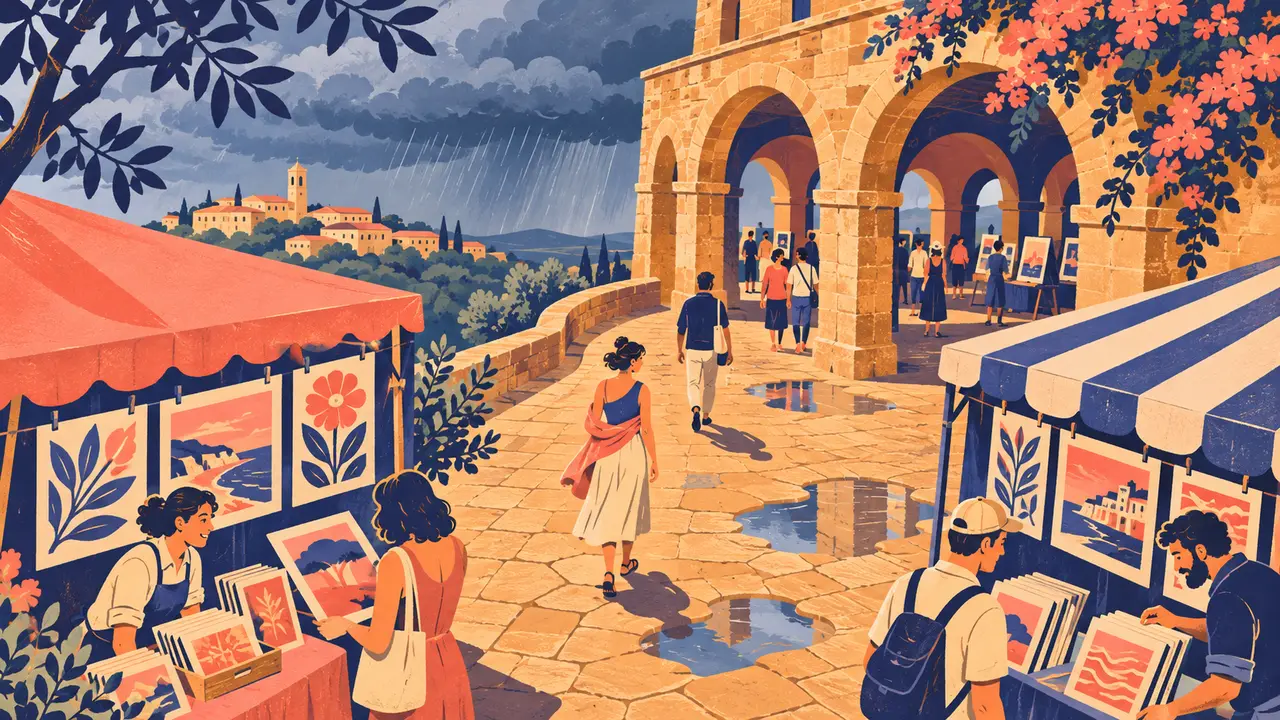
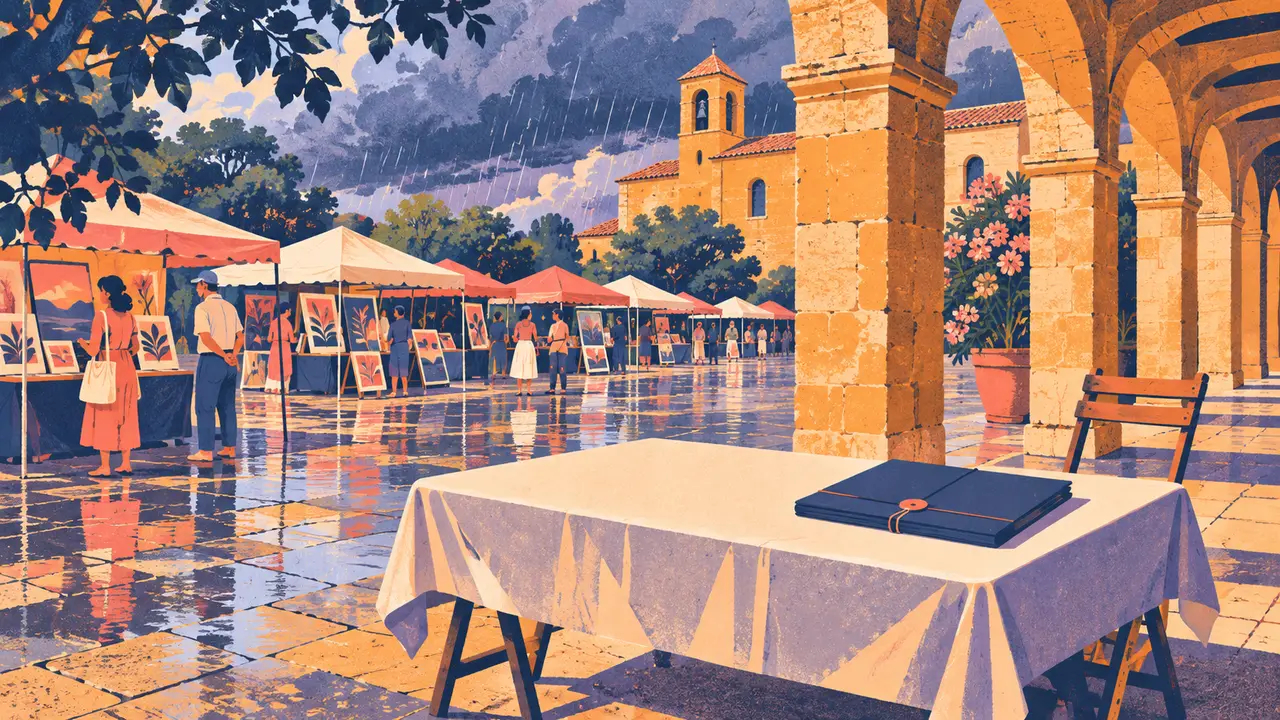
At a street print fair, a printmaker named Inez has brought one large print that won't fit in her covered box. She has promised to leave it on display until a buyer returns. The sky darkens. In the next stall, a neighbor is trying to keep a sheet of canvas from sagging over a table. Inez can carry the print to a sheltered arcade, but she will be harder to find there. Those are the materials of the example: one piece of paper, two people who need cover, and a short walk with a cost attached.
Give the weather something specific to interrupt
Write down what the character expects to accomplish in the next ten minutes. Not what they want from life, but what they need to do right here. Inez wants a returning buyer to see the print laid flat and decide whether to buy it. That goal tells you why the first drop matters. It also tells you why packing immediately is not an obvious choice. The scene does not need a dangerous storm. It needs a change that makes two reasonable actions incompatible.
Try taking the weather out. If Inez still packs up and moves under the arcade at exactly the same moment, the rain may be incidental. That is fine if all you need is atmosphere. If you want a cause, fix the chain. Perhaps Inez sees a drop hit the paper and reaches for a cover. The cover is too narrow; the neighbor has just used the only spare canvas to protect a stack of prints. Now the situation demands a different action. You can show the new limit without adding a speech about bad luck.
Show the first change a character can actually notice
A storm cloud viewed from above tells readers something Inez may not know. A single round drop on the white margin is a detail she can see from the table. Choose according to whose information you want to control. A reader who knows rain is coming can feel the delay while Inez finishes a sale. A reader who discovers it with her can experience the abrupt change. Neither approach needs a catalogue of smells, colors and sounds in the same paragraph.
Give the detail a consequence before adding another one. Inez tilts the print and the drop runs toward the ink. Or she presses a corner of cloth against the margin and leaves a damp mark. The action shows what she thinks is worth saving. It can also reveal a mistake: she protects the image but forgets the loose prints underneath. Once you know what her first response is, choose one more detail that makes that response insufficient. A wet corner of the canopy can do more than a second sentence about the gray sky.

Set a deadline the reader can see
You don't need to announce that there are exactly sixty seconds left. Let a physical condition mark the remaining opportunity. The exposed part of the table gets smaller as drops reach beneath the canopy. The neighbor lifts a sagging corner, then puts it down because holding it prevents them from wrapping their work. Each change closes an option. Inez can no longer simply wait under the canvas and hope the buyer arrives.
Set two thresholds before drafting. At the first, the character can still avoid the cost if they act now. At the second, they must accept a cost to keep going. In this scene, the first threshold is a few drops on bare stone: Inez can still stay at her stall by fitting a cover. The second is water falling from the canopy onto the table: she must move the print or let it get wet. The delay between them gives the choice room to develop. If you write both thresholds in one sentence, it may seem that she never had a choice at all.

Keep the geography simple while options change
Draw three points: the table, the neighbor's stall and the arcade. Note what the character is carrying and which hand is free. You don't need a diagram in the book. You need to know whether Inez can keep the print level and lift the flap of the canvas at the same time. If she needs help, the weather has changed not only her route but also whom she must ask.
On the page, introduce the arcade before she needs it. The buyer may have paused there in the shade earlier. That small detail gives Inez somewhere to look when she searches for shelter, and it keeps the reader from feeling that a solution appeared on demand. Then show the obstacle that makes the move matter. The buyer knows her stall, not her name. Under the arcade, the print stays dry but the sale may disappear. If she can leave a note, decide whether the rain will make the note useless or whether someone can deliver a message. Keep the consequence tied to what this particular scene has established.
Carry one consequence past the last drop
After the rain, don't reset the fair to its earlier state. The print might survive, but the buyer has left. The neighbor may have helped hold the cover and now needs help lifting a damp box. Inez may notice that the arcade brings a different set of visitors. Pick the result that follows most directly from the choice. This isn't a requirement to punish her. It is a way to make the scene matter after the weather stops.
Draft a sentence that starts the next scene with that result instead of the weather report. For example: “When the buyer came back, the table was empty.” You can then choose whether to follow the buyer or return to Inez in the arcade. The important thing is that the empty table tells us what she did. If the next scene starts with an explanation of the storm and then returns everyone to the same plan, check whether you have written a consequence or merely a delay.
Revise for cause, perspective and variety
Read the draft once for verbs. Underline the places where the weather changes something: covers sag, ink runs, a path narrows. Circle the choices that follow. If a long descriptive paragraph has no underlined change and no choice, decide whether it earns its place through mood. If it does, keep it for that reason. If it doesn't, move one useful detail into the moment where a character acts.
Read again for perspective. Inez may notice the paper first. The neighbor may notice a line of water running toward a box on the ground. Let the character who can act on a detail be the one who sees it, unless the story gains something from the gap in knowledge. And vary the pace of the change. A cloud, a drop and a downpour in three consecutive sentences may work if the scene is about being caught unaware. If the scene is about deciding how long to wait, give the character a genuine chance to try a solution before the situation changes again.
As a final check, try another kind of weather without rewriting the plot. If wind blows the print off the table, the character may need to chase it rather than find cover. If afternoon heat dries the inks too fast, the change might affect what can be demonstrated to the buyer. The exercise is not to find a more spectacular forecast. It is to see which physical constraint belongs with the choice you want your character to face.
Now have a reader stop at the first drop and tell you what Inez is trying to preserve. Ask again once she reaches the arcade. If the first answer is “the print” and the second is still only “the print,” check whether you have shown the promise to the buyer clearly enough. Her choices become more legible when a reader can name both things she wants before she has to give one up. Conversely, if the buyer seems more important than the work, give Inez a reason to protect this particular print rather than any sheet on the table. A wrong guess at this point can identify a missing setup more precisely than a general complaint that the weather scene feels slow.
If you already draft in Fyrlo, keep the fair, the promise and the portfolio fixed in the scene brief. Compare a dry version with one where the canopy starts leaking, then check that the next scene follows the version you chose.
Check what a temporary solution costs
The covered arcade may keep the print dry without solving everything. Imagine that the move requires two people, but the neighbor cannot leave their own table. Inez must decide whether to ask a passerby, roll the print and risk a crease, or spend the remaining seconds securing the neighbor’s canvas so the two of them can leave together. Give the reader enough information to see why the most convenient option is not automatically available. Then let the chosen solution leave a trace: a rolled print that must be flattened, a person who now knows where Inez went, or a neighbor who remembers being asked for help. That trace keeps the weather tied to the rest of the story.