
Fiction craft
Setting in fiction: make place shape the scene
Give readers their bearings, choose details through a character's attention, and let the location change what happens next.
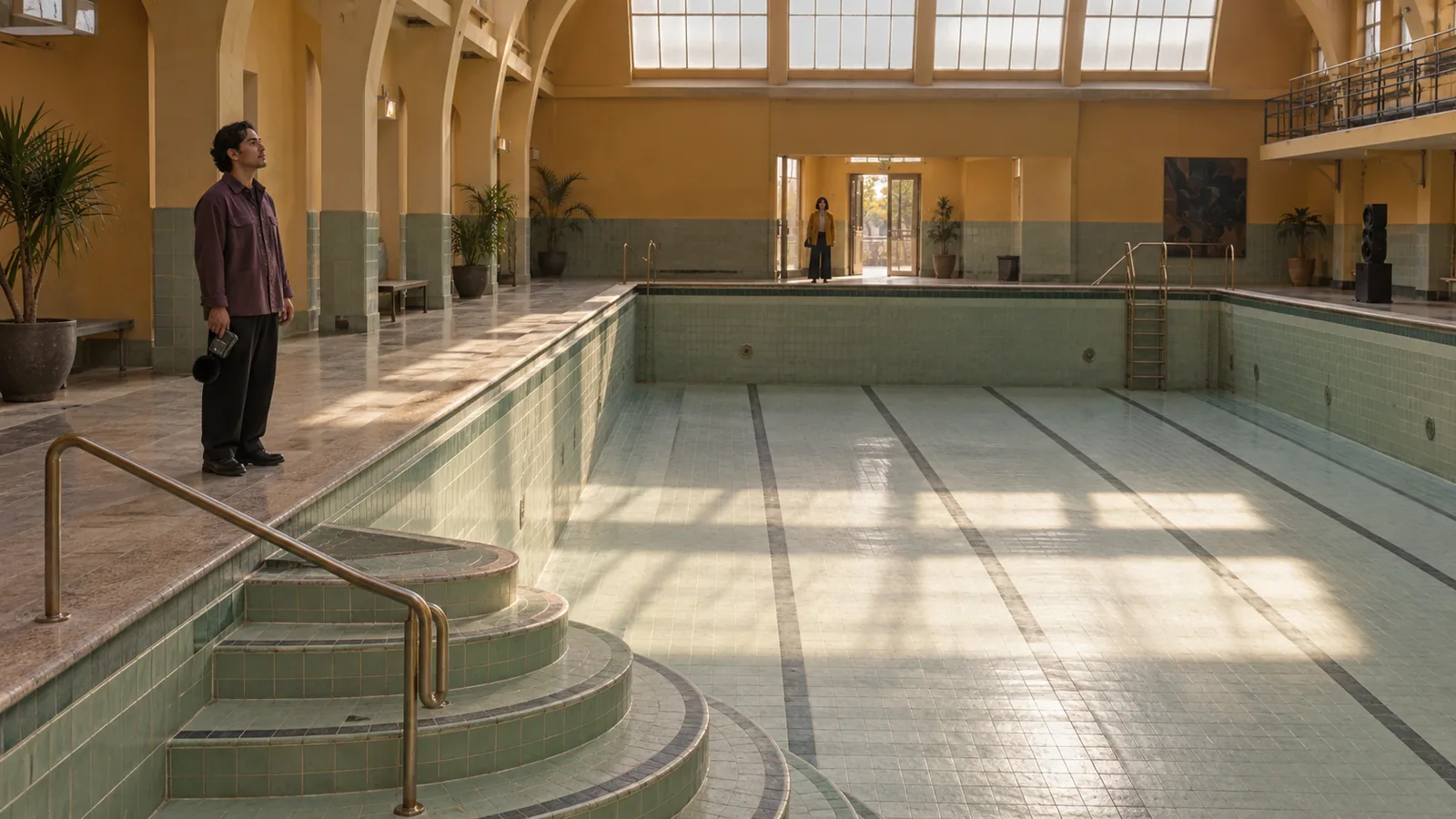
Setting in fiction works when a reader can picture where the character is, understand what that place allows, and feel why being there matters now. You do not need a paragraph for every wall or a list of all five senses. Establish a few stable landmarks, filter details through the viewpoint character, and let the surroundings affect a decision. The location becomes part of the scene rather than a pause before it.
This guide uses an invented example: Elia, a sound artist, returns to a drained municipal swimming pool to collect a borrowed recorder before the building closes for conversion. His former collaborator, Sami, wants to hear their unfinished recording before he takes it away. A notebook and a short draft are enough for the exercises. The pool is a fictional writing example, not advice about entering closed buildings or using equipment.
Setting in fiction begins with place, time and access
Start with a sentence you can use privately: Elia enters the old pool hall late in the afternoon, with permission, twenty minutes before the caretaker finishes work. This fixes the location, immediate time and access condition. It is more useful than deciding that the scene should feel nostalgic. Nostalgia may arrive through the writing; the practical conditions tell you what the people can actually do.
The Open University's setting lesson treats time and place as connected to narrative events and characterization. Use that distinction to separate your background research from the facts this scene needs. Your private notes may cover the building's whole life. The opening needs only the conditions that orient the reader and make the current encounter intelligible.
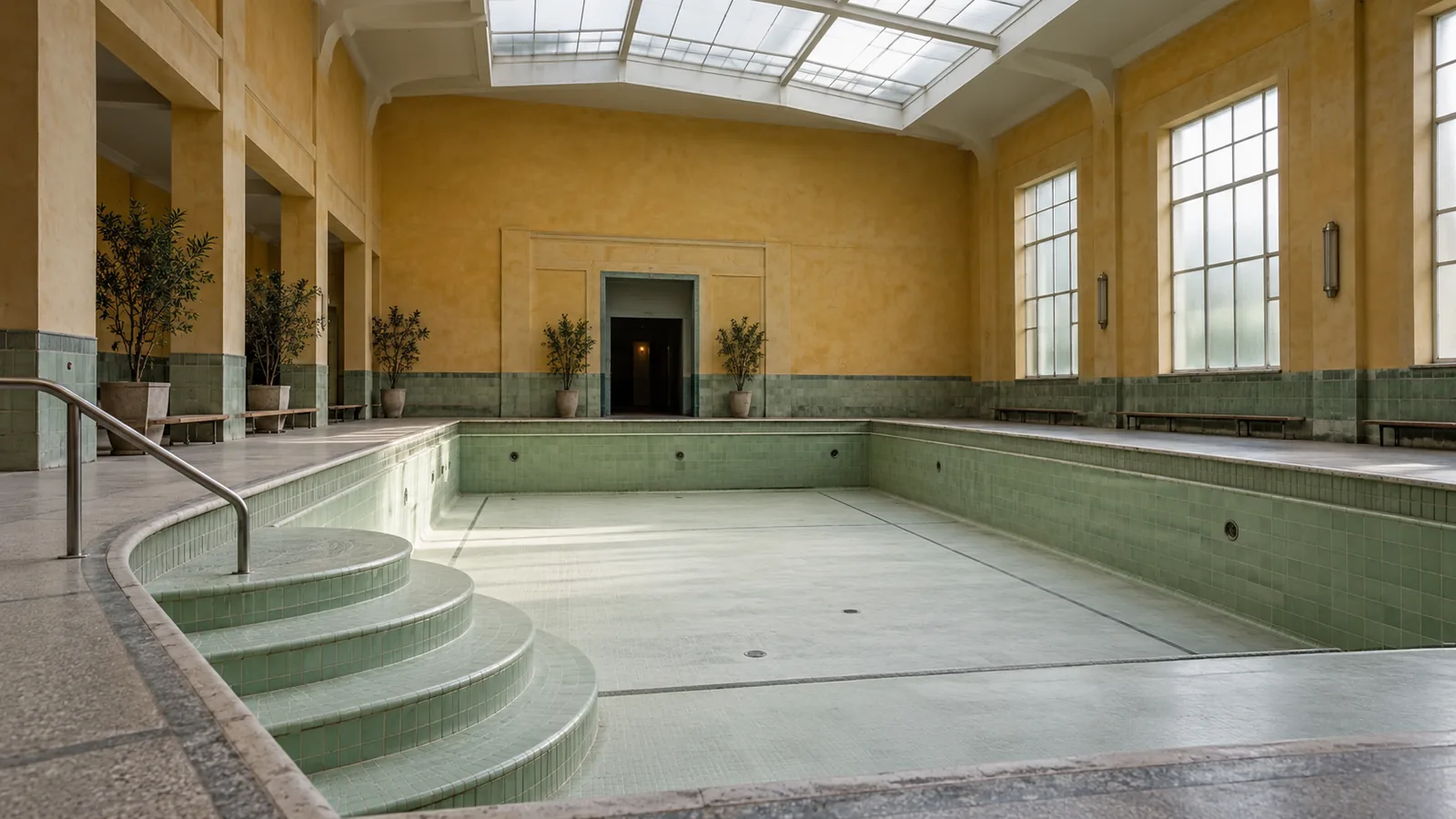
Choose three landmarks before drafting: the poolside entrance, the empty basin and the far doorway where Sami waits. Place the recorder on a bench near that doorway. Readers can now anticipate Elia's route. They need not know the dimensions of every changing room. Establish the important relationship between the people, the object and the exit before adding decorative detail.
Check the opening with a simple question: could a reader sketch the route without rereading? If not, clarify one spatial relation, such as across the basin or beside the entrance. Precise relations often do more work than additional adjectives. You can keep the plan rough; its purpose is to prevent accidental teleportation, not to produce an architectural drawing.
Let attention select the details
The viewpoint character is not a camera collecting everything equally. Elia works with sound, so he notices the pause between a dropped bag and its fading echo. He sees the soft panels stacked against the wall because they will change that sound. A visitor looking for a repair job might notice the tile joints instead. Different attention makes the same room serve different stories.
Give the character an immediate task, a relevant familiarity and a current feeling. Elia wants his recorder back, remembers working here with Sami, and is reluctant to discuss why he left. These three conditions help choose what he notices. The bench matters as his destination; the altered acoustics matter as evidence of change; the empty place beside Sami matters because he avoids sitting down.
Write six observations in your notebook, then choose two for the opening. Keep one that gives physical orientation and one that carries the character's particular concern. Save the others for later or discard them. This is a drafting exercise, not a rule that every paragraph must contain exactly two details. Selection protects the reader from having to assign equal importance to everything.
The publisher Éditions Baudelaire connects place description with a character's perception. Test your own passage by changing only the observer. Let Sami describe the same hall as someone proud of the conversion. If both versions notice precisely the same objects in the same order, you may be writing from an unexamined authorial viewpoint rather than either person's attention.
For a close viewpoint, avoid explaining what Elia cannot yet know. He can hear a door close, but he cannot automatically know who closed it in another room. Preserve the distinction between perception and inference. If the narrator has wider access, establish that consistently. Our point-of-view guide can help you choose the information boundary before polishing the description.

Make the surroundings change an available action
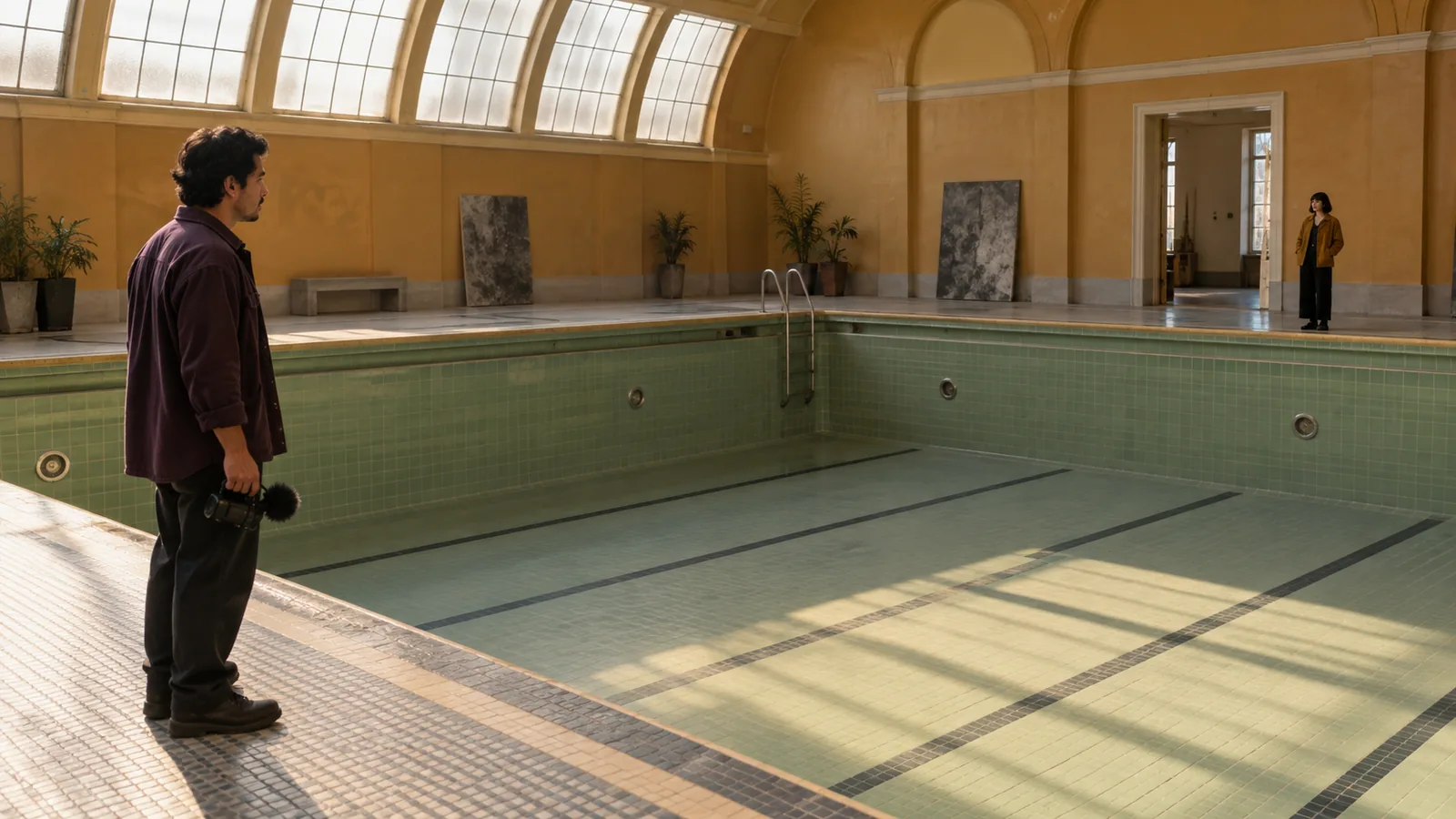
A location becomes dramatically useful when moving the scene elsewhere would change an action. In a quiet kitchen, Elia and Sami could speak softly over a table. Across the empty pool, a small comment travels. Elia has to decide whether to answer at a distance or walk the long perimeter toward her. The room changes the form of their conversation without inventing an unrelated obstacle.
Give the setting one pressure, not six convenient complications. Perhaps the remaining chairs are stacked for tomorrow's work, so Elia cannot turn this into their familiar seated listening session. Sami offers him a place on the bench instead. His choice to remain standing can reveal reluctance. The environment does not force an emotion; it offers an action whose meaning depends on the relationship.
Distinguish a physical condition from a social condition. The empty basin determines the route; the caretaker's closing time determines the duration; Sami's responsibility for the conversion determines who may move the stacked panels. These conditions can coexist, but each should have a clear cause. Avoid a sudden locked exit simply because the scene needs more tension.
Try the relocation test. Rewrite the exchange in a cafe while keeping the characters' goals. What must change? If nothing changes except the nouns, the pool is mostly decoration. That can be a valid choice for a brief scene, but here you want the place to affect privacy, distance and the decision to listen. Revise those interactions before making the room more beautiful.
Connect the resulting action to the scene's turn. Elia walks toward the bench, hears the room differently beside Sami, and agrees to listen to one short passage before leaving. He has not solved the whole relationship. He has made a choice he would not have made at the entrance. The guide to writing a consequential scene develops this objective, resistance and change at a broader level.
Control the rhythm of description
Orient first, elaborate when something changes. A sentence about the drained basin can establish the room on entry. Later, Elia's voice returning from the tiles makes the echo relevant. Later still, the panels matter when Sami explains the new listening area. Each detail appears beside the action that gives it a purpose rather than arriving as a compulsory opening inventory.
Not every description needs an immediate plot function. A brief pause can create atmosphere, intimacy or a different sense of time. The question is whether that pause belongs to this scene and this narrative voice. Let Elia look at the pale rectangle where a clock used to hang if the absence matters to him. Do not demand that the missing clock become a clue.
Balance concrete nouns with purposeful verbs. The hall was large and sad tells the reader what to feel before providing much experience. Elia waits for his footsteps to stop answering him gives a physical impression and a behavior. Both summary and dramatization have uses. The second version is useful here because it lets the room and the character appear in one movement.
Read the passage aloud and notice where action disappears. If three successive paragraphs describe unrelated surfaces, return to Elia's unfinished task. If the exchange is impossible to picture, add a landmark before cutting more description. Fast prose is not automatically clear prose. The right amount is the amount that supports this encounter at the pace you intend.
Revise geography and changing conditions
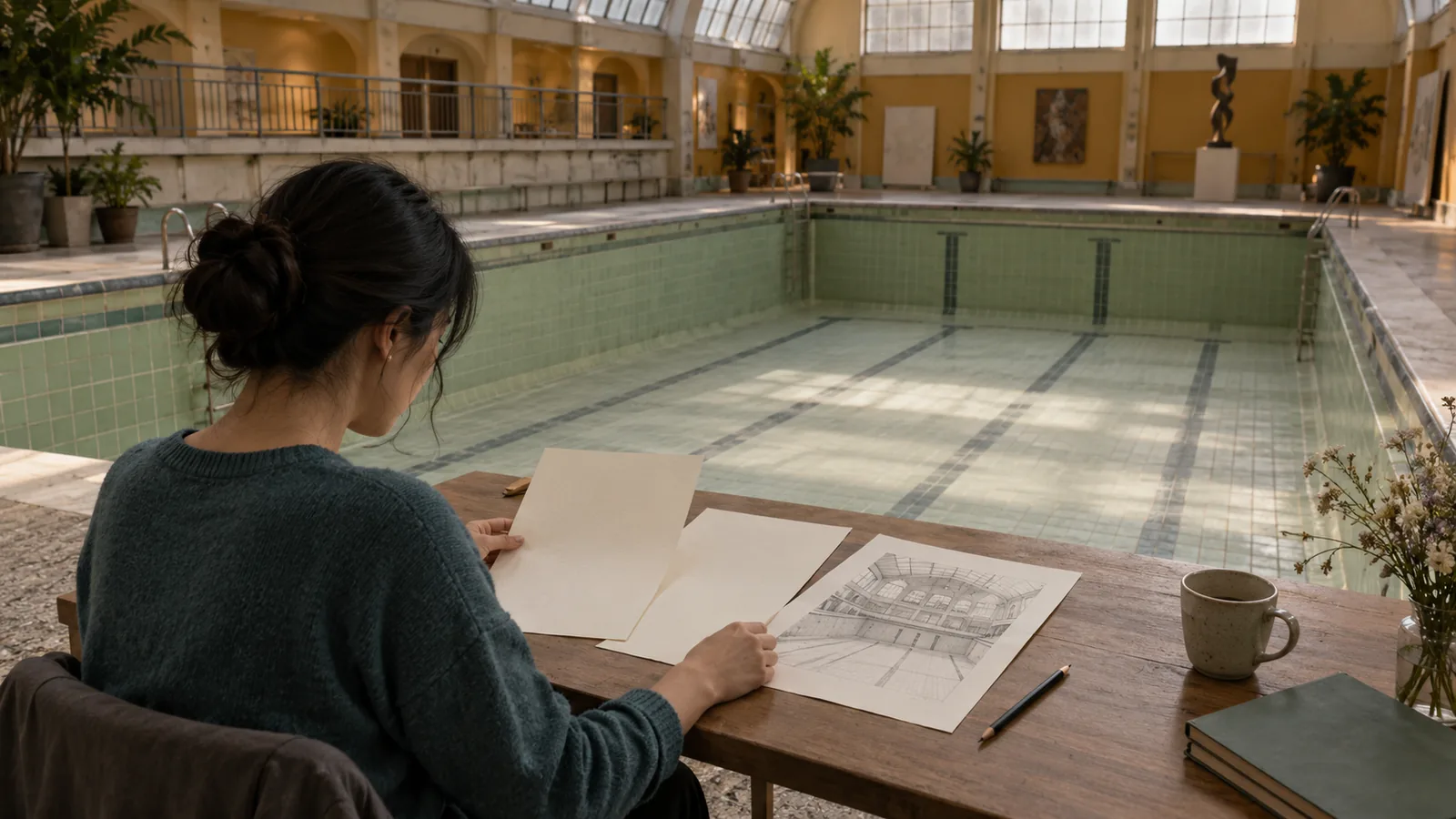
Make a short continuity sheet after the first draft. Record the entrance, bench, basin, route, light and closing condition. Then trace each character's movement with a pencil. If Sami is at the doorway in one paragraph and beside Elia in the next, decide whether the journey needs a sentence or whether the text already makes the movement evident. Do not explain every step.
Follow objects as carefully as people. Where is the recorder before Elia lifts it? Who holds it during the conversation? Can Sami hear the playback from her position? You do not need technical instructions, but you do need a consistent physical exchange. Otherwise a passage that feels emotionally convincing can still leave the reader unable to understand what happened.
Track changes, not only fixed facts. The skylight's fading light, a door closing and a chair being moved can alter the room during the scene. Introduce those changes through an observable event. A place may evolve, but it should not rearrange itself silently to rescue your next sentence. Keep weather, access and distance consistent with the earlier description.
Ask a reader two questions: where are the people, and what about the place affected the conversation? A wrong answer suggests a specific repair. Confusion about the route needs orientation; a place with no remembered effect needs a better interaction. Asking whether the description was vivid often produces praise that does not tell you what to revise.
For a whole novel, keep this scene sheet separate from your larger outline. Note which location facts later chapters inherit and which are temporary. Our novel-planning guide can help place the encounter within the larger sequence. A return visit should recognize stable features while allowing new use, different company or a changed goal to alter what the character notices.
Practise with one place and two purposes
Choose a familiar room and draft two short entrances: someone collecting an object and someone waiting to apologize. Keep the layout identical. Change the selected details, sentence rhythm and immediate action. Compare the versions for orientation and emotional implication, not for which contains more adjectives. This exercise works with your notebook and your own observation.
If you already draft in Fyrlo, you can keep the accepted place facts beside the plot and character context and compare one descriptive focus at a time. Hold the layout and goals steady; change only what the viewpoint character attends to. Inspect the result yourself. Fyrlo supports planning and drafting, but does not guarantee spatial consistency, factual accuracy, originality or publication readiness. Research real places independently.