Writing tips
How to write a scene that changes the story
Give a character a concrete goal, put resistance in the way, and end with a choice that changes what happens next.

Learning how to write a scene begins with a smaller question than what happens in this chapter: what can this character do here, now, that will leave the situation different? A vivid setting and polished dialogue are not enough if everyone exits with the same knowledge, options, and relationships they had on entering. Nor must every scene contain an argument or a disaster. A quiet refusal, an unexpected concession, or a discovery that changes a plan can be a decisive turn.
We will follow a fictional conservator, Mara, who wants to inspect a blue porcelain bird before it leaves a museum. Her supervisor has sealed the cabinet. Mara believes the object's records are wrong but risks her job if she opens the case without permission. This small problem lets us test goal, resistance, choice, consequence, entry, exit, and revision without relying on a rigid formula. You can use the same questions for romance, mystery, literary fiction, or an almost silent scene between people who know each other too well.
Name the scene goal in one observable sentence
A story goal may take hundreds of pages: Mara wants to restore trust in her work after a public mistake. A scene goal is narrower and testable: before the evening shipment, she wants to examine the mark under the porcelain bird. Readers can recognize progress or failure because the action is specific, time matters, and another person can oppose it. If your scene note says only Mara feels anxious about the collection, ask what she does because of that feeling. Anxiety may shape the scene, but it cannot substitute for an action the reader can follow.
Give the goal a private layer without making the character announce it. Mara wants the object opened, but she also wants her supervisor to believe that she has learned from her earlier mistake. The practical request and the personal need can pull against one another: insisting may make her look reckless, yet silence would repeat the behavior that caused the original error. Decide which desire is visible to the other characters and which remains inside the viewpoint. This difference creates tension before anyone raises a voice.
Before drafting, write three lines: what the viewpoint character wants by the end of this encounter, why now, and what failure will cost. Keep each line concrete. A goal such as learn the truth may be too broad; compare it with see the object's underside before the transport team arrives. A social goal such as win an apology can be concrete when the scene provides a person, a request, and a time-bound situation. The goal is a compass for selection, not a demand that every sentence repeat the character's intention.

Make resistance come from the story, not from random delay
If the cabinet simply jams, Mara may need a screwdriver; that is an obstacle, but it says little about her choice. If her supervisor refuses access because a sealed inventory protects the museum from another unrecorded handling, the resistance grows from earlier events and a defensible position. Now Mara has to decide whether to argue, find evidence, wait, or risk breaking the rule. Neither character needs to become a villain. A stronger scene gives both people a reason that makes sense from where they stand.
Resistance can be physical, social, procedural, internal, or a mixture. The transport crew's arrival sets a clock. A glass partition makes the bird visible yet inaccessible. A colleague's doubt makes a request costly. Mara's fear of appearing careless may keep her from stating the one fact that would persuade her supervisor. Choose the obstacle that exposes the question this story is asking. Adding a power cut, an alarm, and an angry visitor merely to make the scene louder may bury the choice under events that have no lasting effect.
Try an escalation of responses rather than repetitions of no. Mara requests access; the supervisor cites the seal. She offers to inspect it with a witness; he reveals that the shipment has been approved. She produces a photograph showing a mismatched mark; he asks where she obtained it. Each reply changes the information or cost of the next attempt. If the conversation could be rearranged without changing anything, the middle may be circling. Give each exchange a distinct tactic, new fact, or consequence.
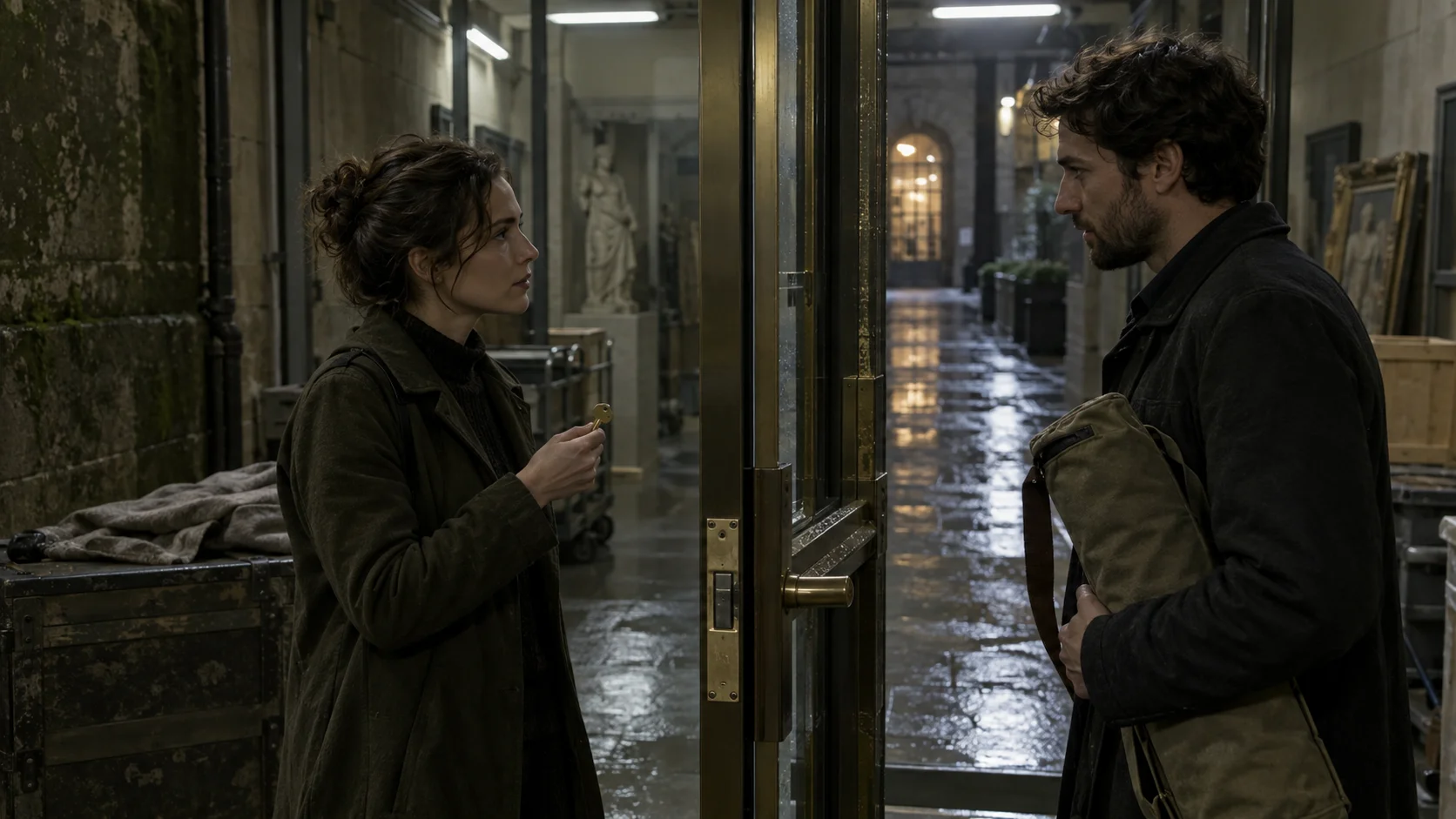
Let a choice create the scene's turning point
A scene turns when its ending changes the terms under which the next action must happen. That change can be a new fact, a lost opportunity, a damaged relationship, a decision, or a success with a price. Mara could gain access by revealing that she photographed the bird after hours. She gets what she wanted, but the admission threatens her credibility. This is more useful than an unrelated security siren that interrupts the conversation: her own choice creates the new problem.
Do not assume that every result must be a catastrophe. A supervisor may refuse the inspection but offer to delay the shipment; Mara wins time while losing his trust. A friend may unexpectedly help, making Mara indebted to someone whose motives she doubts. A quiet scene might change only what one person understands, provided that understanding alters a later action. Test the turn by writing two short statements: before the scene, Mara could do or believe X; afterward, she must do or believe Y. If the statements are effectively identical, the scene may be atmospheric but not yet causal.
Purdue OWL's discussion of compelling characters connects goals to conflict and resolution. Use that link at the scene level without turning it into a compulsory template. Mara's public goal, private fear, and chosen action should meet in the outcome. If the porcelain bird turns out to be a forgery, that discovery matters most when it changes what Mara is willing to admit or risk. A revelation alone is information. A revelation that forces an accountable choice becomes a turn the reader can carry forward.

Enter late, leave after the consequence lands
The first line of the scene need not show Mara waking, traveling to the museum, finding her coat, and walking down three corridors. Start near the moment she can act: the supervisor's hand moves toward the cabinet seal just as she arrives with the photograph. Supply orientation quickly—who is present, where the object is, what time pressure exists—but let action carry the room into focus. Entering late is not withholding basic facts until the reader is confused. It means skipping routine steps that do not change the choice.
Where should you stop? Once Mara has made the decisive move and readers understand its immediate price, the next beat may belong in a different scene. If she admits taking the photograph, let the supervisor's response register. You may not need three paragraphs explaining that she is worried about her job; the emptied corridor or the way he returns her access card can make the consequence concrete. Conversely, cutting on the admission before anyone reacts could leave the turn emotionally unfinished. Ending early is a judgment about completed action, not a mechanical cliffhanger.
A following reflective passage can make room for reaction, dilemma, and a new decision. Mara might sit outside the loading bay, consider whether to alert the museum director, then decide to speak to the restorer who handled the bird last. That pause is not filler if her options genuinely change. When the plot contains several scenes, connect each by cause: the next objective should grow from the previous outcome, not arrive because the author needs another exciting location. The same principle works when an entire chapter consists of one scene or several.
Revise by testing what changes, then cut the surplus
After drafting, write a one-sentence account of the scene's beginning and ending states. List what Mara knows, wants, can access, and believes about her supervisor at both points. Circle the differences. If nothing changed, decide whether the scene belongs as a brief summary, needs a stronger choice, or can be removed. Some passages are valuable for texture and relationship, but they still need to affect how later moments are read. A scene should earn its space in the novel, not simply advertise that the setting exists.
Next mark every paragraph by its job: establish a fact, complicate a tactic, reveal character through action, prepare the turn, or show consequence. If two paragraphs do the same job with no new pressure, combine them or choose the sharper one. Read the dialogue without dialogue tags to see whether each reply responds strategically; then restore only the physical details that change how an exchange is understood. A beautiful description can stay when it changes attention or meaning, even if it does not advance the external task directly.
Finally compare the revised scene with the larger story. Does the bird's mark have the same meaning as before? Did Mara already know a fact that this scene treats as new? Will the supervisor's response matter in the next chapter? Fyrlo can help keep an accepted premise, plan, characters, and chapter drafts together when you check continuity, but the scene works without the app. You decide what has been earned and revise the final prose. Neither a planning aid nor a tidy scene formula guarantees quality, factual accuracy, originality, rights, publication readiness, or success.