
Fiction craft
Scene transitions: skip the journey, keep the thread
Connect two scenes across a change of time or place without narrating every journey or hiding the decision that matters.

Scene transitions are the small joins that let a novel move without making its reader stop to reconstruct the route. One scene ends in a depot; the next begins outside a hillside hut. You do not necessarily need the walk between them. You do need enough continuity to understand why the same person is there, what has changed and what remains unresolved. A blank line alone cannot supply those answers.
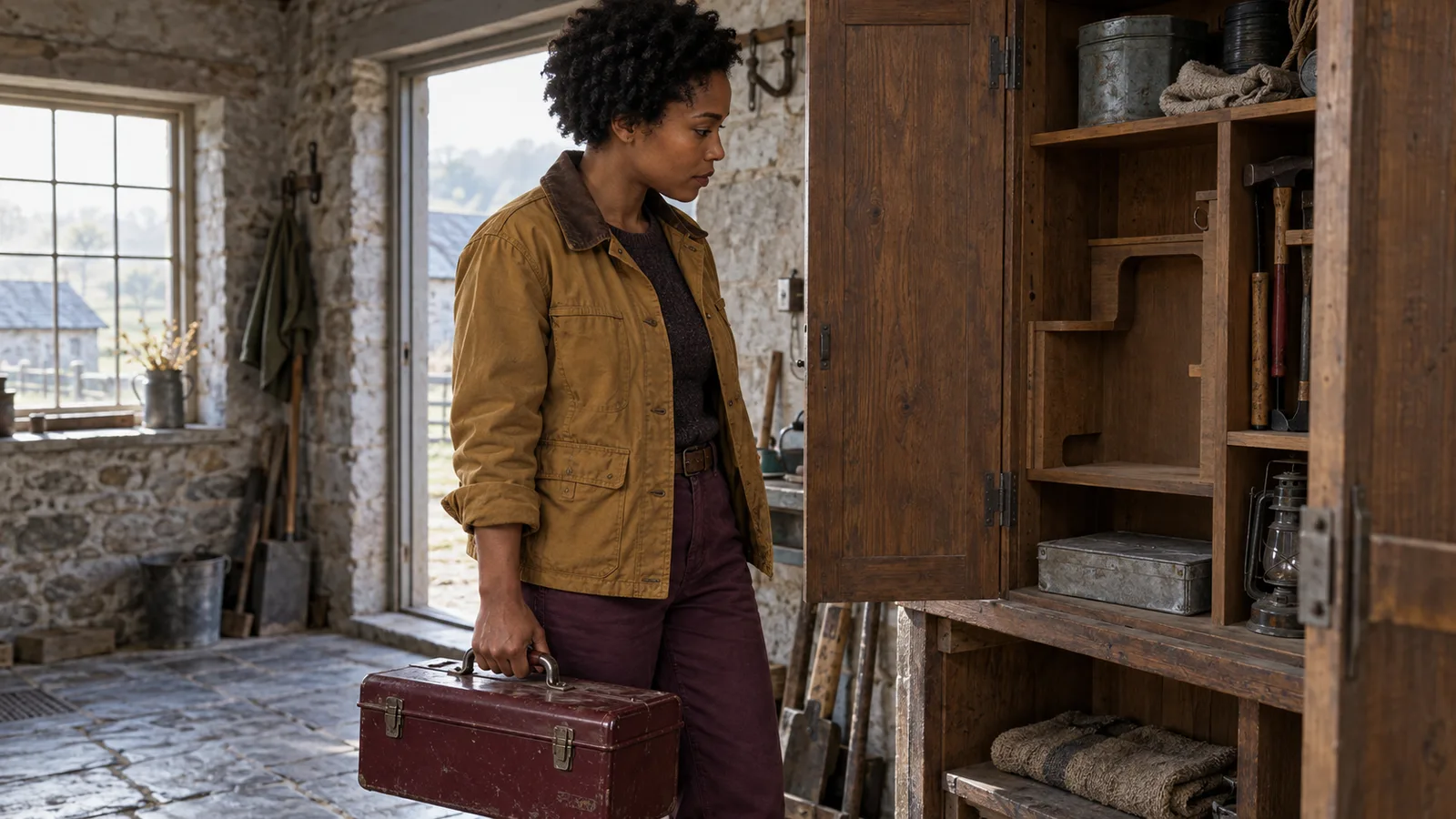
Work with two adjacent scenes rather than redesigning the whole manuscript. In this invented example, Iris takes a closed tool case from a maintenance depot because she has promised to return it to a colleague at the hill hut. At the next scene, the door is shut and the colleague is absent. The useful connection is her unfinished promise, not a detailed account of every gate along the path. You can complete this exercise on paper.
Read scene transitions from both sides of the gap
Put the last paragraph of the departing scene beside the first paragraph of the arriving scene. For now, ignore the pages around them. Mark what the first paragraph makes you expect and what the second assumes you already know. Iris may leave the depot intending to make a delivery. If the next paragraph has her arguing about a repair inside the hut, several events have silently happened. She gained entry, found somebody and changed her immediate task. Perhaps those events deserve a scene; perhaps one concise bridge will establish them. Decide deliberately instead of trusting the chapter break to explain everything.
Caro Clarke’s craft discussion emphasizes helping readers follow changes of time and place. That is a useful starting point, not a demand to document every movement. Ask a reader unfamiliar with your plan to explain the situation after these two paragraphs. If they can name the new place but cannot say what Iris wants, geography is not the only problem. Our guide to building a scene around a consequential change helps you test the destination scene itself. A polished connection cannot give a directionless scene a purpose it does not yet have.
Cut routine movement, not the event that changes the task
Write a private account of the omitted interval in ordinary language. Iris takes the path, crosses the bridge and reaches the hut later that morning. Nothing challenges the promise during the walk. That interval can probably disappear or occupy a short sentence. Now change one fact: a colleague meets her on the bridge and says the intended recipient has left permanently. That conversation alters what she expects at the hut. Cutting it without a replacement explanation may create a false impression of continuity. The test is not whether the journey looks exciting; it is whether an omitted event changes the next scene’s meaning.
Separate practical plausibility from narrative emphasis. Check privately that the distance, daylight and available transport make sense, but put only the useful cues in the prose. Readers do not need a timetable merely because you used one while planning. Conversely, a tight deadline may make the duration of the journey crucial. If reaching the hut late costs Iris the chance to speak, the delay is no longer disposable connective tissue. You can summarize it, dramatize it or make its consequence clear on arrival. What you should not do is remove the delay and keep a consequence that now has no cause.
Orient the new opening through an action
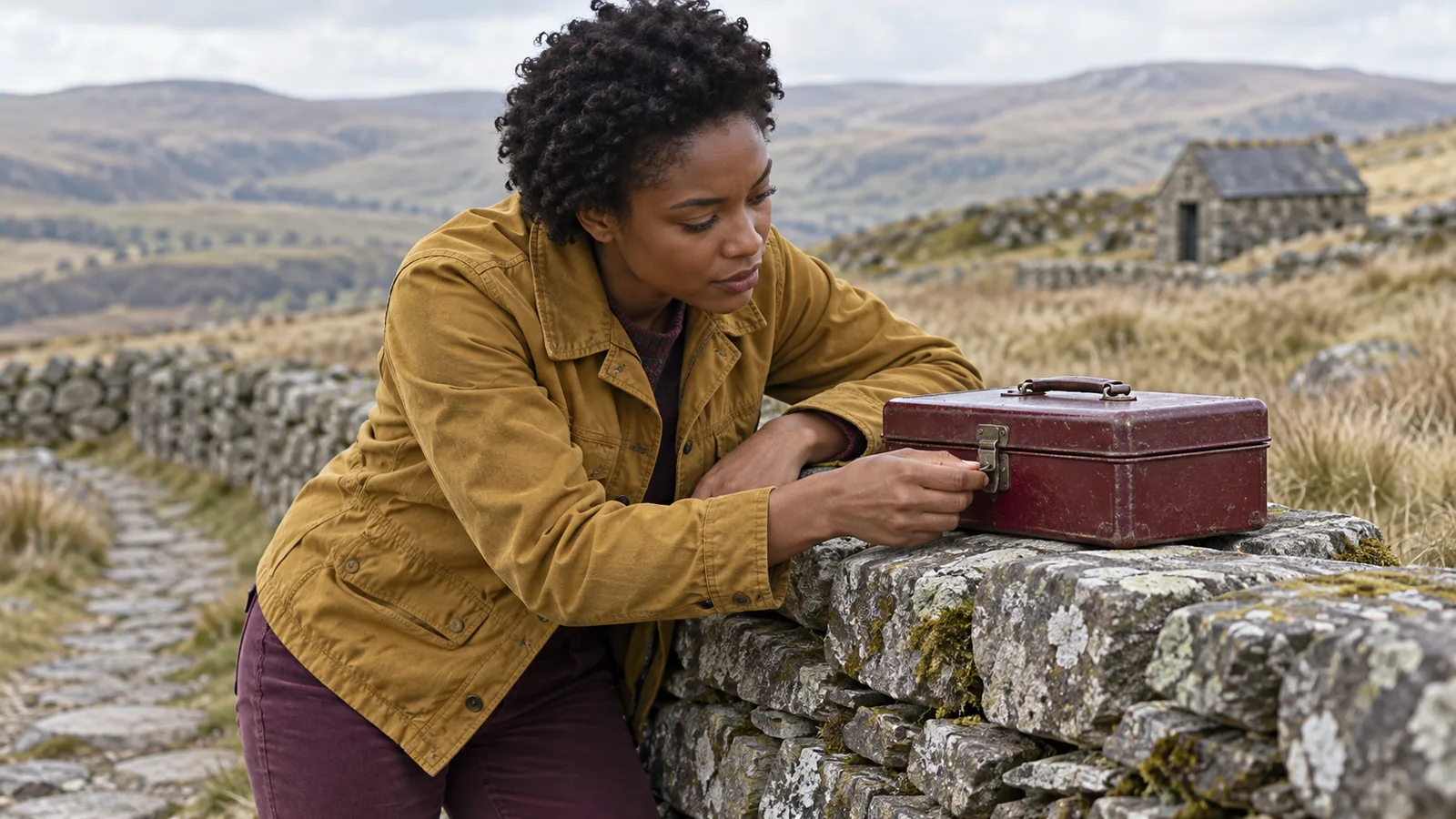
Try this connection: Iris promises to return the case before lunch at the end of the depot scene. After a scene break, the next scene opens with her setting it on the hut’s wet doorstep later that morning. The new place and the advance in time arrive through a physical action. You can then show the shut door and the unanswered knock. There is no need to list the date, location and character name in a separate announcement if the sentence already makes the situation clear. A precise cue usually does more work than several atmospheric sentences that avoid saying where we are.
Compare that with an opening about wind moving through grass. It may be beautiful and appropriate, but it does not automatically tell us whether Iris is still near the depot or has reached her destination. Keep the description if it contributes; attach it to something that locates the action. Do not overload every first sentence with all possible coordinates. A small change may require only one cue. After a long interval or a move into an unfamiliar setting, readers may need more. The aim is enough orientation to follow the immediate action, not a compulsory checklist imposed on every scene.

Carry an obligation, not merely a repeated object
The case appears in both scenes, but repetition alone does not create a causal link. Iris could carry it anywhere while pursuing an unrelated errand. Make the continuing task legible: she still owes somebody its return, and the closed door now prevents completion. The second scene develops the situation rather than simply displaying a familiar prop in a different location. If the case could be removed without changing her decision, ask what actually connects these scenes. The bridge might be a question, a consequence or a promise rather than a physical object.
You can also let the next scene challenge an expectation created by the previous one. Iris expects an easy handover; an empty hut forces a choice about waiting or taking the case back. Establish why that choice matters before demanding a strong reaction from her. She need not deliver a speech explaining the entire arrangement. A brief reference to the promised return, combined with the obstacle, may be sufficient. Keep the emotional response consistent with what she has learned. A quiet inconvenience should not suddenly produce terror unless the story has supplied a reason beyond the convenience of raising tension.
Choose a break, a summary or an uninterrupted move
A scene break is useful when you want the reader to accept a meaningful gap and begin a new dramatic unit. A short summary can connect the units when something about the interval matters but does not need a full scene. An uninterrupted move may suit a conversation that continues while people walk into another room. These are choices about attention, not a hierarchy in which the shortest transition always wins. Try each against the action you need readers to experience. If you summarize a difficult exchange, you may be skipping the very conflict the chapter was preparing.
Keep the manuscript’s visible separator consistent, then check the target submission or publication format before preparing a final file. There is no single decorative mark every novel must use. A new chapter can provide a larger pause, but creating one whenever a character changes rooms will fragment a story unnecessarily. Our pacing guide looks at where scenes deserve space and where compression helps. Use that broader diagnosis if the problem occurs throughout the book. For the present exercise, solve one specific join before deciding that every chapter needs to be shorter or that all travel must vanish.
Keep the viewpoint and the knowledge boundary stable
For this exercise, stay with Iris in the same tense on both sides of the break. That makes accidental changes easier to spot. If she has not opened the case, she cannot know a tool is missing simply because the author knows it. If nobody has told her why the hut is empty, the opening should not casually present the explanation as her established knowledge. A scene transition can move the reader forward in time without granting the viewpoint character information they never acquired. Record any necessary conversation or discovery in your private account, then decide how it reaches the page.
Check names and pronouns as well. The last paragraph may mention Iris’s colleague, a driver and a caretaker. Opening the next scene with an unexplained “she” can suggest that the viewpoint has changed, even when you intended to follow Iris throughout. Naming her once may be enough. This is not a rule against pronouns or an argument that multiple viewpoints are bad. It is a way to reduce the number of things changing in one small revision. Once the connection works, you can evaluate a genuine viewpoint switch as a separate structural decision rather than letting it happen by accident.
Compare one bridge without rewriting the whole chapter
Make two versions of the join while keeping the scenes themselves fixed. In the first, use a break and a clear arrival sentence. In the second, add a brief summary of the walk before the same arrival. Read each aloud with the preceding paragraph. Does the summary supply a needed delay or emotional adjustment, or merely repeat the departure? Keep the version that supports this particular passage. A faster reading is not automatically a better reading. If Iris needs time to reconsider her promise, compression should preserve that change rather than erase it.
If you already use Fyrlo, you can optionally draft this bounded alternative there. Supply the premise, the characters’ immediate aims, the two accepted scene edges and a manual note of what happens between them. Ask to vary only the connecting passage; reject invented encounters or discoveries that alter the accepted plan. In a Book project, the editable chapter plan can help keep the larger sequence visible, while you maintain the actual continuity notes yourself. Check the result before continuing chapter by chapter. This is drafting support, not an automatic transition checker or a guarantee of quality, originality, factual accuracy, rights, publication readiness or sales.

Test the join in the surrounding pages
Restore the paragraph before the departure and the page after the arrival. A connection that looks clear in isolation may repeat information the preceding scene has already supplied. It may also orient the reader correctly and then disappear into a destination scene that never acts on the promised task. Track the first practical decision Iris makes at the shut door. If the case and promise vanish while she begins an unrelated conversation, revise the scene’s focus or establish the diversion as an actual event with a consequence.
Finally, ask a reader three ordinary questions: where did the scene move, how much time seems to have passed, and what does Iris still need to do? Do not explain the intended answers first. An unexpected answer identifies a place to inspect, not a command to add a paragraph of explanation. Sometimes replacing an ambiguous place word or moving a time cue earlier is enough. Keep the smallest revision that restores the intended reading, then read onward. The transition has done its job when attention returns to Iris’s next decision rather than remaining on the mechanics of getting her there.