Narrative craft
Past vs present tense: choose your story’s footing
Give the scene a stable now, place earlier events clearly, and make every change of tense earn its place.

Past vs present tense is a choice about the telling, not a verdict on which stories feel alive. A past-tense paragraph can be urgent; a present-tense paragraph can patiently summarize years. Begin with a small scene and a clear reference point. Decide what is happening in that scene, what happened earlier and what is only anticipated. Then choose the wording that lets a reader follow those relationships without having to reconstruct your intentions. You do not need to convert an entire manuscript to discover whether a different baseline would help.
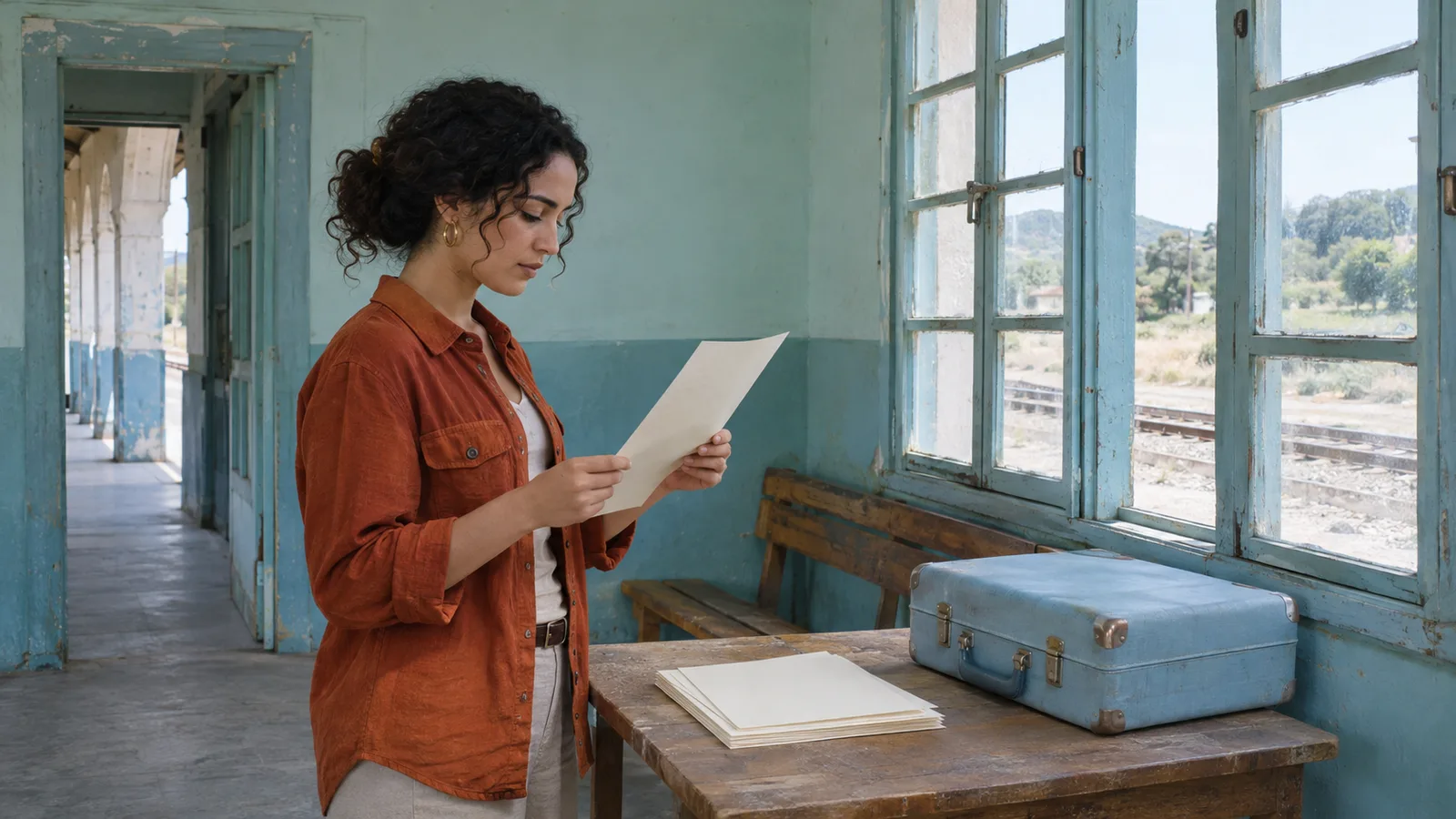
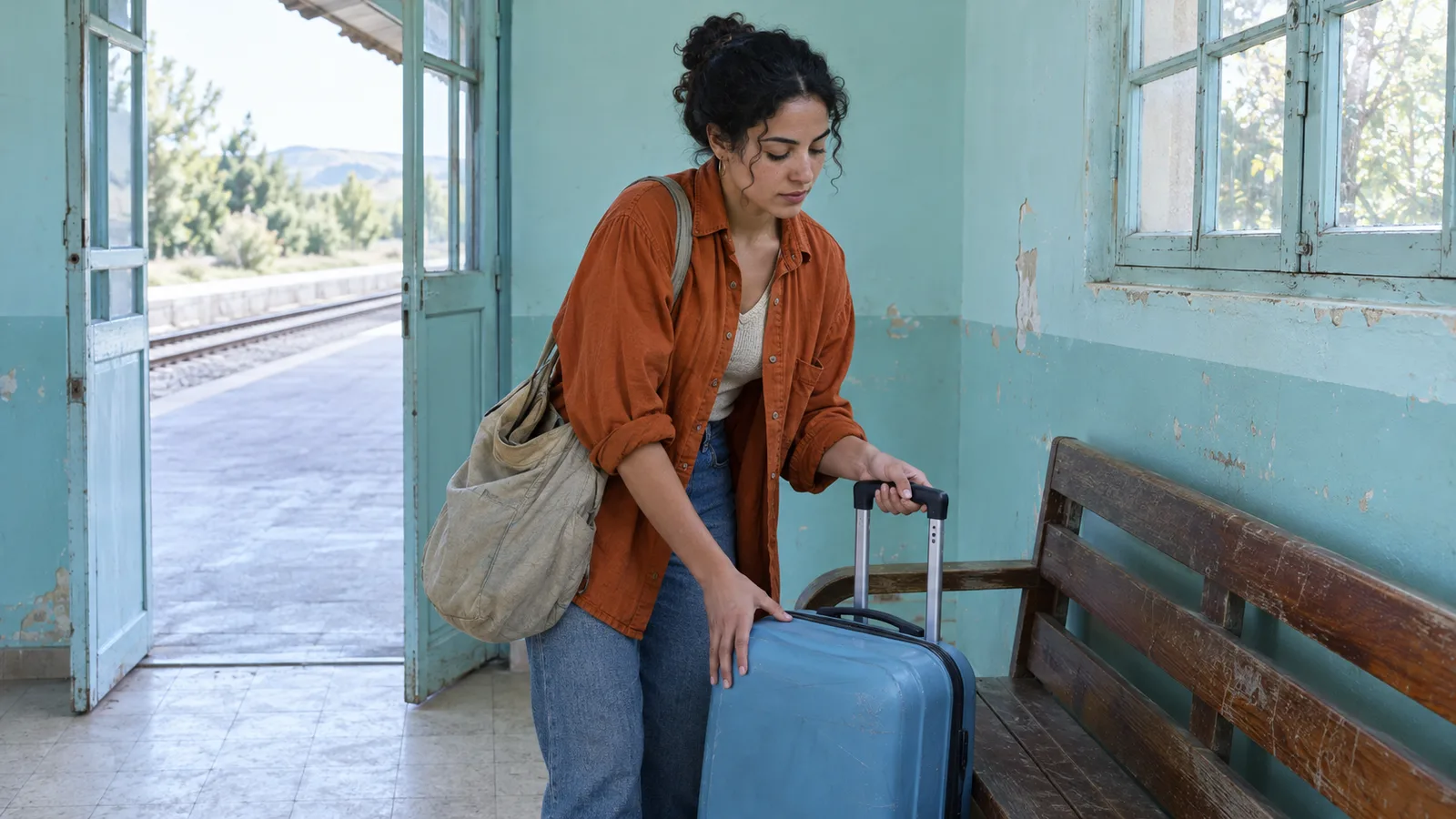
Use paper, two short drafts and a reader. Our invented example follows adult Nadia returning a borrowed blue suitcase to Ivo in a railway waiting room. Before arriving, she found a landscape photograph in its pocket. Now she must decide whether to ask about it before he leaves. Keep that event and Nadia’s limited perspective steady while experimenting. The example is not a quotation, a real person’s private photograph or a reported writing test. The task is to compare how you tell one event, not to invent a more dramatic event for each tense.
Establish the scene’s now before choosing a tense
Write the current action in plain notes before polishing prose: Nadia brings the case into the room; Ivo is waiting; she has the photograph; he has not yet explained it. The scene’s now is this encounter, even if the finished version tells it in the past. Earlier discoveries belong before that reference point. A planned departure belongs after it. Knowing these relationships matters more than colouring every verb on the page. Without them, a grammatically neat sentence can still leave the reader unsure whether Nadia finds the photograph here or found it somewhere else.
Keep a separate note about the act of narration. Is this account limited to what Nadia understands during the encounter, or does an identifiable later narrator comment on it? You need not introduce a narrator sitting at a desk just because you use past tense. Nor does present tense mean the author is literally reporting events as they occur. These are storytelling arrangements. For the first experiment, use a close third-person account with no later commentary. That leaves one manageable variable and prevents tense, person and hindsight from changing at once.
Let past tense carry action without adding hindsight
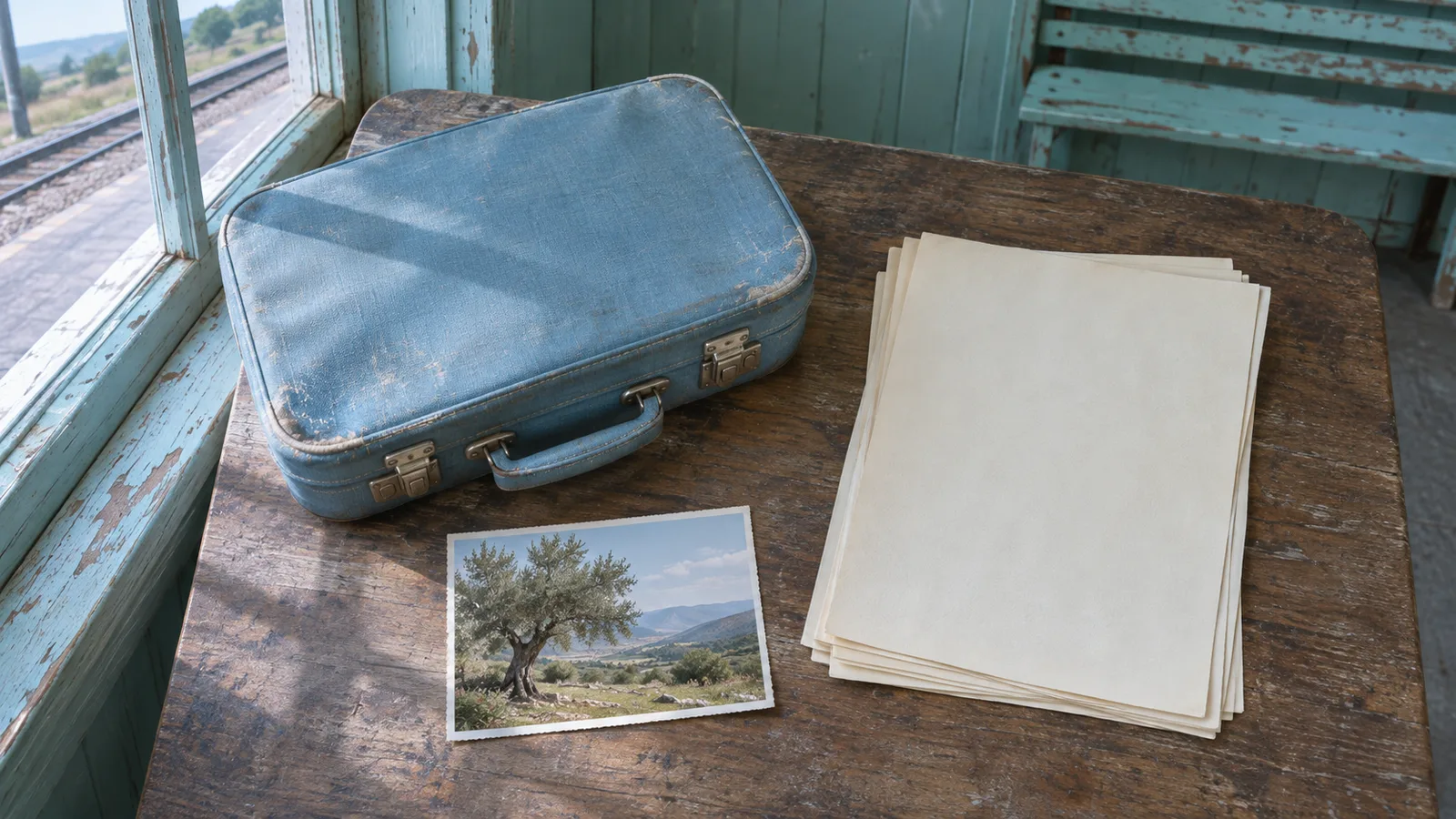
Try a simple opening: Nadia set the suitcase beside the bench. Ivo held out his hand, but she kept the photograph. The verbs establish a past baseline while the withheld object creates a present reading question. Nothing requires a slow explanation of everything Nadia eventually learned. Let action, resistance and consequences do their work. If the paragraph feels distant, examine its vague nouns, repetitive explanation or lack of a concrete objective before blaming the tense. Replacing set with sets will not repair a scene whose characters have no reason to respond.
Past narration gives you several ways to describe duration and background. Nadia was waiting is not interchangeable with Nadia waited in every context: one may place us within an ongoing interval, while the other can present it as a bounded event. Choose the relationship your scene needs rather than making every sentence mechanically identical. You can compress an uneventful interval and slow down an important reply in either baseline. Read the complete paragraph aloud. Does its attention fall on her hesitation and his response, or on an inventory of actions that matter equally little?
Use present tense deliberately, not as a speed setting
Now tell the same opening with a present baseline: Nadia sets the suitcase beside the bench. Ivo holds out his hand, but she keeps the photograph. The reader encounters her decision through a different verbal arrangement, but the event has not become more consequential by itself. You still control selection, sentence length, summary and pauses. Do not add a platform announcement or a new threat merely to make this version exciting. If you change the pressure as well as the tense, you will not know what produced the difference you prefer.
Brazilian novelist Luiz Antonio de Assis Brasil argues in Rascunho that sustained present narration can become monotonous and advises beginners toward the past. That is an author’s craft position, in Portuguese, not a universal ban or a measured prediction of reader response. Use the concern as a question for your page: have you fallen into one repeated sentence pattern? Vary emphasis where the scene requires it. Present tense can include description, reflection and compression; it need not become a running list of movements. Decide from your prose rather than an assumed fashion.
Place earlier discoveries and later possibilities clearly
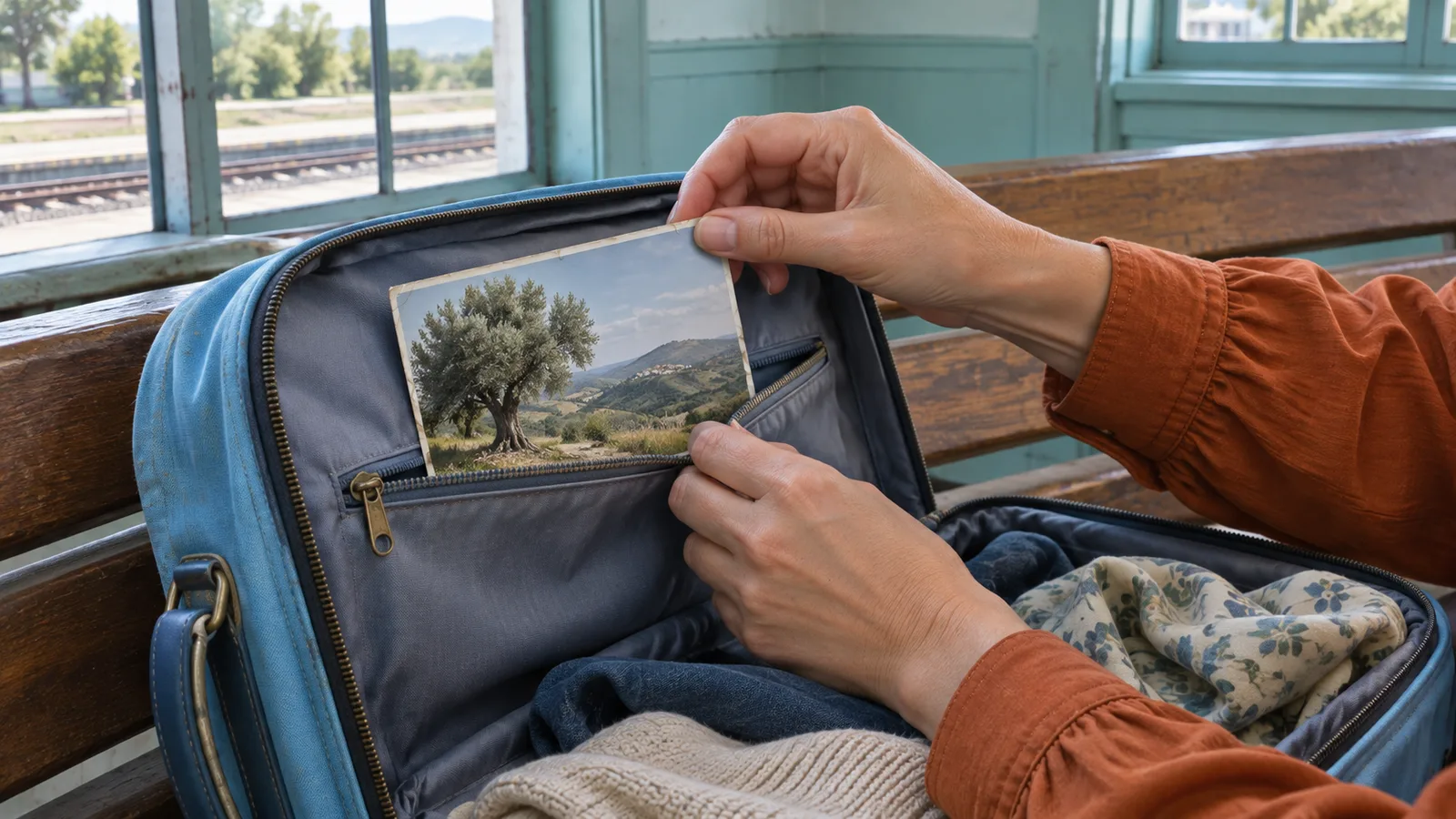
In a past-tense version, a sentence such as Nadia had found the photograph before she reached the station places the discovery before the meeting. Once an extended earlier scene is clearly established, its local wording may become simpler, provided the entry and return remain intelligible. You do not need to put every sentence of a long recollection into the same heavy construction. For our brief experiment, one clear reference is enough. The discovery matters because it changes what Nadia wants to ask now, not because every detail of opening the pocket needs its own scene.
Purdue OWL’s English grammar guidance distinguishes needless tense changes from changes that express a different time frame. Apply that distinction, not a rule that every verb must match. In a present-baseline version, Nadia found it that morning can identify a completed earlier event. Ivo may leave soon expresses a possibility, not proof that he has already left. Quoted speech can refer to yesterday or tomorrow while the surrounding narration stays in its own baseline. Read the time words and the verbs together. Correcting only one can leave an apparently tidy but misleading chronology.
Separate tense from viewpoint and narrative distance
Changing I carried to she carries alters two choices: grammatical person and tense. Adding what Ivo secretly remembers changes access to information as well. Keep those decisions separate if you want a meaningful comparison. In our trial, Nadia can notice his outstretched hand, remember finding the photograph and wonder whether to ask. She cannot know his unspoken explanation merely because one version sounds more intimate. Write down what she knows before comparing the drafts. A shift into another person’s mind is not a tense correction and needs its own narrative justification.
Distance also comes from vocabulary, perception and explanation. Nadia could hold the photograph in either tense while the narration stays close to the pressure of her choice. Conversely, a broad summary can sound remote in present tense. If you like one draft better, identify the actual passage that creates that effect. Perhaps it contains a more specific observation, not a superior tense. Keep that useful observation when testing the other version. Otherwise, you may choose a whole-book baseline to solve a paragraph-level problem that could have been revised independently.
Give intentional shifts a readable boundary
A novel can use more than one temporal arrangement. A clearly separated later account might comment on an earlier meeting; a framed document might have its own date and voice. The reader needs evidence of the change, not just your private explanation that it was intentional. Consider a section break, an opening time cue or an established pattern. Do not introduce all three automatically. Choose the smallest signal that makes the relationship clear and preserves the experience you want. A new paragraph alone does not always announce a different narrative present.
Distinguish a sustained shift from ordinary variation inside a stable scene. A remembered action, a prediction, a conditional possibility and direct dialogue may all require different verb forms. They do not necessarily create a new baseline. Mark a doubtful sentence with a question: what time does this refer to, and from whose position? Then check the sentences before and after it. If you cannot explain the relation without adding a paragraph of commentary, the passage probably needs clearer wording or a more deliberate boundary. Keep the sophisticated version only if it remains readable.
Test past vs present tense on one complete passage
Choose a passage long enough to contain action, background and a response. Save the original, then rewrite it with the other baseline while keeping event order, viewpoint and character knowledge unchanged. Check pronouns, temporal expressions, reported thoughts and anticipated actions, not only the main verbs. Read each version without looking at the other. Note where you understood the photograph’s discovery, where you expected a reply and where a sentence made you reread. This is a proposed practice exercise, not a claim that one tense wins an objective scoring contest.
Ask a reader to describe the event order before asking which version they prefer. Preference and clarity are different kinds of feedback. If they think Nadia found the photograph after entering the waiting room, locate the wording that created that impression. If both versions are clear, compare the narrative stance you can sustain across a chapter, including its quieter stretches. A lively opening is not enough evidence for a global conversion. You may also choose to keep the original. The experiment succeeds when it explains your choice, not only when it changes it.
Revise relationships before converting a manuscript
For a larger draft, check one scene at a time. Mark the baseline, earlier references, expectations, dialogue and any later narrator commentary. Resolve uncertain event order before changing verb forms. Keep the earlier manuscript so you can compare decisions and recover wording. A global replacement cannot reliably distinguish a dialogue line from narration or an intentional memory from an error. After revision, read a scene boundary and its neighboring paragraphs together. The return from earlier time should restore the current pressure, not leave Nadia indefinitely opening the same pocket in the reader’s mind.
The exercise needs no app. If you already draft with Fyrlo, keep the premise and character context fixed, compare a bounded passage with only the tense changed, select the wording yourself and update your manual accepted notes before continuing chapter by chapter. No automatic manuscript converter or tense audit is promised. Fyrlo is a planning and drafting aid, not a guarantee of coherence, quality, facts, originality, rights, publication readiness or sales. It is free to download and includes some usage, not unlimited free generation. Whatever tool you use, end by checking the complete text as a reader.