Very short fiction
Flash fiction writing: a free revision exercise
Keep a whole story inside a small space: one bounded change, telling details and enough room for a reader to infer the rest.
Flash fiction writing is not simply cutting a longer story until it fits a small box. You can remove half the words and still have a synopsis, a joke or the opening of a novel. This free exercise asks a different question: what changes inside this short work, and can a reader perceive that change without needing the missing chapter? You need paper, a draft and a willing reader, not a paid writing tool.
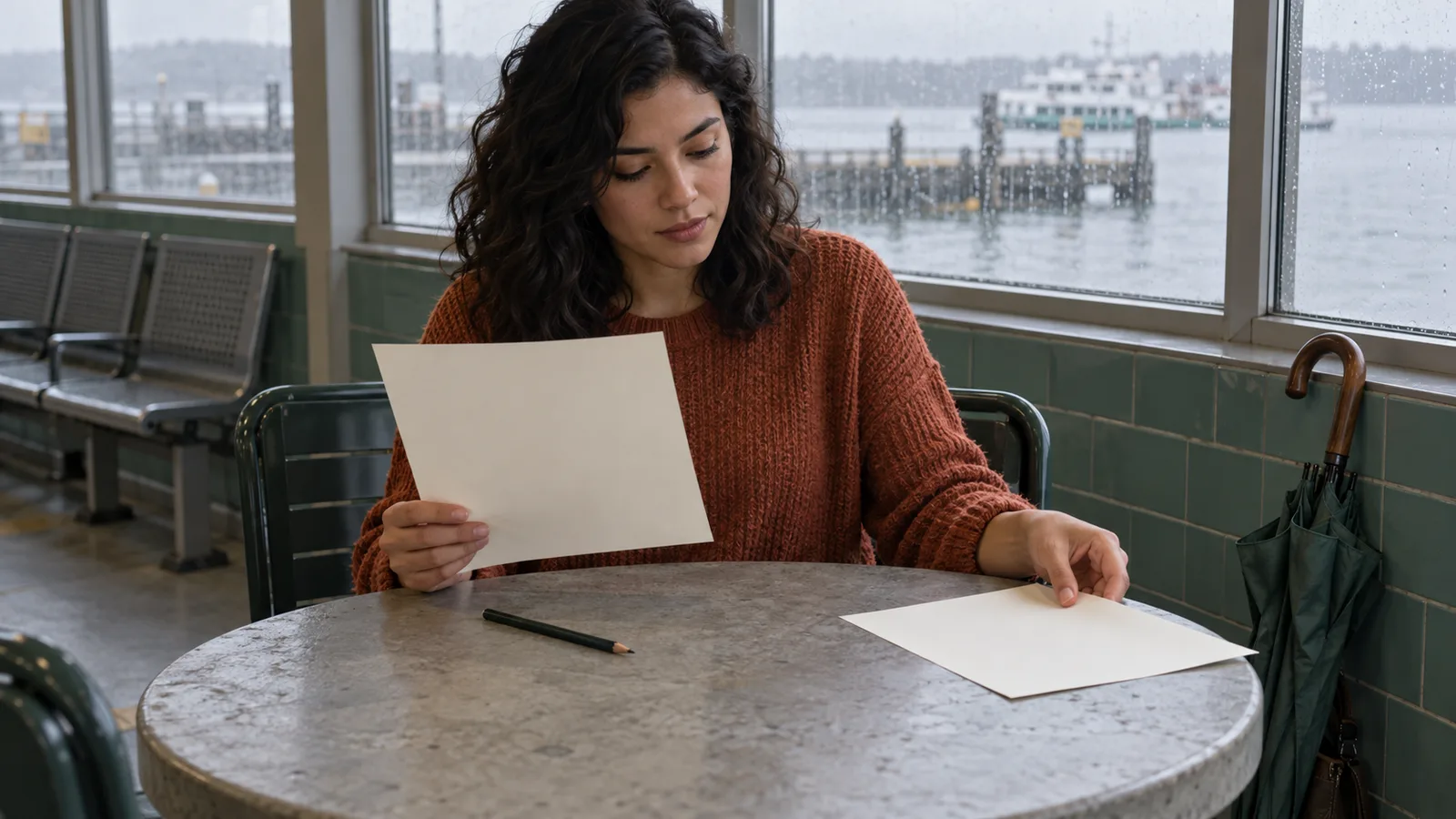
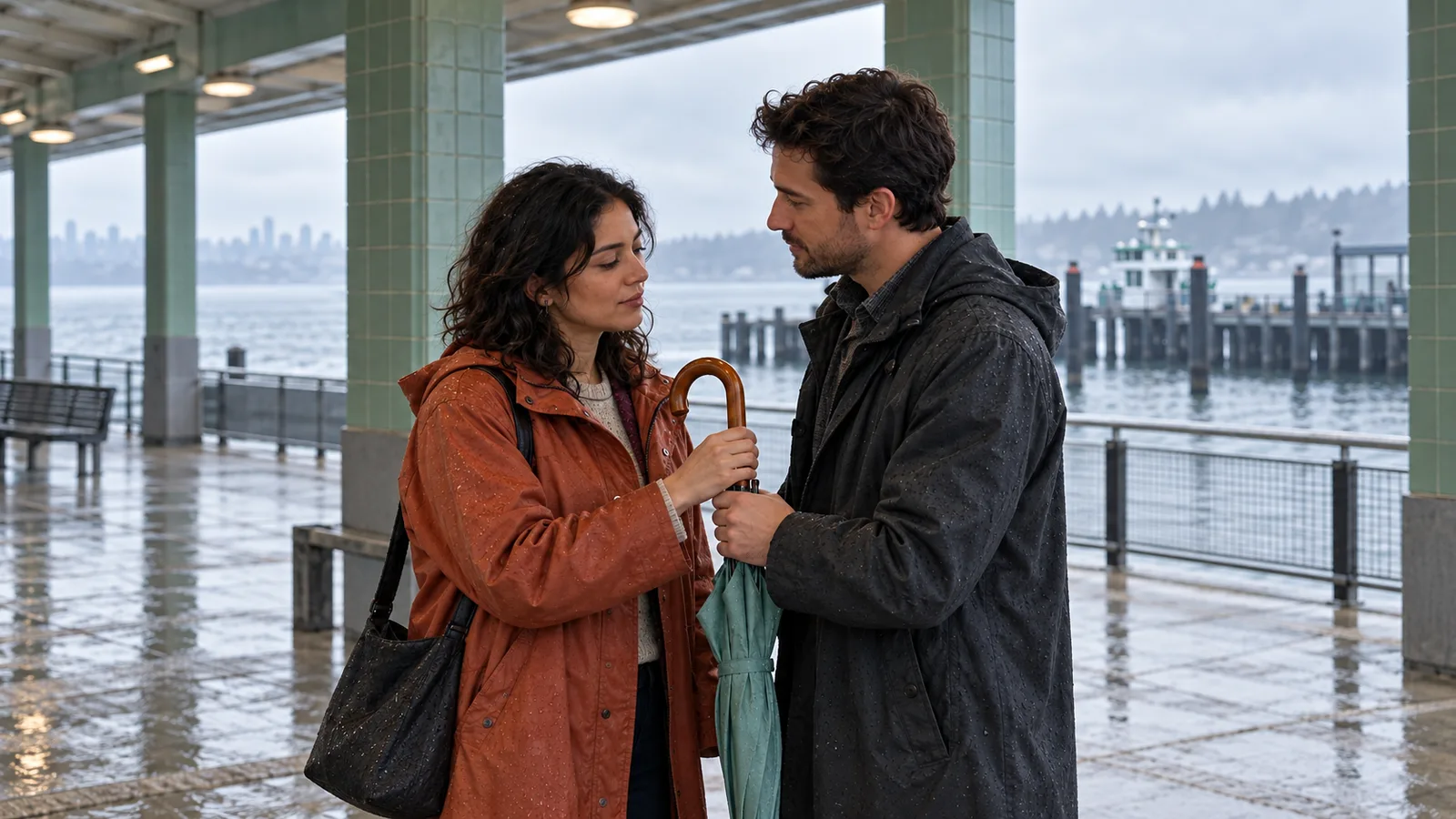
Our invented story follows two adults, Maya and Leo, at a ferry terminal. Maya has left their shared home. Leo brings an umbrella she forgot. Accepting a short walk together does not mean agreeing to return. That small distinction gives us a complete movement to revise. We will examine scope, detail, omission, title and the last gesture, while leaving the people’s larger history unresolved. This is one practical approach, not a universal template for every very short form.
Flash fiction writing needs a workable scale, not a universal number
Publishers and exercises use different word or character limits. Check the actual rules of your intended venue, including whether the title counts, rather than assuming every definition is identical. For this practice, choose a small limit you can comfortably reread in one sitting. The constraint is a way to notice decisions, not evidence that a shorter text is automatically better. You can begin with a loose paragraph and discover the right scale while revising. Do not submit to a competition on the assumption that an informal exercise follows its requirements.
Give the piece a bounded change you can recognize. At the start, Maya intends to leave without sharing any time with Leo; at the end, she permits a walk while maintaining her decision to leave. The whole relationship is not repaired. Holly Lyn Walrath’s craft essay at Cotton Xenomorph offers a useful distinction: a short work can feel whole without following a conventional sequence. Our exercise uses a visible change because it is easy to test, not because every successful flash must obey the same arc. Keep that difference between a working method and a genre law clear.
Draft the small encounter before explaining the whole life
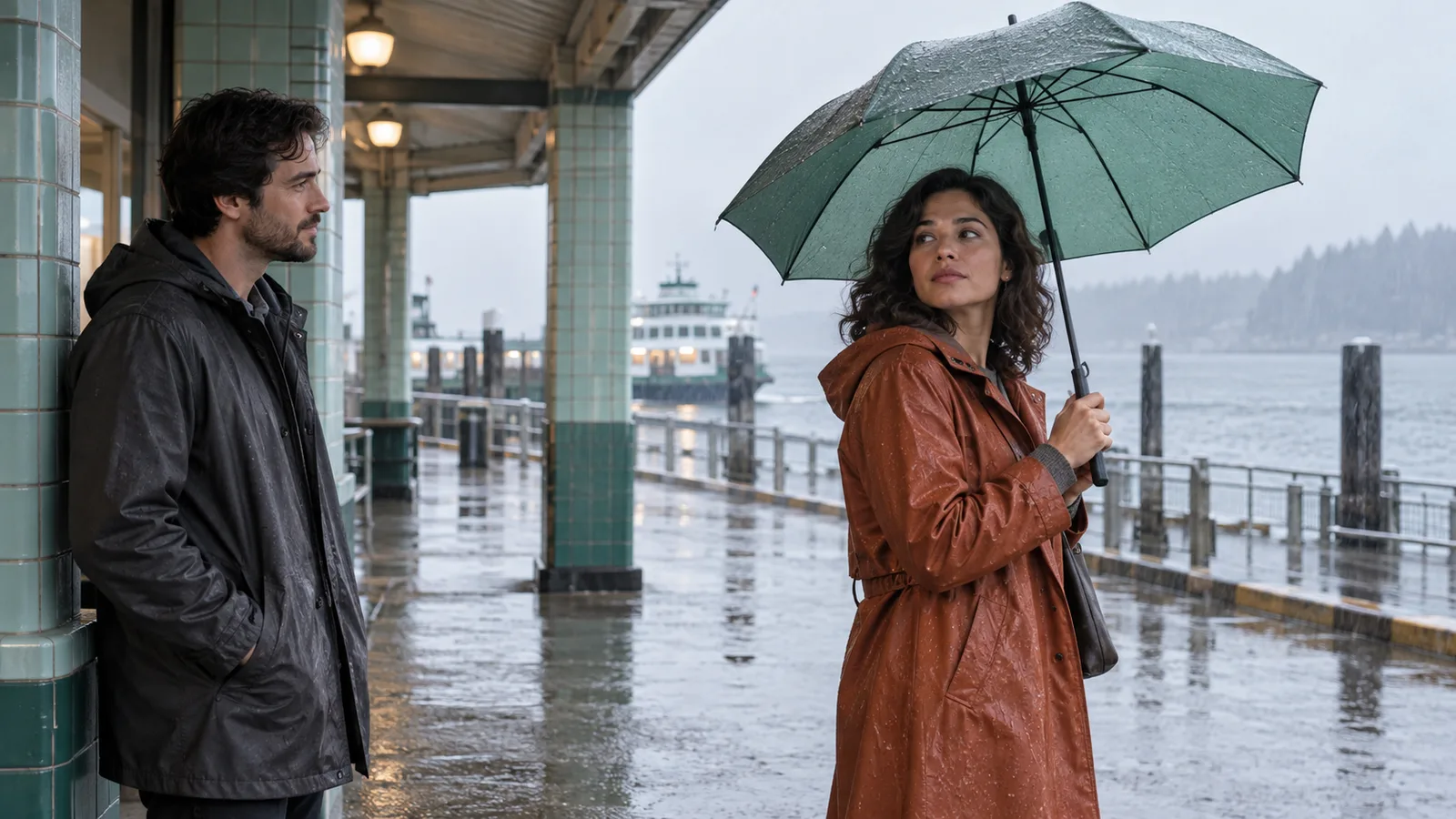
Here is our deliberately plain starting draft: Maya had already bought a ticket for the last ferry when Leo arrived with her umbrella. Six months since she left, and he had repaired its crooked handle. “You forgot this,” he said. She almost told him what he had forgotten. Rain blew under the awning. She took the sea-green umbrella and opened it beyond the shelter. There was space for two. Leo stayed dry by the wall. “I’m not coming home,” she said. “But you can walk with me to the gate.” He stepped out. She kept the handle.
Do not judge the paragraph by how many imagined events it contains. Ask what readers can see happening now: an arrival, a returned object, a held-back response and a limited invitation. Those events create movement. Adding a childhood history, a breakup explanation and the whole ferry journey might produce a different story, but it would blur this exercise’s center. Mark the sentence where the relationship changes locally. If you cannot locate one, revise the encounter before polishing adjectives. A compact story still needs something more specific to do than announce that its characters have complicated lives.

Keep details that perform more than one job
The umbrella is not valuable because green is an emotionally meaningful color by itself. It gives Leo a reason to approach, shows that he noticed something needing repair and creates a physical space the pair might share. The last ferry makes the meeting temporary. The repaired handle suggests an action during separation without proving that Leo has changed in every other respect. Keep the inference proportionate to the evidence. A useful detail opens possibilities; it should not secretly certify a character’s goodness or settle an entire relationship for the reader.
Test each descriptive addition against the present action. Wet concrete may establish weather and make the umbrella necessary. A long account of the terminal’s architecture probably does less unless access or shelter matters. Do not strip away every sensory element to save words: the result can become abstract and harder to understand. Our scene-writing guide helps distinguish an event from a general statement about life. In this shorter exercise, the same test applies at sentence level. Keep the particular detail that makes the choice readable, then remove another sentence that merely explains the meaning you have already made visible.
Omit history, not the evidence needed to follow the action
Readers do not need to learn every reason Maya left, but they need enough orientation to understand that the invitation is limited. “I’m not coming home” supplies that boundary. Removing it could turn the final walk into an apparent reconciliation. You might want that ambiguity in another story; here it changes the intended movement. Separate a productive question, such as whether they can remain in contact, from a basic confusion, such as who has left whom or whether the umbrella belongs to either person. Brevity is not an excuse to make every reference impossible to resolve.
Renata Chaves de Carvalho’s Portuguese-language school workshop for Instituto Claro invites readers to build meaning from a brief narrative. We use that idea here with original adult characters, not the workshop’s examples. Ask a reader what they inferred and which words supported it. Do not correct them with facts that exist only in your notes. If their reading is plausible but different, decide whether to keep the openness. If nobody can follow a required connection, restore a concrete clue. This test protects implication without confusing it with the author’s private knowledge of an unwritten backstory.
Let the title change the reading without doing all the work
Write three private title options after drafting. For our piece, consider “Returned,” “To the Gate” and “Under One Umbrella.” Each directs attention differently: the object’s return, the limited distance or the shared shelter. None needs to announce “a story about learning to forgive.” That explanation would narrow the movement and imply more resolution than the paragraph earns. Read each title with the whole draft. Notice whether it enriches an existing detail or inserts information that the story otherwise gives readers no chance to discover. Choose the effect you can support.
A title can contribute essential context when that is a deliberate choice, but check how much weight you put on it. If deleting the title makes every pronoun or action unintelligible, you may have removed too much from the prose. Conversely, a purely generic title can waste an opportunity in a very short work. Do not keep changing the title to rescue a paragraph whose action remains unclear. Stabilize the scene first, choose a title that works with it and reread the pair after a break. You are assessing one complete reading experience, not two unrelated pieces of packaging.
End with an earned gesture, not a compulsory surprise
“She kept the handle” lets Maya retain control of the shared walk. It relies on the umbrella being present and her boundary already spoken. Appending “and she finally understood the meaning of forgiveness” explains too much and resolves a question the paragraph has deliberately left open. A twist is possible in flash fiction, but it is not a requirement. Do not reveal on the last line that the entire meeting was a dream merely to manufacture impact. Ask whether a changed fact grows from earlier evidence or replaces the story with a new premise readers could not evaluate.
Compare the final gesture with a neutral report: “They walked to the gate together.” The report is clear but loses the small question of who directs the encounter. Neither sentence is universally correct. Choose according to the movement you have built, then examine whether the preceding line has already finished the piece. Try removing one explanatory sentence at a time, keeping a copy of the original. Our guide to whole-story endings provides a broader account of promises and resolution. For this miniature, limit the check to what this specific short text has actually asked readers to expect.

Revise in passes rather than cutting everything at once
First check the movement, then the reader’s necessary information, then the language. On a paper copy, mark sentences that perform an action, orient the reader or change an inference. A sentence may do several jobs. Look especially for two sentences doing the same one: “Maya was unsure whether to speak” may repeat the hesitation already visible in her almost-answer. Keep a version before each substantial cut. If the revised piece becomes clipped or cryptic, restore the missing connection rather than congratulating yourself on a smaller number. Compression should improve the reading, not merely the count.
If a focused comparison would genuinely help, you can optionally use Fyrlo. Establish the premise, the two characters and Maya’s unchanged decision to leave; keep that plot context together, compare one closing gesture and retain only the accepted wording before continuing any larger project chapter by chapter. Do not ask for an entire replacement story and assume it preserves your intention. The paper exercise remains complete without an app. Fyrlo is a planning and drafting aid, not a guarantee of quality, originality, factual accuracy, copyright status, publication readiness or success. Use invented material and review any output yourself.
Test the complete piece with a fresh reader
Give someone the title and text without your notes. Ask what happens, what changes and what remains uncertain. These questions are more useful than asking whether the piece is “deep.” If the reader sees an invitation without assuming a return home, the boundary has probably reached the page. If they see only two strangers discussing an umbrella, check whether you have cut the separation cue. Avoid making the reader guess the exact biography you invented. Their interpretation needs support in the text, not perfect agreement with every detail you privately imagined before drafting.
Set the piece aside, then read it aloud at an ordinary pace. Check names, referents, tense and the practical handling of the umbrella. A beautiful line can still make the object vanish between sentences. When the draft feels whole at its chosen scale, stop adding explanations to answer every possible question. Keep your working versions, choose the title and verify any venue’s current submission rules separately. This free practice has a modest finish line: a reader can follow a small change, notice the evidence that supports it and continue thinking beyond the final gesture. More words are useful only when they make that experience clearer.