
Character voice
Writing an interior monologue: a free exercise
Give a character a private decision, then compare two thoughts without changing the spoken line.
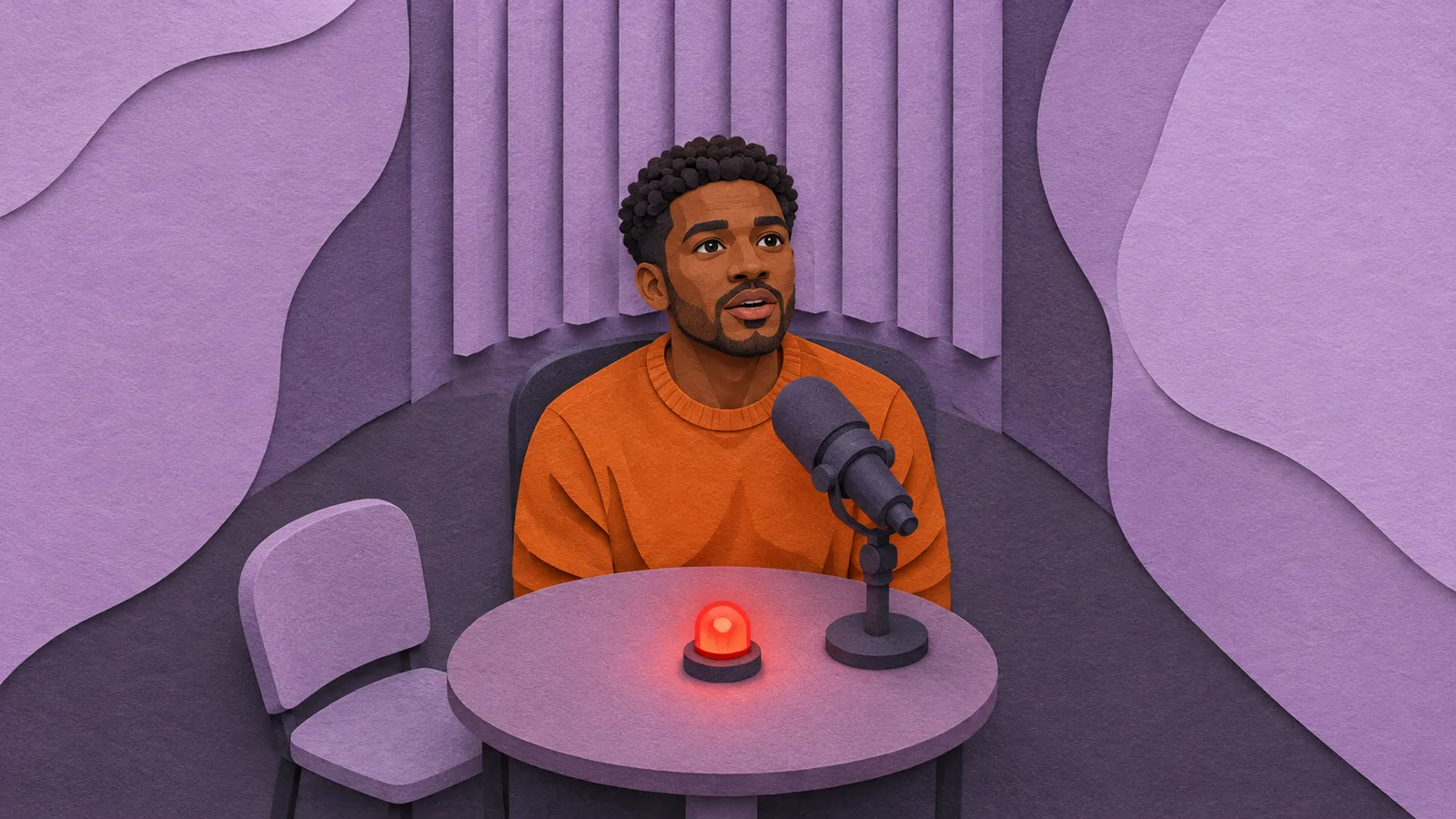
An interior monologue puts the reader inside a character's unfinished thinking. It can make a small decision feel substantial without adding an explanation after every line of dialogue. The hard part is choosing thoughts the character would have now, in their own language, rather than thoughts that serve as notes from the author. Start with a free exercise on paper. Then, if it helps, use Fyrlo to compare two drafts without changing the events around the thought.
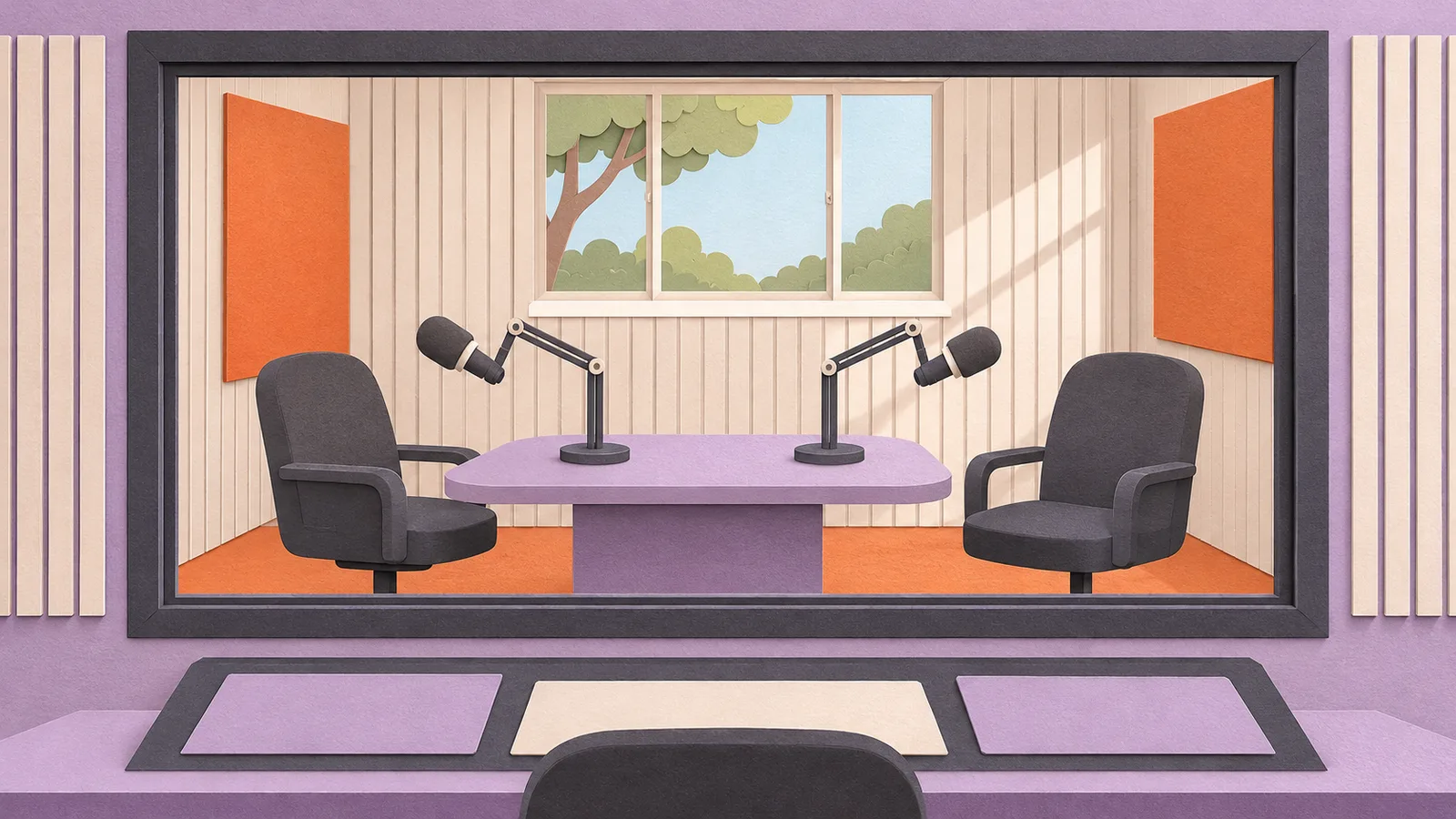
Our invented example takes place in a community radio station. Ari has promised his cohost, Sami, that he will wait to introduce their recorded interview. The producer gives the cue. Sami's chair is still empty. Ari has a safe line ready: “Let's listen to the recording.” The line stays the same in both versions. What can change is the private meaning of saying it.
Give the interior monologue an interruption
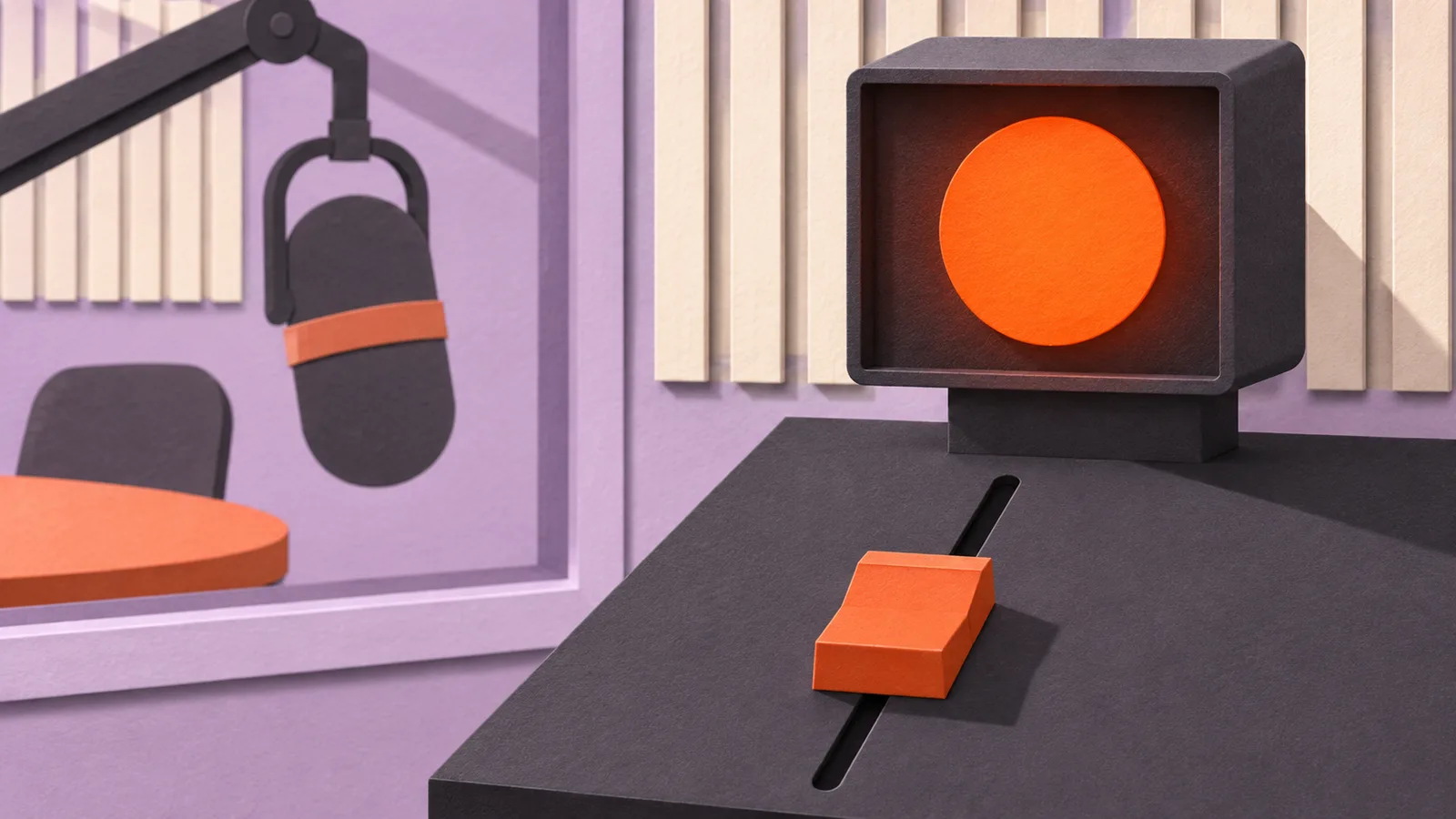
Think of a specific outside event that makes the character's previous plan harder to follow. Ari can wait agreeably until the cue lamp comes on. At that point continuing to wait itself becomes an action. He could speak, let the booth stay silent or look to the producer. You already have a playable predicament before writing a single thought. Choose the object or sound that tells Ari he can no longer put off deciding. Here it is the little lamp, not a long description of the room or a memory of how he first learned to operate the controls.
The Open University's creative-writing glossary treats interior monologue as direct access to a particular character's thinking. Test that description against your own draft. “Ari experienced conflict between loyalty and ambition” might help on an outline, but nobody need think that sentence in a booth. An immediate thought could be, “Leave room for his voice. Two seconds more.” It isn't a full theory of Ari. It sounds like something he could tell himself under time pressure, and it gives us a next action to watch for.
Set apart facts, inferences and promises
Divide a sheet into three columns. In the first, write facts Ari has witnessed: the lamp is on, Sami's chair is empty, the producer is visible through the glass. In the second, write things he might infer: the producer is irritated, the audience can tell someone is missing. In the third, write commitments already established in the draft: he promised to wait for Sami before introducing the interview. Keeping the columns separate prevents a vivid thought from turning into knowledge he has no way to possess.
Go back to the previous chapter and underline the actual sentence where the promise was made. If you can't find it, decide whether the reader needs to see it before the broadcast. You might show Ari setting aside a chair and saying he won't start early, or let him remember one short line when the light comes on. Resist the temptation to use his thoughts to deliver a full history of the friendship. The promise only needs enough history to make breaking or keeping it matter. Leave Sami's reason for being late unknown.
Try the free exercise before choosing a tool
Write four sentences under the first version. Give Ari one concrete observation, one private interpretation, one self-directed instruction and one small physical response. For example: “Sami's headphones are still there. They're going to think I forgot him. Keep it to the recording. Ari ran a thumb along the edge of the card.” Read those sentences aloud. If they sound like a briefing addressed to an audience, shorten the instruction or change its vocabulary. Ari might think in seconds and cues because he has spent evenings in this booth.
For a second version, keep the entrance, physical action and spoken line, but change one assumption about the silence. What if Ari believes the listeners haven't noticed anything wrong? “Nobody has heard a mistake yet. Don't explain one.” The new thought changes what the reader understands about Ari, not what anyone else actually knows. You can do the exercise without an account or a tool. Fyrlo is free to download and includes some usage; optional purchases and limits may apply. The exercise does not depend on having a particular amount of app usage.
Keep a small, editable book plan in Fyrlo
If you want to compare drafts with assistance, choose the Book format and enter a premise that can be contradicted by a scene: two volunteers have promised to introduce a recorded interview together, and one is missing when the producer cues the introduction. Place the promise in the previous chapter, the cue in this chapter and the first conversation after the broadcast in the next. Use the editable chapter plan and the plot and character information to keep Ari's access to facts separate from Sami's. Don't fill the missing reason in just to make the plan look complete.
For Ari's character notes, add one sentence about what he is trying to protect and a few concrete words he would use: cue, gap, chair, playback. For Sami, record the promise and leave his motives unconfirmed from Ari's viewpoint. Give the station a few stable facts, not a replicated operating manual. If the app suggests a public feud or a confession you didn't ask for, it is proposing a different story. The practical outline guide linked here can help you place the promise and its fallout before you draft more prose.
Change what Ari assumes, not the scene
Keep a copy of the accepted premise and chapter brief. In both Fyrlo drafting attempts, ask for only the beat between the lamp and the line introducing the recording. Keep the point of view, elapsed time, mic position, empty chair, action and spoken words fixed. In version A, Ari assumes the silence sounds like a public mistake. In version B, he assumes the audience hasn't noticed. Ask the assistant not to add facts about the audience or Sami. Compare the two sketches yourself; this doesn't require a branching feature or automatic version management.
Underline only the phrases that express the interpretation. If a sketch makes Ari check his phone, gives Sami a reason for being late or adds a second promise, don't judge the resulting scene as though it isolated your test. Drop the new material or return to the shorter brief. Read the thoughts again with the unchanged public line. In one version it may sound like damage control; in the other, like restraint. The better result is the one that prepares the next choice you actually want Ari to face, not the one that sounds more profound in isolation.

Choose how the reader hears the thought
A character can think in direct words even if the surrounding scene is in third person. A direct fragment might read, “Don't explain a mistake they haven't heard.” A closer third-person passage can let Ari's judgment color the narration: “Nobody listening at home had heard a mistake yet. Why supply one?” A more distant report simply says Ari assumed the listeners hadn't noticed. These aren't three ways to decorate the same sentence. They offer different access to the moment and put different weight on Ari's own phrasing.
There isn't one universal rule for italics. Follow a consistent convention for your manuscript and make the shift legible through context, not typography alone. As a practical test, remove the formatting and read a paragraph to someone without explaining who is thinking. If they mistake it for spoken dialogue or switch to the producer's perspective, clarify the action immediately before it. A small sensory cue can help: the monitor goes quiet, Ari leans closer, then the thought arrives. Don't give the cue a second explanatory sentence if it's already clear.
Carry the accepted version into the following chapter
After you choose, note what actually happened and what remains private. Ari played the recording; Sami didn't hear the thought; Ari still doesn't know why Sami wasn't there. If you picked the second assumption, don't turn it into a fact about listeners. The distinction gives you a useful chapter opening: Sami arrives later and asks what Ari said. Ari now has to decide whether to repeat only the public line or admit what he was afraid of. A short list of knowledge and decisions is more useful context than a summary of the entire draft.
Use the accepted notes in Fyrlo to draft the next chapter and compare its first page with the page you just finished. Reject any draft that has Sami reacting to words Ari never said. Then update the editable plan only with the details you keep. The linked character-arc exercise can help if you want later choices to test the same habit without replaying the radio scene. Fyrlo helps plan and draft, but it doesn't guarantee continuity, originality, accuracy, rights clearance or publication readiness. Your own reading and revision decide what stays.
Give the thought an endpoint in the room
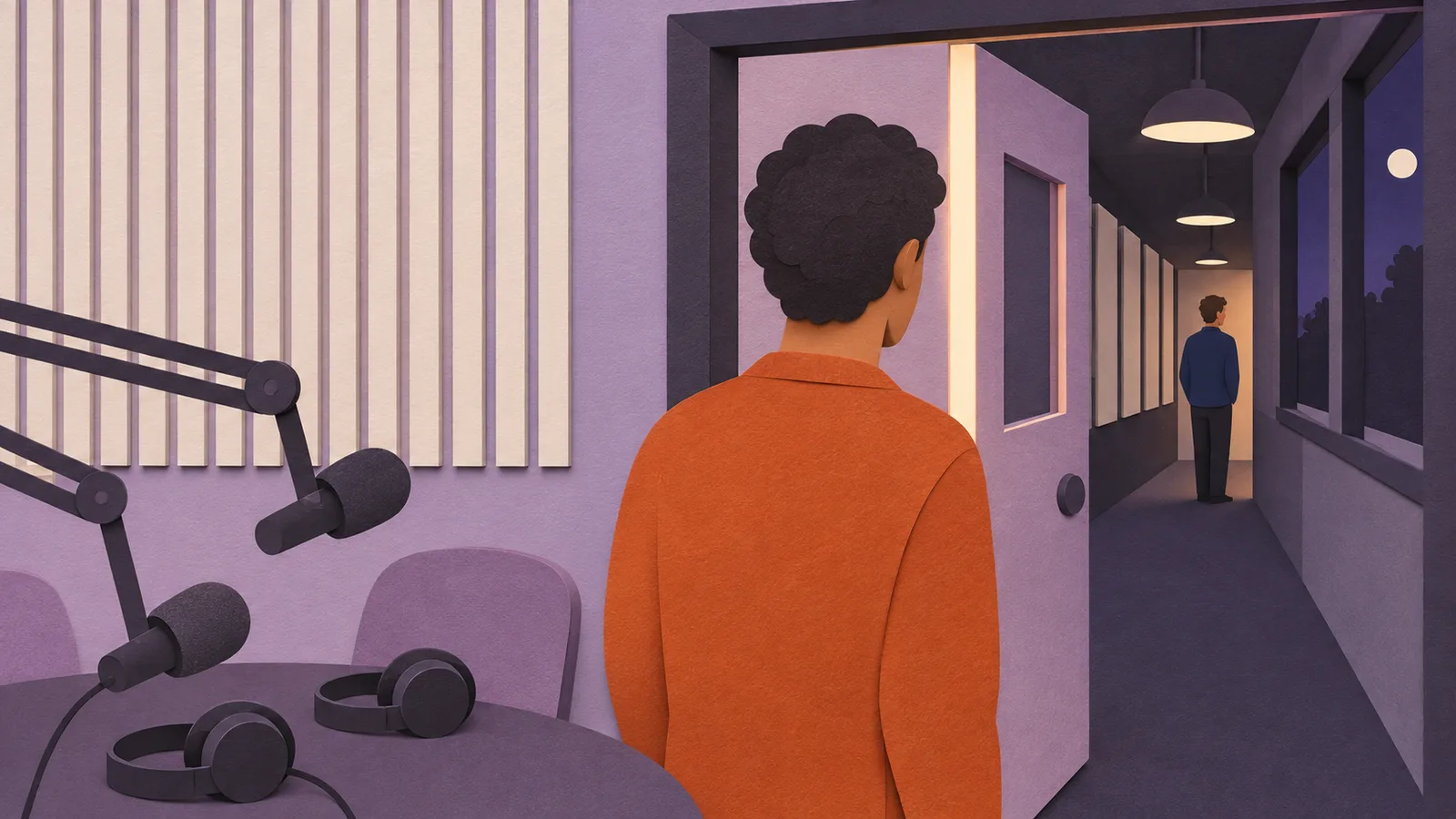
On a revision pass, put a mark at the moment the thought leads to a visible action. If the lamp prompts a memory, and the memory leads to a second memory, ask where the reader last had a reason to care about the live cue. You can keep an associative passage when the story benefits from it. In this exercise the useful endpoint is a public line that can mean two different things, so a return to breath, microphone and sound will often do more than another inward explanation.
Try removing the final thought sentence. If Ari's gesture and next line say enough, leave it out. If the remaining beat could equally belong to somebody who didn't make the promise, bring back one word or a sharper image that belongs to him. Now read the first two lines of the next chapter. They should not tell us again what we already heard in the booth. They should make the private decision encounter somebody who could not know it.