Revision with AI
Reverse outline with AI: follow the manuscript evidence
Find the story you actually drafted before deciding what to change. Build a scene record, check its claims and revise one dependency.

A reverse outline with AI is useful only if it describes the draft you have, not the stronger story you hoped to write. You finish a chapter, remember the intention behind it, and later discover that an essential decision never reached the page. A confident summary can hide that gap by supplying a plausible connection. Begin instead with a short scene record tied to the actual manuscript. Then use the record to decide whether anything needs changing. The outline is evidence for your judgment, not an automatic verdict on the novel.
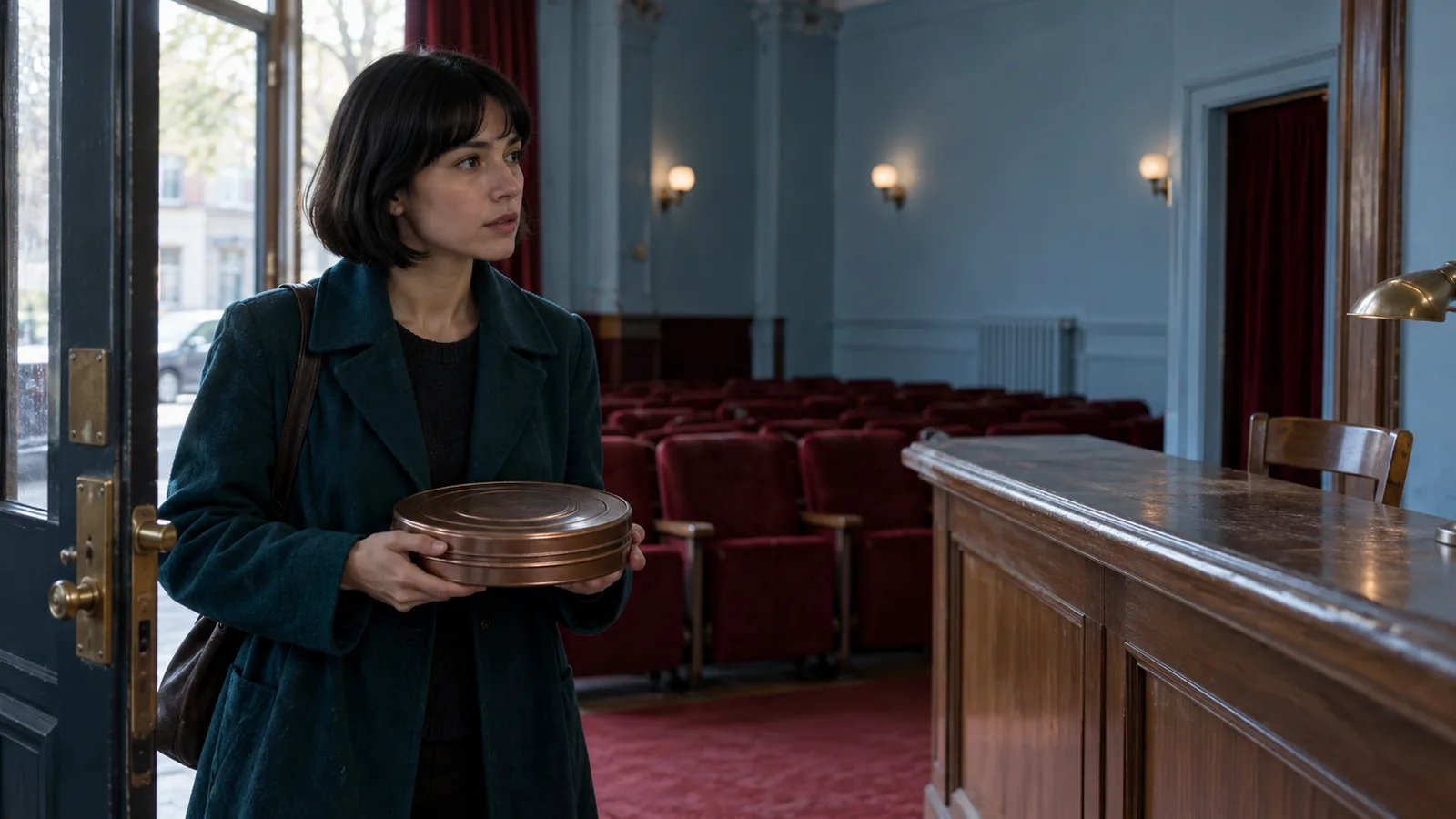
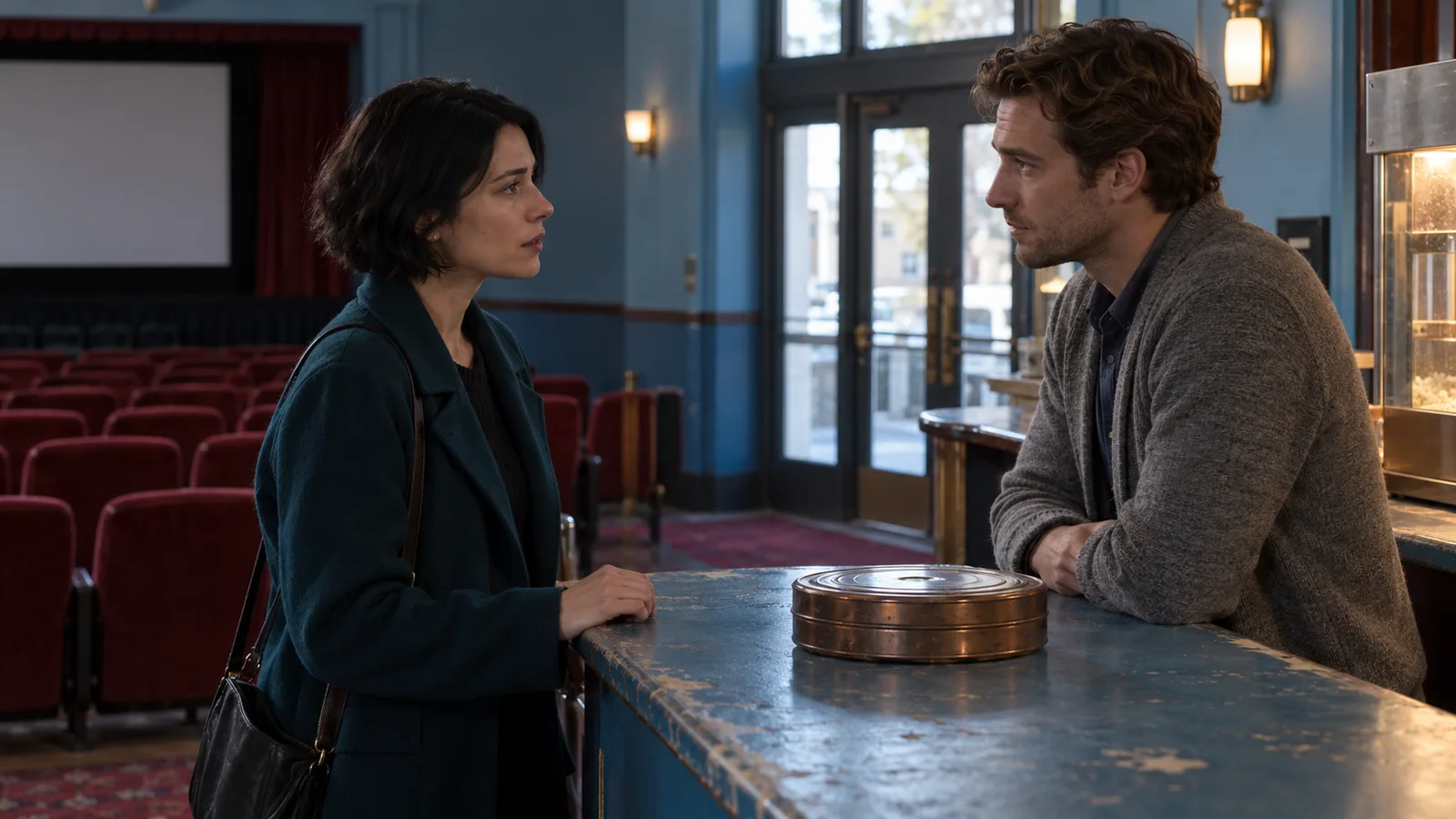
Our invented example follows Ada, who is arranging a final screening at a small cinema, and Leon, who lent its film canister. A delivery occurs in one scene; Ada announces that the evening can proceed in another. The draft never establishes that Leon authorized a public screening. We will locate that missing dependency, compare two possible placements for a permission conversation, and continue from the version the author accepts. Fyrlo can support planning and drafting around this exercise. Do not assume it has a manuscript importer, a reverse-outline button or a reliable record of every fact you have ever supplied.
A reverse outline with AI starts after the scene exists
A forward outline proposes what might happen. A reverse outline records what currently happens. Save them separately so a planned reconciliation cannot quietly become an event that the reader has supposedly witnessed. Work from a dated copy of the draft, with stable chapter and scene identifiers. If chapter numbers change later, keep a small correspondence note. Otherwise a useful observation about scene four can become difficult to locate after you move the opening. Start with three consecutive scenes rather than demanding an apparently comprehensive diagnosis of the entire book.
Purdue OWL explains reverse outlining through brief notes about a paragraph’s subject and contribution to a larger argument. That is an academic exercise, not a prescribed structure for fiction. Here we adapt the distinction: what happens in the scene, and what difference does it make to this story? A quiet conversation, an associative passage or an unresolved encounter may matter without producing a spectacular reversal. If you need a plan for an unwritten novel instead, use the separate planning guide. Do not treat this retrospective record as a replacement for exploratory writing.
Write a scene entry that another reader can check
For each scene, record its identifier, viewpoint, immediate situation, observable action and ending condition. Add one short evidence reference to a paragraph or distinctive phrase in your private manuscript. Keep quoted material in your working notes rather than publishing a collaborator’s text. In the cinema example, the first entry says that Ada receives a closed canister from a courier. It does not say that Leon grants permission. Delivery and authorization are different events, even if the author had always imagined them arriving together. A useful record preserves that uncomfortable difference.
Also mark uncertainty explicitly. Perhaps Ada believes that an earlier conversation covered the screening, but the scene contains only her recollection. Record it as Ada’s belief, not as an established agreement between both characters. Give an absent fact a plain label such as not shown in this extract. Avoid replacing it with a guess about a missing chapter. The next person reading the entry should be able to distinguish what is visible, what a viewpoint character infers and what remains unknown. Concision helps, but accuracy matters more than making every row equally tidy.
Give Fyrlo a bounded task, not the whole editorial decision
Set out the project premise and relevant character context before asking for a comparison: Ada wants the last screening to happen; Leon wants control over the loan; neither has secretly agreed off the page. Supply only material you are entitled and willing to share. Remove private information, confidential contracts and identifying details that the exercise does not need. Keep your original manuscript outside the generated response. When using an available writing input, work with a short passage or your verified scene notes rather than assuming an unlimited document-processing capability.
A useful task is: describe only events supported by these notes; separate observation, character belief and uncertainty; do not add motivations, permissions or scenes. Ask for concise candidate entries, then read them against your draft yourself. If the current interface cannot take the passage you need, make the record manually and use the accepted notes to guide subsequent drafting instead. Fyrlo supports planning and draft development; this method does not claim a dedicated analysis feature. For Book projects, its editable chapter plan can hold the selected direction, but that particular plan screen should not be promised for every format.
Reject the helpful invention before it becomes context
Suppose a candidate entry says that Leon approves the loan when the parcel arrives. Search the actual scene for that approval. If there is none, reject the claim even if it would neatly solve the plot. Do not quietly revise the manuscript to make the summary correct during this first pass. That would blur diagnosis and invention. Instead, write two separate notes: current draft, canister delivered; possible revision, establish screening terms. The second note can become a creative choice later, but it cannot serve as evidence about the first draft today.
Read for subtler substitutions too. A character’s silence is not necessarily consent; receiving an envelope is not necessarily reading it; preparing a projector does not establish a right to show a film. These are fictional story distinctions, not legal advice about screenings. Ask which sentence supports each claimed change in knowledge or agreement. Where an interpretation is genuinely ambiguous, preserve the ambiguity and explain its effect on the reading. A summary that admits uncertainty can be more useful than one that smoothly connects every event. You remain responsible for checking the final account.

Read dependencies, not just a list of happenings
Once the entries are verified, read them without the prose. Ask what each later scene requires the reader to know or believe. Ada’s announcement depends on permission, a deliberate misunderstanding or a conscious decision to proceed without agreement. The draft must support whichever version you choose. Mark the earliest scene where that dependency matters and the later scenes that would be affected by a repair. The aim is not to insist that every action have one simple cause. It is to expose important assumptions that the current narrative asks the reader to supply.
Novelist Chelsea Abdullah describes making a reverse outline while rereading a first draft, then using it to shape a new outline for revision. That distinction keeps the record of the existing book separate from the plan for its successor. Apply the same separation here. Give each issue a provisional action: investigate, retain, move or rewrite. Do not automatically cut two scenes because their short summaries sound alike. One may change trust while the other changes practical circumstances. Return to the full passages before deciding whether the apparent repetition is actually a problem.
Compare one change while holding the other facts steady
Choose a single variable for the next drafting exercise: when Ada asks Leon about the screening. Version A places the conversation before her announcement. Version B leaves the announcement first and makes her later question reveal the unsupported assumption. Keep the deadline, the loan, the characters’ aims and the eventual answer unchanged. Ask Fyrlo for a short candidate passage in each arrangement, not a rewritten novel. The comparison becomes readable because you know which difference you are testing. Adding a storm, another antagonist and a new backstory would make the result harder to assess.
Read both versions for consequences, not an abstract quality score. In A, the announcement may carry informed risk; in B, it may expose Ada’s avoidance. Which fits the character you have actually developed? Check the surrounding scenes for knowledge that the moved conversation now reveals too early. You can also reject both versions and write a third yourself. Do not retain attractive phrases at the cost of conflicting facts. Choose the arrangement that serves this book, then document the decision in ordinary language so future drafting does not accidentally combine the two alternatives.
Carry the accepted version into the next chapter
Keep a compact accepted-context note: which conversation occurs, what each person learns, what remains disputed and which scene identifier changed. Label rejected alternatives separately. Update the relevant plot and character notes; in a Book project, revise the editable chapter plan where needed. This is an author-maintained handoff, not a promise that generated text will remember everything automatically. Continue one chapter at a time with the selected context available. Compare the new scene with the evidence record before moving on, especially where someone acts on information they only recently received.
If Ada now asks permission earlier, the next chapter must not depend on her never having raised the question. If the announcement still comes first, Leon’s response may need to address that breach of trust. Note these consequences before polishing sentences. Save a new manuscript version and preserve the earlier one for comparison. After the changed chapter is drafted, rebuild its entry from the new prose rather than merely ticking off the planned repair. Our separate editing guide covers reviewing generated text more broadly; this pass has a narrower job, keeping the structural decision and its consequences consistent.
Finish with a testable revision, not a perfect-looking table
For one working session, choose three scenes, verify their entries and identify one dependency that deserves attention. Save the evidence record, the proposed change and the accepted-context note as distinct items. Then reread the relevant manuscript pages as a reader, without looking at the table. Can you follow what happened, who knows what and why the next encounter matters? A friend’s explanation can reveal a different interpretation, but it is not a universal measurement. If the sequence already works, retain it. Producing a revision plan does not create an obligation to rewrite.
Fyrlo is a planning and drafting aid, not a guarantee of quality, originality, factual accuracy, copyright status, publication readiness or commercial success. It is free to download and includes some usage; that does not mean every feature or unlimited generation is free. The same reverse-outline exercise can be completed with paper and the manuscript. Use assistance only where it makes a bounded task easier to inspect. At the end, Ada’s story may be unchanged or it may have a relocated conversation. Either outcome is useful when the choice follows the written evidence instead of an invented summary.