
Suspense writing
Free AI thriller story generator: build a ticking clock
Turn a deadline into believable pressure, control who knows what, and draft a suspense novel one checked chapter at a time.

A free AI thriller story generator can produce a chase quickly. Making the reader care about its outcome takes a more precise plan. If a deadline keeps moving, a witness knows things nobody told her, or every obstruction is another broken phone, polished sentences will not make the danger credible. Start with a pressure system the reader can understand, then use AI to explore how a person acts inside it.
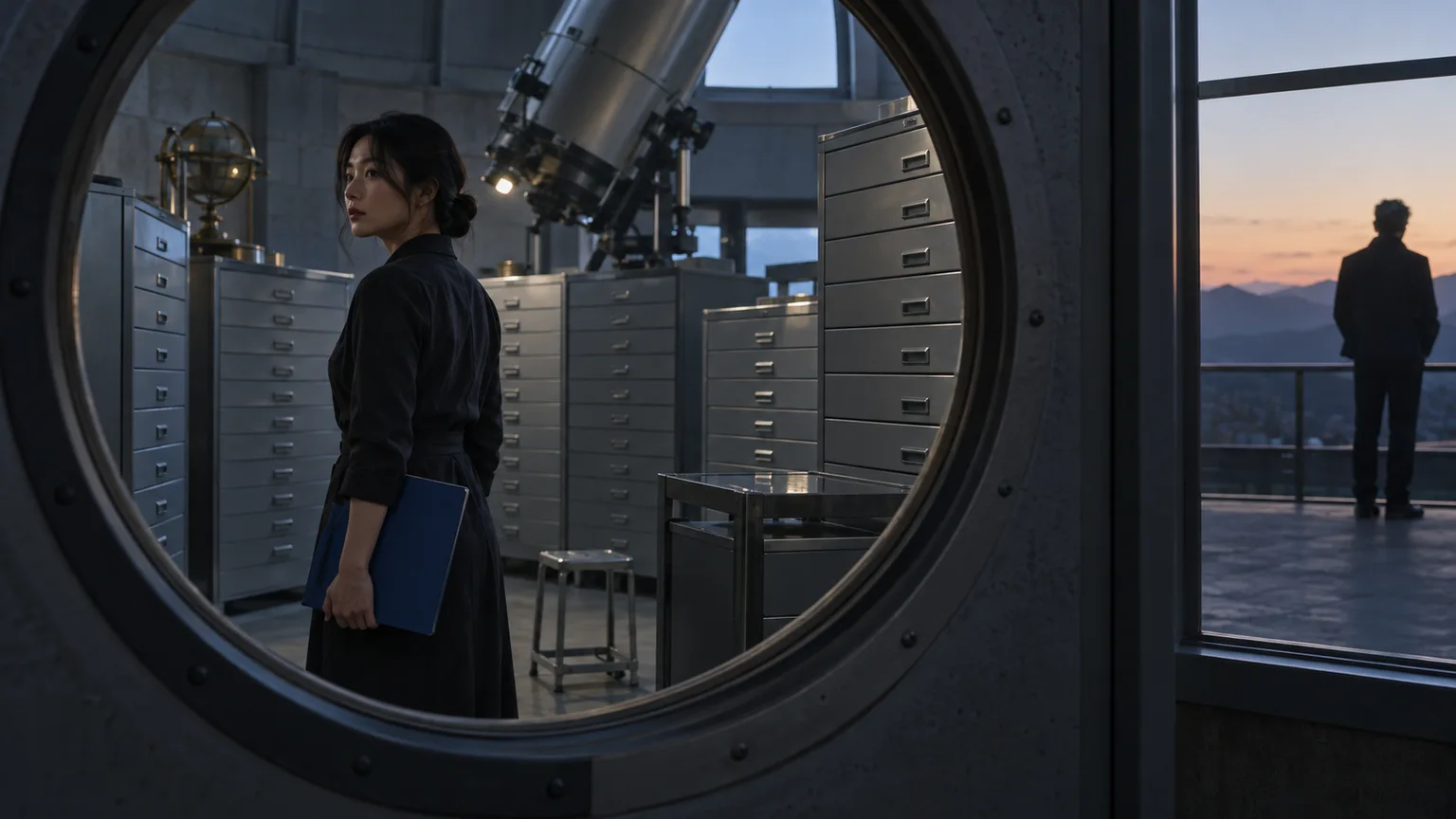
This workflow uses Fyrlo to develop an original fictional example: Ivo, an observatory technician, must persuade archivist Mei to confirm altered records before a public report wrongly blames his colleague at dawn. We will plan the clock, distribute information, compare one approach to the witness, and carry accepted consequences into subsequent chapters. Fyrlo is free to download and includes some usage; that does not mean every feature or unlimited generation is free. Check the current in-app allowance before drafting.
Give your free AI thriller story generator a pressure premise
Write the premise as person, necessary action, opposing pressure, deadline, and consequence. Ivo needs Mei's testimony, not merely a mysterious folder. His supervisor wants the disputed report released unchanged at six in the morning. If Ivo fails, an innocent colleague becomes the public explanation for a failed project. The stakes concern reputation and responsibility; this thriller does not need an expanding body count to maintain tension.
Separate the question of suspense from the question of mystery. A mystery may invite us to identify who altered the records. Here the reader can learn the supervisor's involvement early and still worry about whether Ivo will secure testimony in time. Knowing the source of a threat can increase anticipation. Decide which uncertainty drives this particular book instead of requesting a twist at the end of every chapter.
In Fyrlo, choose a Book, select thriller and a suitable tone and length in the creation flow, and describe this premise. Add focused character notes: Ivo wants to protect his colleague but previously stayed silent; Mei wants the record corrected but fears becoming the convenient scapegoat. A supervisor who genuinely believes disclosure will destroy valuable work is more useful than a villain labeled simply evil.
Set boundaries before generation. This is an invented observatory, not a factual account of scientific procedures. Specify no new crimes, secret relatives, or miraculous technical solutions unless deliberately planned. The app can help draft alternatives within your brief, but you remain responsible for originality, factual checks, and whether the characters' decisions deserve belief.
Make the clock change options, not just chapter headings
A ticking clock works when time removes an available action. At three, Ivo can obtain Mei's account privately. At four, the supervisor starts gathering the staff, making a quiet conversation harder. At five, the visiting auditor prepares to leave. At six, the report is released. Each threshold should change access, privacy, or the cost of disclosure; repeating that dawn is approaching does not create four different turns.
Give the deadline a reason established before it becomes convenient. The report's scheduled release and the auditor's departure were arranged earlier, not invented when Ivo needed trouble. Failure need not erase the truth forever. A correction tomorrow remains possible, but the colleague will already have been publicly blamed. This narrower consequence is more credible than claiming that one missed vehicle makes evidence impossible to share for life.
Challenge obvious exits. Why not send a photograph? Ivo can send it, and should try, but a copied record does not explain who changed it or why Mei recognizes the alteration. Why not call the auditor? Contact can arrange a meeting without replacing the witness's decision to speak. Allow competent ordinary actions to work partially. Suspense strengthens when solutions expose the real remaining obstacle rather than when every useful device fails.
Review Fyrlo's editable chapter plan against this schedule. Next to each planned chapter, write its starting time, likely duration, lost opportunity, and surviving option. These are your planning notes, not a promised automatic timer in the app. Check travel and conversations manually. If a chapter needs forty minutes, do not move the clock only five minutes because the ending sounds better.

Track the reader's knowledge separately from the character's
Keep a small knowledge ledger outside the prose. For each planned scene, record what Ivo knows, what Mei knows, what the reader knows, and how each person acquired that information. At the start, Ivo has a conflicting record. Mei recognizes the supervisor's correction method. The reader has seen the supervisor prepare the release. None of those facts automatically belongs to the other two observers.
Choose a viewpoint that can honestly deliver the intended advantage. In close third person following Ivo, do not casually disclose the supervisor's private thoughts. If the book needs a short supervisor scene, plan that separate viewpoint explicitly. Alternatively, let Ivo notice the release already being prepared. Readers can anticipate trouble from observable action without an unexplained switch into another person's mind.
A reveal should change the next decision. Learning that Mei initialed an earlier version makes Ivo understand why she fears speaking. Learning that the auditor has a copy changes his task from transporting evidence to establishing its meaning. A fact that only adds ominous atmosphere may be worth retaining, but it should not masquerade as a major reversal. Test what the protagonist does differently after receiving it.
Include only the current accepted knowledge in the next chapter brief. Do not paste competing versions of Mei's motive together. AI can make an elegant scene that quietly grants her knowledge from a rejected draft. Check every important line of dialogue against the ledger: did she witness this, hear it, infer it, or is the narrator accidentally lending her the reader's information?
Compare one way of approaching the witness
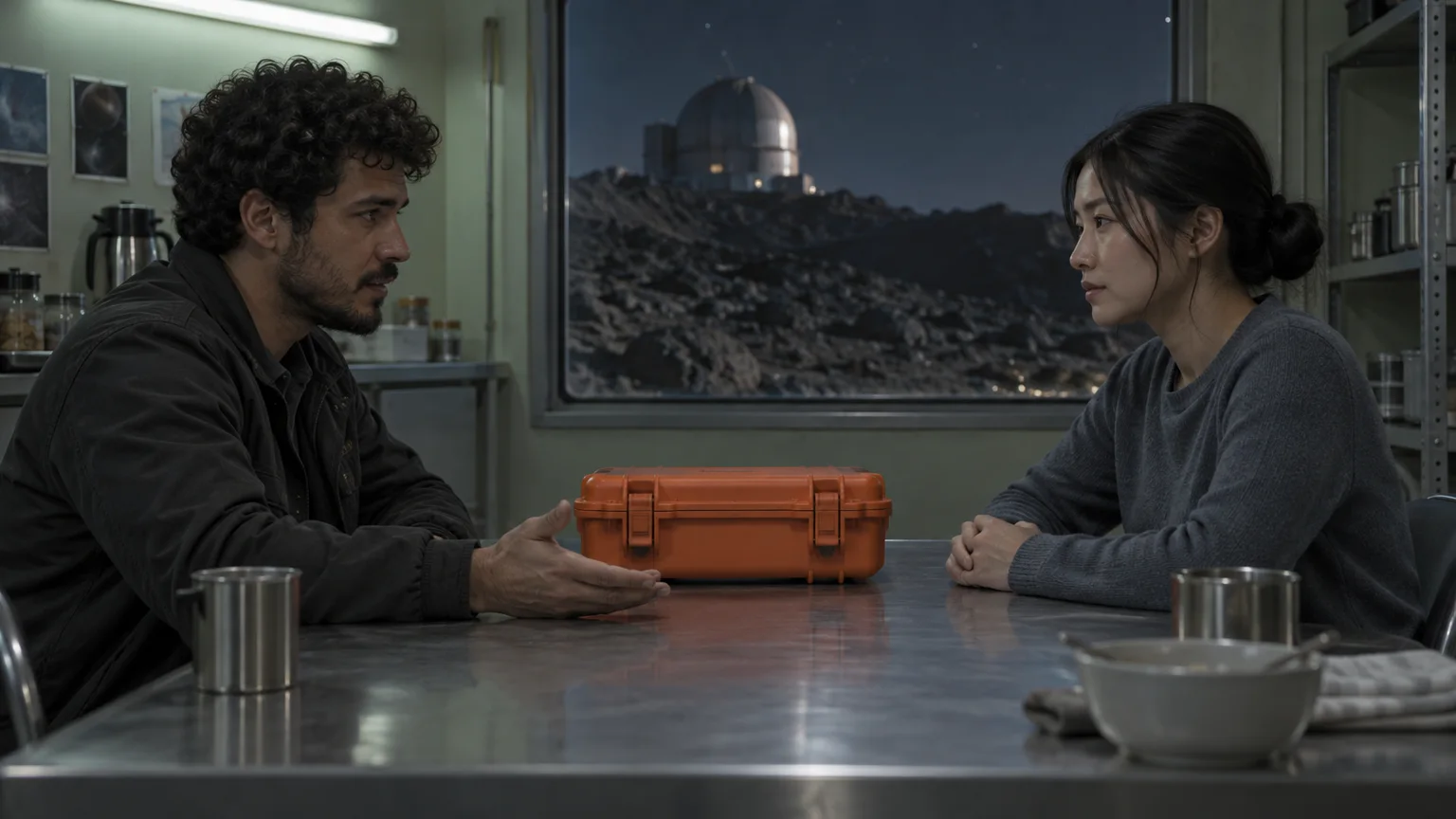
Now draft a focused encounter instead of asking for a complete thriller. Ivo meets Mei in the break room at four fifteen. He needs her to meet the auditor; she needs to know he will acknowledge his own earlier silence. The orange case contains the disputed records, but the argument concerns trust. Give the scene an immediate objective, a resistance, and a possible change in their relationship.
Compare only Ivo's first approach. Version A begins with an accusation that Mei is protecting the supervisor. Version B begins with Ivo admitting that he ignored a warning. Keep viewpoint, time, evidence, setting, Mei's history, and the chapter's destination unchanged. You can adapt these instructions to Fyrlo's drafting and continuation prompts. This is a deliberate writing exercise, not an automatic split-testing feature.
Read the alternatives against observable criteria. Which approach gives Mei a reason to hesitate? Which makes Ivo pay a personal cost? Which preserves the upcoming deadline without forcing an instant confession? Choose based on consequences, not which version includes more urgent adjectives. You may combine a useful gesture with your own rewritten dialogue, but preserve a single coherent motive.
Research on iterative suspense planning offers a useful reminder that fluent generation and suspense construction are separate problems. The 2024 paper Creating Suspenseful Stories studies a planning method; it does not test Fyrlo or guarantee today's models will maintain tension. Treat its focus on planning as a reason to review your causal structure, not as evidence that an app can certify a gripping novel.
Carry consequences into the next chapter
Suppose you choose the admission. Mei agrees to accompany Ivo only if he tells the auditor that he saw the discrepancy earlier. Record that condition immediately. She has not agreed to every allegation, forgiven him, or suddenly become fearless. The next chapter must honor the limited commitment, or the difficult conversation becomes decorative rather than a cause of what happens afterward.
Prepare a compact continuation brief: four thirty; Mei has agreed conditionally; the supervisor expects them at the staff meeting; the auditor leaves at five; the case is with Ivo. Ask for the next chapter's specific action, such as arranging the meeting without surrendering the records. State what must remain unresolved. Review the generated chapter before adding its events to the accepted context.
Let progress create a fresh cost. Reaching the auditor can reveal that Ivo's admission may jeopardize his own role. Do not replace that earned pressure with an unrelated intruder simply because the characters achieved something. A thriller can alternate movement and quiet negotiation as long as both change the available choices. A pause earns its space when the reader sees a costly decision taking shape.
At the chapter boundary, update time, location, possession, knowledge, promises, and unfinished consequences. This manual handoff complements Fyrlo's project and chapter context; it does not guarantee perfect recall. Continue chapter by chapter from the accepted manuscript, not a pile of unused variants. If the plan changes substantially, revise the later chapter notes before generating more prose.

Revise for credible pressure before polishing danger
Run three separate passes. First, trace the clock: travel, waiting, argument, and recovery all consume time. Second, trace information: each discovery needs a route into the scene. Third, trace agency: whenever the plot blocks an obvious solution, check whether the restriction was established and whether a reasonable character would try another action. These passes catch different failures that a general request to make it exciting may hide.
Read the break-room encounter without its danger words. Does the exchange still make you worry about what Ivo must admit? If not, rebuild the opposing goals. Then restore selective sensory details: a cup cooling untouched, a chair angled toward the exit, the low hum from outside. Do not attach ominous description to every object. Readers need ordinary reality against which an unusual decision can register.
Finally, review what the resolution can truthfully accomplish inside your fiction. Delivering records may delay a report or open an investigation; it does not instantly repair every relationship. Check scientific details with reliable sources if realism matters, and check the manuscript for borrowed phrasing, continuity, and voice. AI drafting is a planning aid, not a guarantee of accuracy, copyright status, publication readiness, or commercial success.