
AI writing
Free AI short story generator: from idea to polished draft
Use a free AI short story generator without surrendering the craft: define one change, shape a compact plot, draft in scenes, and revise the result into your own story.
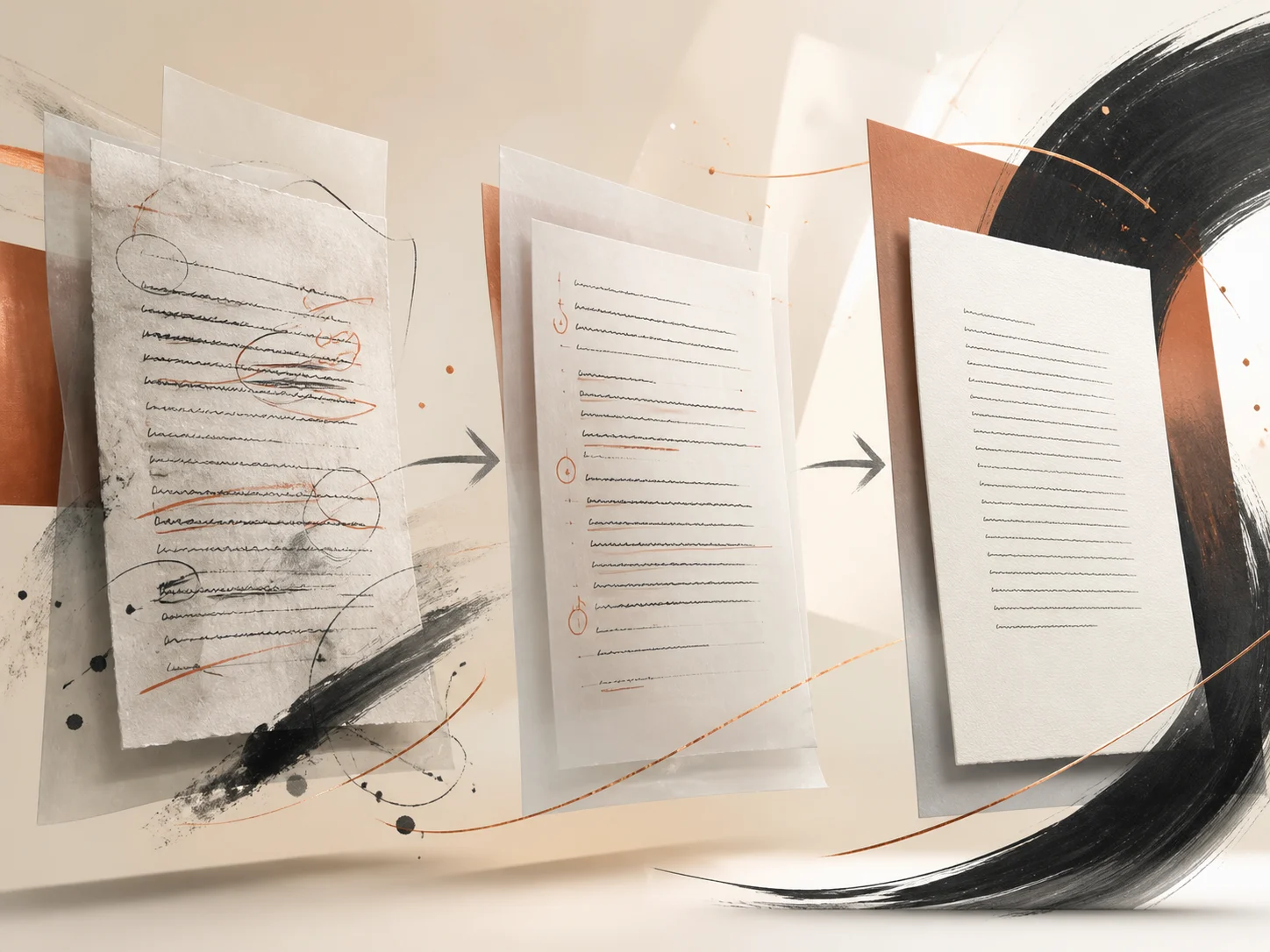
A free AI short story generator works best as a drafting partner, not an automatic author. Give it one protagonist, one urgent problem, one meaningful choice, a clear point of view, and a practical length. Generate a small number of directions, choose deliberately, then rewrite the strongest draft for voice, causality, specificity, and a satisfying ending.
Short fiction has little room for wandering. Every scene must increase pressure, reveal a useful detail, or change what the protagonist can do. The workflow below helps you get value from generation while keeping the premise, judgment, and final language yours.
Start the free AI short story generator with a constrained premise
A useful premise names a person, a destabilizing event, a goal, and a consequence. ‘A night guard discovers that every painting in the closed museum shows tomorrow’s crime, but the next canvas implicates her brother’ gives the draft a direction. ‘Write a mysterious story’ leaves too many decisions open and usually produces familiar scenery instead of purposeful action.
Add only the boundaries that shape the reading experience: genre, intended audience, point of view, tense, approximate length, emotional tone, and one element to avoid. Do not overload the first instruction with every backstory detail. The short story needs a strong present-tense problem more than a complete encyclopedia of its world.
- Protagonist: who must act now?
- Pressure: what makes delay costly?
- Choice: what can the protagonist lose either way?
- Change: what will be different by the final image?
Choose a short-story shape before asking for prose
A short story is not a compressed novel. It usually benefits from one central line of action, a limited cast, and a decisive change. Before generating prose, write five beats: the opening disturbance, the first committed action, a complication, the hardest choice, and the consequence. Flash fiction may compress these into one scene; a longer story can give each beat room without adding a second novel-sized plot.
Ask for two or three beat-sheet alternatives rather than several complete stories. Compare where each version begins, what choice drives the climax, and whether the ending grows from the protagonist’s action. Selecting structure first costs less attention than repairing thousands of unfocused words later.
The best outline is not the busiest one. It creates one difficult choice and makes its consequence feel inevitable only after it happens.
Write a prompt that protects viewpoint, tone, and length
Turn the selected beats into a compact story brief. Specify what the viewpoint character notices, what they misunderstand, and how close the narration should feel. Replace vague style requests such as ‘make it beautiful’ with observable qualities: restrained sentences, concrete sensory details, dry humor, or dialogue that avoids direct confession.
Set an approximate word range and ask the draft to spend most of its space on the central scene. Request an opening in motion, transitions that preserve cause and effect, and an ending that shows the cost of the choice. You can also name exclusions such as dream endings, unexplained rescues, copied author styles, or a moral stated directly.
- Include the five beats and the emotional turn.
- State point of view, tense, audience, and approximate length.
- Name two or three concrete tonal qualities.
- Ask for an editable draft, not a supposedly finished masterpiece.
Generate in controlled stages instead of rerolling blindly
Read the first draft diagnostically. Mark the first place your attention drops, every action without a clear cause, generic description, repeated explanation, and any fact introduced only to solve the ending. Instead of requesting ‘make it better,’ revise one dimension at a time: sharpen the protagonist’s decision, compress the opening, distinguish the dialogue, or plant the ending earlier.
Keep promising sentences and decisions while replacing weak sections. Endless full regenerations can erase what worked and make it difficult to know why one version improved. A useful comparison asks the same focused question of two alternatives, then records the chosen fact as part of the story’s continuity.
Build and continue the short story in Fyrlo
Fyrlo keeps the premise, plot, characters, and chapters together in one project. Record the chosen short-story beats, the protagonist’s private motive, the viewpoint rule, and the ending image. Then explore a few focused alternatives for the opening, turning point, or final choice without separating them from the story context.
Choose the direction that best fits the established character and continue the draft from that decision. Fyrlo can be downloaded for free and includes usage, so you can try this workflow on one short project. Generated text remains material to edit: keep what serves your intent, rewrite it in your voice, and verify originality, facts, continuity, and cultural detail.
A practical division of labor is simple: use generation to expose possibilities and use human judgment to decide meaning. The premise, selection, emphasis, and final sentences are where the story becomes specifically yours.
Revise the generated draft into a complete short story
First revise structure. Give every paragraph a job, remove setup that the reader can infer, and make sure each turn follows from a choice or consequence. Check that the climax answers the problem opened near the beginning and that the last image changes how the opening is understood. A surprise is not enough if it has no emotional cost.
Then revise language. Replace generic feelings with behavior, vary sentence rhythm around moments of pressure, cut repeated adjectives, and read dialogue aloud. Search for phrases that could belong to any story and substitute details only this character would notice. Finally, check names, timeline, viewpoint, permissions, factual claims, and any submission rules that apply to AI-assisted work.
A generated draft becomes a finished short story through selection: what you cut, connect, specify, and choose to leave unsaid.