
Writing tips
Free AI science fiction story generator: one rule, real stakes
Build a science fiction story around one speculative rule, test its human cost, and keep its consequences consistent from chapter to chapter.
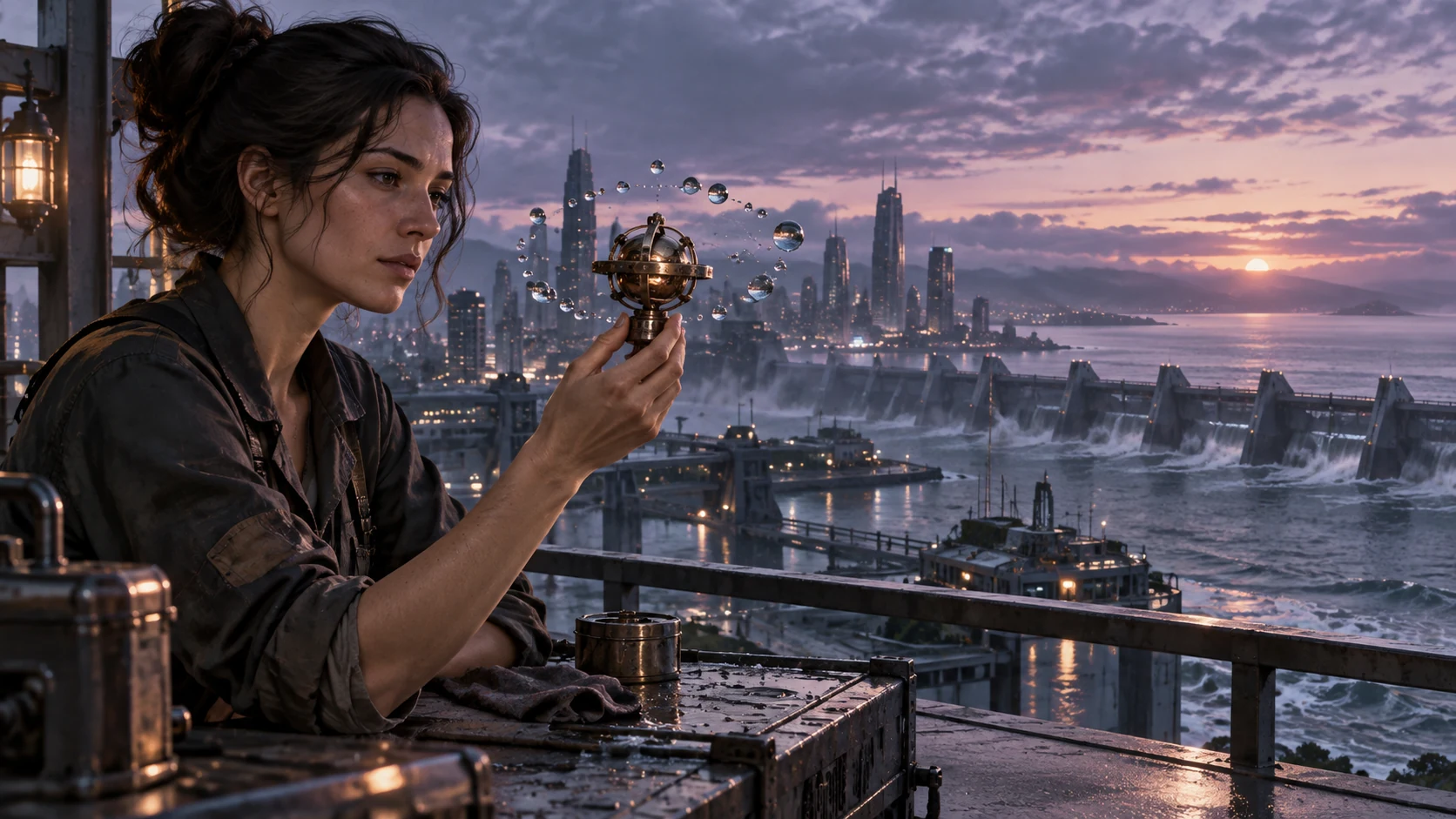
A free AI science fiction story generator can give you a striking future city in seconds. The harder task is writing a story that still makes sense after the first surprise. If a gravity device can lift water in chapter one, the reader will ask who controls it, what powers it, why it cannot solve every problem, and what happens when it fails. Those questions are an opportunity to build plot rather than an obstacle to imagination.
This guide uses one fictional example: an engineer in a coastal city discovers that a small gravity device can move water uphill, but every use draws power from another essential system. You will define that rule, make its cost personal, compare one meaningful choice, and draft chapter by chapter in Fyrlo. The same method works for space travel, altered memory, biotechnology, or any other single departure from ordinary reality.
Start with a human problem, not a catalogue of inventions
Imagine Nara, a maintenance engineer whose district is preparing for an unusually high tide. The flood barrier needs more power than the city has stored. She finds an experimental gravity device that can lift seawater over a damaged gate, yet the machine uses the same reserve that runs the lifts in a residential tower. Her first problem is not how clever the technology looks. It is deciding whose safety she risks when neither system can be fully supplied.
A useful premise joins a person, a desire, an obstacle, and a speculative condition: Nara wants to protect the lower district, but activating the device will strand residents in the upper tower. The technology creates the impossible choice; it does not replace the character's motive. Write that sentence before requesting a long draft. If the premise works with the device removed, the science-fiction element may be decorative. If the premise contains only the device, you still need someone whose life it changes.
Give the protagonist a specific reason to care. Nara may have helped design the shared power network and promised a neighbor that the tower lifts would remain available. A promise creates a sharper conflict than a generic instruction to save the city. It also gives later chapters something to test: can she keep faith with the neighbor while telling the truth about the flood? You need not explain the entire city's politics at the outset. Begin with a relationship and an immediate pressure the reader can understand.
Give the speculative rule a boundary and a price
For this example, the device redirects the effective weight of nearby water for a few minutes within a limited radius. It cannot create energy, move people without harm, or keep working after the reserve is spent. Those boundaries do more narrative work than pages of invented terminology. A reader can anticipate when a plan may fail, and Nara must choose where the limited effect matters most. A rule that can do anything will eventually erase the stakes it was meant to create.
Keep a small rule sheet with five questions. What can the device do? What can it not do? What does one use consume? Who has access? What evidence would show that it is failing? Answer with observable conditions rather than vague adjectives. For instance, a working device leaves a narrow ring of droplets above its housing, and the ring breaks as the reserve falls. That detail gives a scene an image and lets the reader notice trouble before anyone delivers an explanation.
Separate science you intend to research from invention you openly ask the reader to accept. A gravity-changing device is fictional. Tides, flood barriers, power distribution, and evacuation routes have real constraints that you can check. The Science Fiction & Fantasy Writers Association argues that research matters most where a scientific claim is load-bearing for the plot; background details can often be investigated as drafting raises questions. Use reliable sources for real claims, and never treat fluent AI prose as proof of engineering feasibility.

Let the invention change work, power, and everyday life
A plausible speculative city is not a list of shiny objects. Follow the gravity device through ordinary routines. If it lifts irrigation water to rooftop orchards, someone maintains it, someone pays for it, and someone goes without water when the system is rationed. Perhaps the upper terraces harvest fruit while the lower terraces rely on salt-tolerant crops. The uneven distribution is not set dressing; it explains why two neighborhoods disagree about the emergency plan.
Write three consequences at different scales. At the physical scale, the machine heats and loses efficiency during sustained use. At the social scale, its operators receive priority access to stored energy. At the personal scale, Nara's neighbor depends on an electric lift to leave the tower. Each consequence should become visible through action. A queue at a charging station tells more than a paragraph announcing inequality, and a failed lift changes what the characters can do in the next scene.
Resist the urge to invent a second major breakthrough whenever the plot becomes difficult. If every door can open with a new gadget, the first rule stops mattering. Instead, combine the existing rule with scarcity, weather, trust, and limited time. The same technology can look miraculous during a demonstration and inadequate during a storm. That contrast creates escalation without making the world incoherent.

Compare one decision instead of generating unrelated plots
A focused alternative makes the draft easier to judge. Hold the tide, power limit, Nara's promise, and her knowledge constant. In route A she diverts the reserve to the flood barrier and sends a warning to the tower. In route B she keeps the lifts running while attempting a slower manual repair at the gate. Both choices have a credible reason and a cost. Compare what each choice reveals about Nara and what new problem it hands to the next chapter.
Do not ask a generator for ten unrelated twists at this point. That changes too many variables and often rewards spectacle over causality. Ask what Nara knows before deciding, who can challenge her, and what she cannot undo afterward. If she chooses the barrier, perhaps she must help stranded residents through an unlit stairwell while the water keeps rising. If she chooses the lifts, perhaps the lower district loses a route out. The best version is not automatically the most dangerous; it is the one that develops the premise honestly.
Fyrlo can keep the premise, character notes, and plot context in one project while you compare this single branch. Choose the route yourself and update the accepted plan. Record what changed: energy remaining, barrier state, the tower's evacuation status, who knows about the diversion, and the damaged relationship. Then draft the next chapter from that state, not from a fresh generic prompt. The tool can offer prose and possibilities, but it cannot decide what a morally persuasive choice is for your story.
Draft chapter by chapter and keep a living continuity record
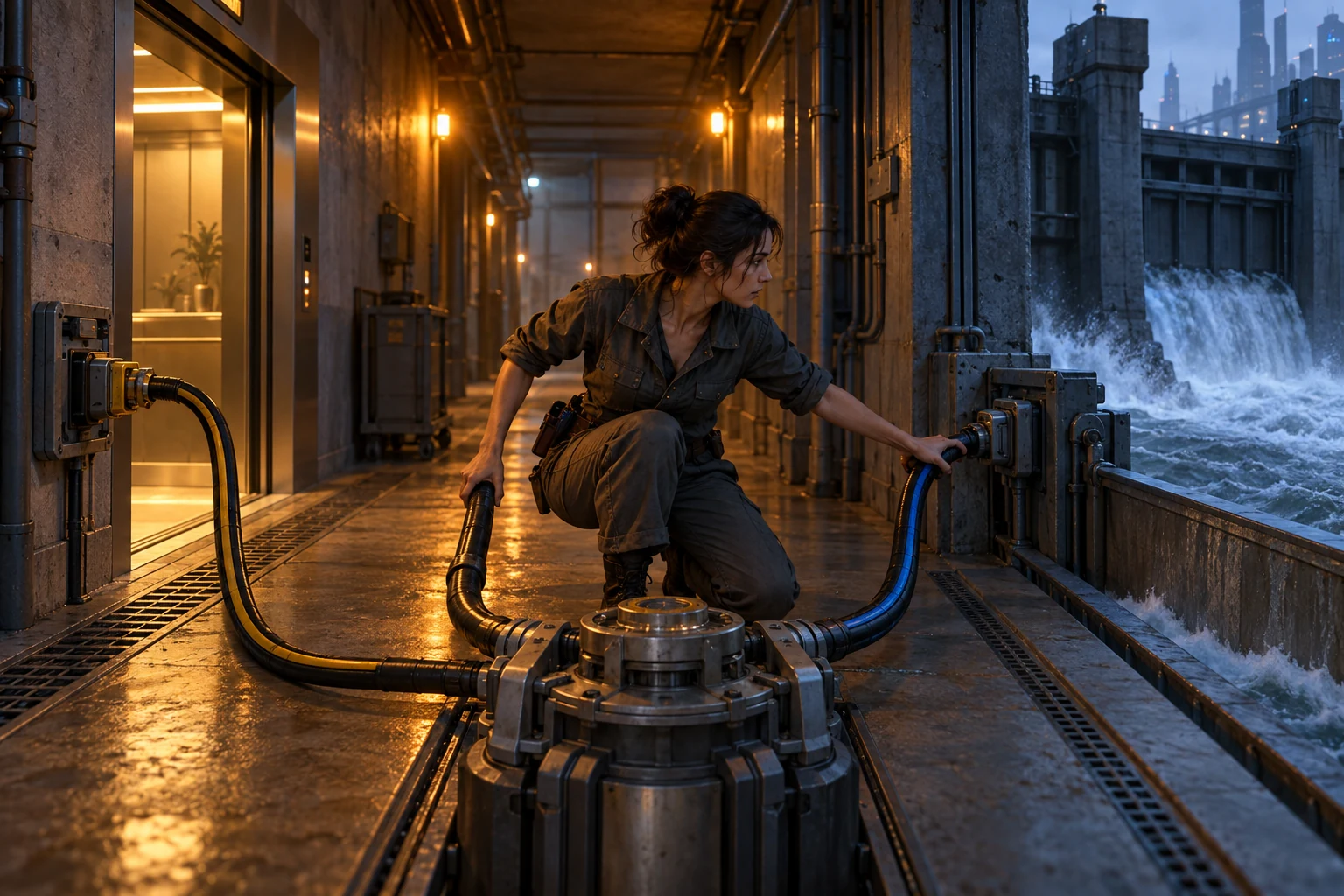
Before each chapter, write four short lines: the immediate goal, the active rule, the current cost, and the change the chapter must make. For Nara's second chapter, the goal might be to reach the tower; the rule is that the device cannot lift a person safely; the cost is dwindling reserve power; the change is that residents learn she redirected their supply. Those lines do not dictate every sentence. They keep the draft from forgetting the premise when a new scene begins.
After drafting, update a compact continuity record. Track where the device is, who has handled it, how much energy remains, the time of the tide, which routes are passable, and what each major character knows. A story bible does not need to be elaborate. Six accurate facts are more useful than twenty pages of atmosphere if they prevent a character from using knowledge they have not gained. Keep uncertain claims marked as uncertain until you verify or deliberately invent them.
Read each new chapter for consequences before moving on. If a lift failed in chapter two, chapter three cannot casually place the same residents at street level without an evacuation scene or a stated time jump. If the device drained the reserve, it cannot power a second miracle without a recharge mechanism already established. If Nara has lied, the next conversation should reflect who suspects her. Revising these connections early is easier than repairing a finished book built on a contradiction.
Fyrlo supports a chapter-by-chapter workflow and lets you continue and edit a project, but a generated draft is raw material. Its wording may be generic, its physical claims may be wrong, and its continuity may drift. Rewrite scenes in your own voice, verify real-world claims, and decide which inventions are clearly fictional. The app is free to download and includes some usage; not every feature or unlimited generation is free. It does not guarantee originality, rights, factual accuracy, publication readiness, or commercial success.

Revise for wonder and clarity at the same time
Once the story has an ending, read it without stopping to explain the device. Mark every place you felt confused about who wanted what, what the machine could do, or why a character lacked an easier option. Clarify those points with observation, choice, and consequence before adding technical exposition. A reader does not need the device's entire invented history to understand a droplet ring breaking as the battery fails.
Finally, check the real science you invoked. Distinguish verified facts from extrapolation and invention. NASA's discussion of scientists writing fiction notes the value of internal consistency even when a story makes a bold imaginative leap. You can bend a premise without turning each chapter into a new set of laws. Let the human stakes remain legible; that is what gives the strange rule a reason to exist.