
Writing tips
Free AI poem generator: draft verse in your own voice
Start with a specific moment, shape the form and sound, and turn an AI-assisted draft into a poem only you could have written.

A free AI poem generator can give you lines quickly, but speed is not the hard part. The hard part is deciding what those lines mean, why one image belongs beside another, and where the reader should pause. Without a clear subject and a personal point of view, the draft often sounds fluent but interchangeable. A useful tool gives you alternatives to think with; it does not know which memory, pressure, or turn is yours.
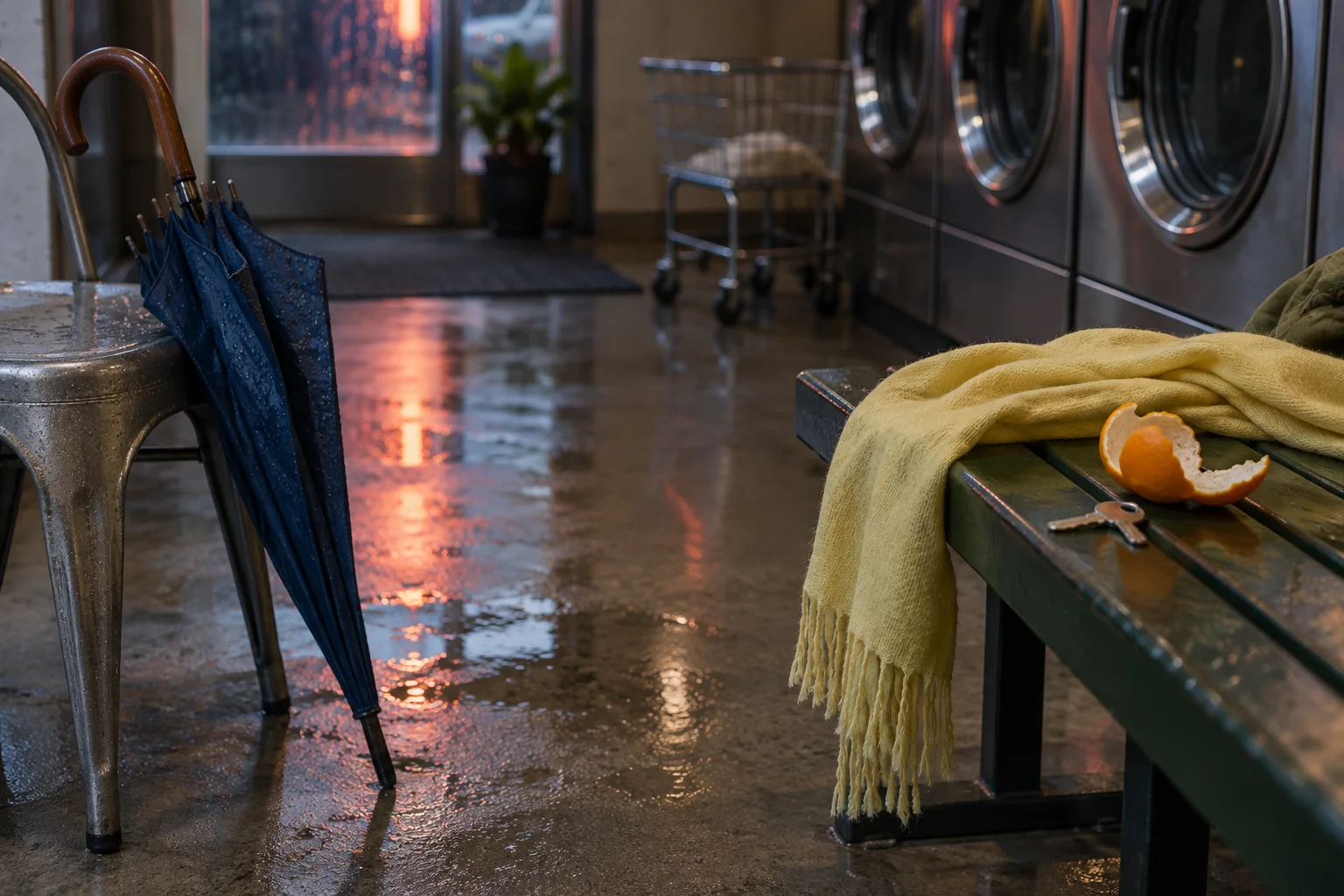
This guide follows one small example from premise to revision: a person returning to a laundromat after moving out, finding a forgotten blue umbrella beside an orange peel. We will choose the emotional turn, test a form, compare one change at a time, and read the lines aloud. Fyrlo can keep the project premise and accepted choices together while you draft. You still decide what to keep, what is true to your experience, and when the poem is finished.
Begin with a moment, not a request for a beautiful poem
A prompt such as write a moving poem about change gives the generator almost nothing to distinguish your work from anyone else's. Start with a scene you can point to: the light of the laundromat at closing time, a wet umbrella nobody claimed, a key that no longer opens your old door. Write down what the speaker wants in that scene. Perhaps they came back for a scarf, but actually want proof that leaving mattered. The tension between the practical errand and the hidden need can carry more than a list of atmospheric adjectives.
Give the scene one anchor image and one emotional turn. The umbrella may first suggest shelter, then become an object the speaker cannot bring home. The orange peel offers color and a brief scent, but it need not stand for hope on command. Tell a generator the literal details, the speaker's distance from the event, and the change you want the poem to approach. Avoid instructing it to explain every symbol. You need a draft that leaves room for discovery, not a polished explanation of what the poem means.
In Fyrlo, establish the premise of a poetry project before asking for lines. Keep the important setting, speaker, image, and intended turn in your own notes or project plan so later drafts have a stable context. Ask for a short opening rather than an entire collection. Mark any detail the generated text invents, such as an absent friend or a remembered conversation, and decide whether it belongs. The tool can suggest language, but it cannot certify your memory or choose the emotional truth of the scene.
Choose a form that gives the idea useful limits
Free verse is a form, not the absence of decisions. Decide how long the poem should stay in the laundromat, whether the speaker says I or addresses someone else, and how much information each stanza can reveal. A short three-stanza draft might move from the physical room to the remembered departure and finally to the unclaimed umbrella. An even shorter poem could stop before the memory is named. Those constraints give the draft a direction without forcing every line into a preset pattern.
If you want rhyme or a fixed pattern, name the rule precisely and verify it yourself. Ask for a rough stanza shape, but check syllables, stresses, and end sounds by ear; generated text may claim to follow a meter while breaking it. Rhyme can be useful when a return in sound deepens a return in meaning. It becomes a problem when the generator chooses an awkward word solely to make an ending match. Try a version with no rhyme and a version with one recurring sound, then compare what the pressure does to the image.
Fyrlo can help keep the chosen form, speaker, and image alongside the draft while you explore alternatives. Set a brief for the poem: present tense; one room; the umbrella appears twice but changes significance; no explanation in the last line. Generate a small passage and inspect it against that brief. If the strongest line violates the plan, you may change the plan deliberately. The plan is a guide for judgment, not a machine-enforced proof of poetic quality or a promise that the output follows every formal instruction.

Compare one line break or image at a time
When a first draft feels ordinary, replacing the whole poem with five unrelated outputs makes it harder to hear what improved. Hold the speaker, setting, and emotional turn steady. Change just one variable. Ask for two versions of the same four lines with a different break before the word home, or replace one general statement with a physical action involving the key. The comparison tells you whether a pause increases uncertainty, whether an image becomes too neat, and whether the speaker still sounds like the same person.
A line break affects timing and expectation. The Poetry Foundation's discussion of the poetic line notes how a line's ending and the next line alter reading. Use that principle practically: read until the break, notice what you think the sentence means, then continue. If the continuation changes that meaning in a useful way, the break is doing work. If it merely interrupts a natural phrase without adding pressure, move it. You need not break every sentence dramatically; a quiet uninterrupted line can make the next pause more noticeable.
Keep a record of the single change you accepted. In Fyrlo, compare a focused alternative while the premise and image remain available, then carry only the chosen choice into the next draft. Do not paste together every attractive phrase from competing versions: their sounds and implications may conflict. Read each candidate without looking at the prompt. A good line should earn its place for someone who does not know your instructions. The tool makes exploration quicker; the decision about rhythm, meaning, and context stays with you.

Read aloud, remove filler, and protect your voice
Read the poem aloud twice: first for meaning, then for breath and sound. At each line, ask what is newly seen, heard, done, or understood. Phrases such as time stood still or a tapestry of memories can sound expressive while adding no observation from this particular laundromat. Replace one with the machine clicking off as the speaker reaches for the scarf. If a sentence explains that the umbrella symbolizes loss, see whether a concrete choice about leaving it behind communicates more. Do not remove every abstraction; keep the ones that arrive after an earned image.
The Academy of American Poets recommends attending to sound when reading poems. On revision, listen for accidental repetition, a rhyme that makes the ending predictable, and a long line that needs a breath you did not intend. Change only what the reading exposes. The short, harsh sound of key might work near the quieter sound of sleeve; a dense cluster of consonants might slow the poem at the moment of hesitation. These are options to test with your voice, not rules a generator can score objectively.
Then check the poem against your experience and other people's work. A generated detail may be plausible but false to your chosen speaker. A striking line may sound suspiciously familiar; do not assume that generated wording is original or safe to publish. Search any phrase that worries you, revise it independently, and get a trusted reader's response to what they actually notice. Fyrlo is a planning and drafting aid, not a guarantee of originality, accuracy, rights, or publication readiness. Your final edits and responsibility matter more than the first output.

Build a small poetry practice rather than an output pile
One finished poem teaches you more than fifty unreviewed openings. After the laundromat draft, write a brief note about its actual center: perhaps the moment when a useful object becomes one more thing not to carry. Save the lines you rejected separately, with a reason, so they do not sneak back into the next version merely because they sounded pretty. Decide whether the next poem should revisit the same image from another speaker, move to another place, or challenge the theme. Repetition becomes a practice when each return changes the question.
For a sequence or collection, keep a short ledger of motifs, speakers, point of view, and dates. Fyrlo can help you keep a project premise and accepted context together, draft a focused alternative, and continue one piece at a time. The same planning continuity also supports longer book projects chapter by chapter; poems do not need to pretend to be chapters. Read the sequence in order and remove pieces that repeat the same turn. A coherent collection benefits from variation in shape and sound as much as from a recurring subject.
Fyrlo is free to download and includes some usage, which makes a first experiment possible without claiming that every feature or unlimited generation is free. Check the current App Store listing for the applicable limits. A free AI poem generator is most useful when it reduces the friction of starting and gives you an alternative to evaluate. It cannot supply your lived detail, judge every formal choice, or certify a finished poem. Return to the page without the tool and ask which lines you would still choose to say aloud.