
Writing with AI
Fairy tale with AI: a free planning start
Give an enchanted object a limit, make the choices matter, and build a draft you can revise yourself.

A fairy tale with AI can sound enchanted before it has a story. There is a lantern, a winter forest and an impossible doorway, yet the heroine keeps finding exactly what she needs. The problem is not a shortage of magic. Nothing makes her choose. Start by giving one magical gift a clear limit and connecting that limit to something the protagonist cannot obtain merely by wishing. You can prepare the exercise on paper without paying for a tool.
This workflow uses an original example about Nera, an adult repairer who wants to speak to her estranged brother, Olan. A borrowed lantern reveals a hidden doorway each evening, but cannot open it or compel anyone to answer. Nera must return it before dawn after the third evening. We will use Fyrlo for planning and bounded drafting, not as a fairy-tale authority. The app is free to download and includes some usage; that does not mean every feature or unlimited generation is free.
Plan a fairy tale with AI around one human want
Write the ordinary difficulty before introducing the enchanted object. Nera repaired Olan’s treasured instrument without asking and changed its sound. She wants a conversation, but he has stopped accepting her visits. This is enough emotional pressure for a short tale. Avoid asking for a whole kingdom, a prophecy and five magical species merely because the generator can supply them. Those additions would distract from the particular request Nera has to make. Decide whether you are writing for adult readers, a mixed audience or a specific younger age group; this example uses adults and is not automatically suitable for every child.
Enter a compact premise in Fyrlo: an adult repairer borrows a lantern to find her estranged brother, discovers that access does not create consent, and must return the gift before its agreed deadline. Keep the desired outcome separate from the guaranteed outcome. A useful ending may allow a conversation without restoring the old relationship. Choose a provisional length and tone, then list what the tale actually needs to dramatize. If the cause-and-effect sequence is still unclear, use the novel-outline exercise at a smaller scale rather than requesting more decorative lore.
Make the gift useful without making it a solution
The lantern has one positive ability and two boundaries. At evening it reveals a doorway to the person its borrower seeks. It does not unlock anything, and it must be returned before dawn after the third evening. Put those statements in your own reference notes. Also decide what an ordinary observer can see and whether the light persists after Nera puts the lantern down. You do not need an elaborate physics system, but you need enough stability to judge the scenes you accept. A later exception introduced solely to rescue the ending would weaken the earlier choice.
The British Library’s curators discuss magical objects among the ingredients of fairy tales and the continuing reinterpretation of the form. That is a useful invitation, not a compulsory checklist. Our lantern and its condition are an original exercise, not a retelling of an exhibit’s story. Ask Fyrlo for a short account of how Nera receives the loan, including the return agreement in the exchange. Reject any draft that quietly grants mind reading, instant forgiveness or an extra wish. A gift can change what a character can attempt while leaving the essential human difficulty intact.

Give every test a different demand
Repetition can help a tale feel patterned, but repeated scenery is not development. Design successive encounters that ask different things of Nera. At the first doorway she demands an immediate answer and receives none. At the second, she brings a replacement part, then realizes that another unsolicited repair would repeat the original offense. At the last, she can make a brief request and leave room for refusal. These are proposed beats, not a rule that every fairy tale needs three trials. Keep only as many encounters as the promised change can support.
Use the plot and character context in Fyrlo to distinguish Nera’s intention from Olan’s. She wants to demonstrate that she can help; he wants his choices respected. Neither goal requires a villain. The lantern’s lender also has a reason to expect its return, such as needing its evening light for a separate journey. Give that person a real concern rather than treating them as a dispenser of instructions. An encounter earns its place when Nera’s response changes the next available action. If removing it leaves everything unchanged, combine it with another beat or cut it.
Draft the threshold, not the whole finished tale
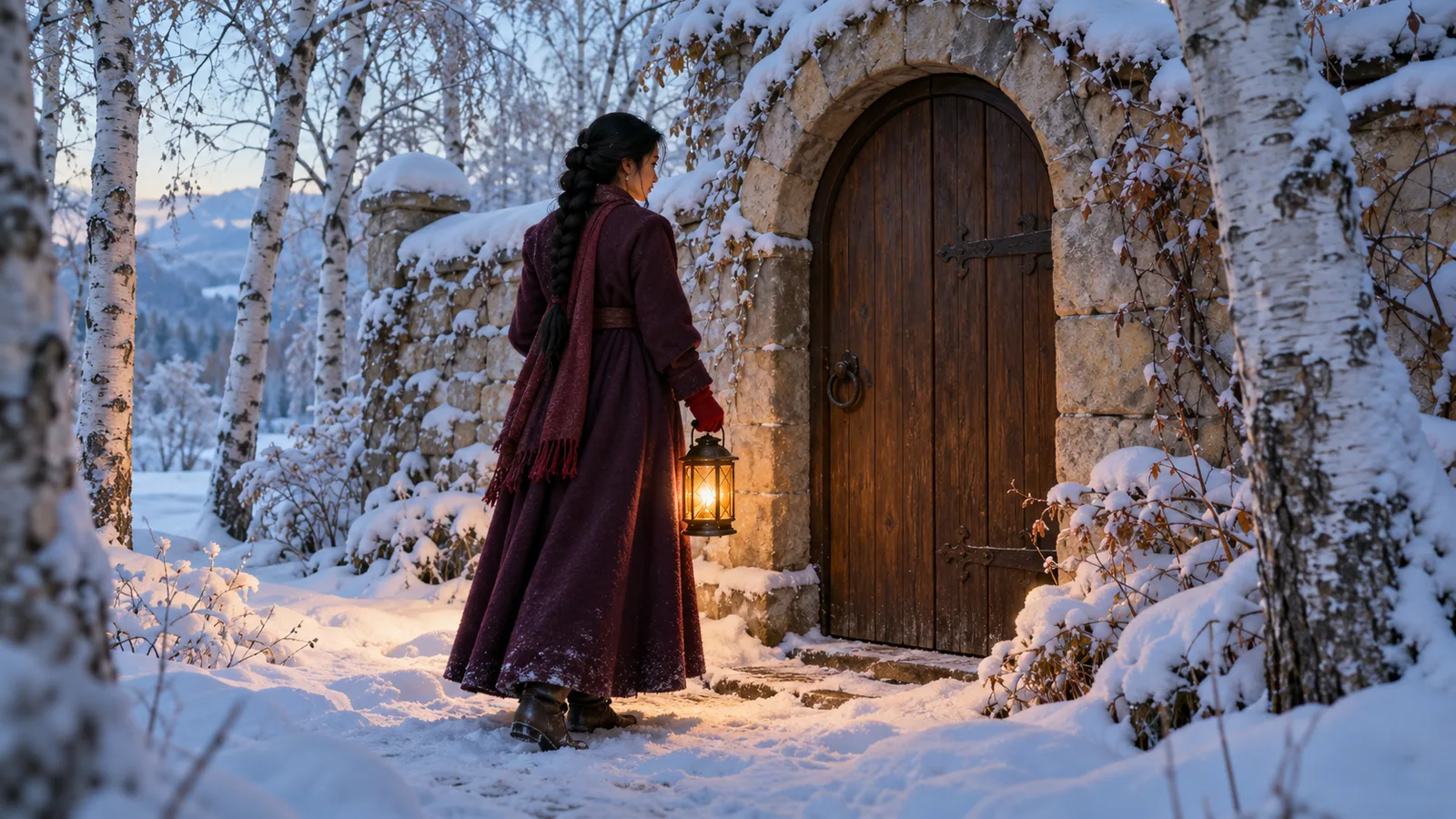
Choose one scene where the magical and ordinary problems meet. Nera sees Olan’s doorway among the birches. Light marks the threshold, yet the door remains closed. Give Fyrlo the location, the accepted lantern rules, Nera’s immediate goal and the scene’s stopping point. A practical instruction is: draft her first attempt to ask for a conversation, keep the door closed, and end when she decides whether to knock again. Specify the chosen viewpoint and tense. This is a bounded writing request, not a claim that Fyrlo has a dedicated threshold or fairy-tale feature.
Read the result for behavior before polishing its atmosphere. Can you see what Nera does, what she hears and what she concludes? If the prose says that the door “recognized her pure heart” and opens, it has replaced her problem with a reward you never established. Restore the closed door and let her action carry the scene. A small concrete gesture can do more work than an explanatory paragraph: she lowers the replacement part rather than pressing it toward the opening. Keep that gesture only if it fits the accepted situation, not because generated prose makes it sound beautiful.
Compare one choice while keeping the magic fixed
Save the first draft separately before requesting an alternative. Hold the doorway, viewpoint, lantern rule and Olan’s silence steady. Change only Nera’s response: in one version she offers the replacement part before asking permission; in the other she asks whether he wants to see it. Do not simultaneously change the weather, invent a secret illness and make the lender an enemy. A narrow comparison lets you judge the effect of a choice rather than mistake a busier draft for a stronger one. These versions are working copies you manage, not an automatic branching system.
Choose by consequence. Which response reveals Nera’s current habit more clearly? Which leaves Olan room to act? Which creates a next scene that is neither repetitive nor effortless? You may discover that the first response belongs early and the second later. Record the decision in plain language and discard contradictory details from the alternative before continuing. Fyrlo can propose wording; you decide what becomes part of the tale. If neither version carries a meaningful cost, revise the situation itself instead of generating a growing stack of nearly interchangeable paragraphs.

Carry accepted facts into the next chapter
After revising the scene, write a short handoff: which evening it is, who holds the lantern, what Nera actually said, what Olan could hear and what remains unresolved. Distinguish accepted events from possible later ideas. A note that Olan might answer tomorrow is not evidence that he has already agreed. Keep the return deadline visible beside the next drafting request. This reference is maintained by you; it is not an automatic continuity checker or a guarantee that a generated continuation will remember every detail correctly.
For a longer Book project, Fyrlo’s editable chapter plan can hold the broad sequence; the dedicated chapter-plan screen belongs to Book, not every format. For a compact tale, a simple scene list may be enough. Continue chapter by chapter, or one bounded passage at a time, after checking the previous passage. Look especially for a new power, a moved deadline or knowledge Olan could not possess. If a detail changes deliberately, revise its earlier setup too. Do not leave incompatible versions in place and hope that a fluent final paragraph will reconcile them.
Return the gift and pay off the actual promise
Separate the magical obligation from the relationship’s outcome. Nera can return the lantern on time even if Olan refuses a meeting. Alternatively, he may offer a brief conversation before she leaves to return it. Neither result should depend on a newly announced power. Establish the lender’s meeting place and the time needed to reach it before the final scene. The return then becomes an action with a cost rather than a last-minute administrative detail. She may have to stop waiting at the doorway because another person’s claim on the gift also matters.
Ask for a final bounded passage using only the accepted events. Then examine whether it rewards a simplistic bargain: behave correctly and another person must forgive you. A more convincing change is that Nera keeps her promise without controlling Olan’s answer. Show the returned lantern and a specific altered action, such as leaving the replacement part unopened until invited to bring it. You do not need a concluding moral that explains every symbol. Let the last image complete the action you promised while leaving an appropriate amount of emotional room for the reader.

Read aloud and revise the tale you actually wrote
Read the draft aloud without looking at your planning notes. Listen for repeated decorative adjectives, confusing pronouns and explanations that arrive before a reader can need them. Patterned language should help recognition, not conceal missing causes. Ask a fresh reader what the lantern can do, why Nera returns it and what changed between the first and last doorway. Their answer is evidence about this draft, not a universal verdict on fairy tales. If they cannot follow the obligation, repair its first appearance before expanding the final explanation.
Review the text yourself for originality, factual claims, stereotypes and any material borrowed from a particular tradition or living author. Do not ask for imitation of a contemporary writer’s distinctive voice or assume that generated wording is automatically cleared for publication. If the intended audience includes children, make a separate age-appropriateness and emotional-safety review; an adult example is not a tested bedtime story. Fyrlo helps plan and draft, but cannot guarantee quality, accuracy, rights, publication readiness or sales. Keep your accepted manuscript, note what still needs human editing, and begin the next passage only when its context is clear.