Writing tips
AI historical fiction writer: a research-first workflow
Build a period story around a human decision, keep research separate from invention, and check every chapter before it becomes canon.
An AI historical fiction writer can draft a convincing street in seconds. It cannot establish whether that street, a transport route, or a phrase existed in the year you chose. Historical fiction needs both a story worth following and a boundary between documented facts, reasonable inference, and deliberate invention. If you let fluent generated prose blur those categories, your draft may look researched while resting on details nobody checked.
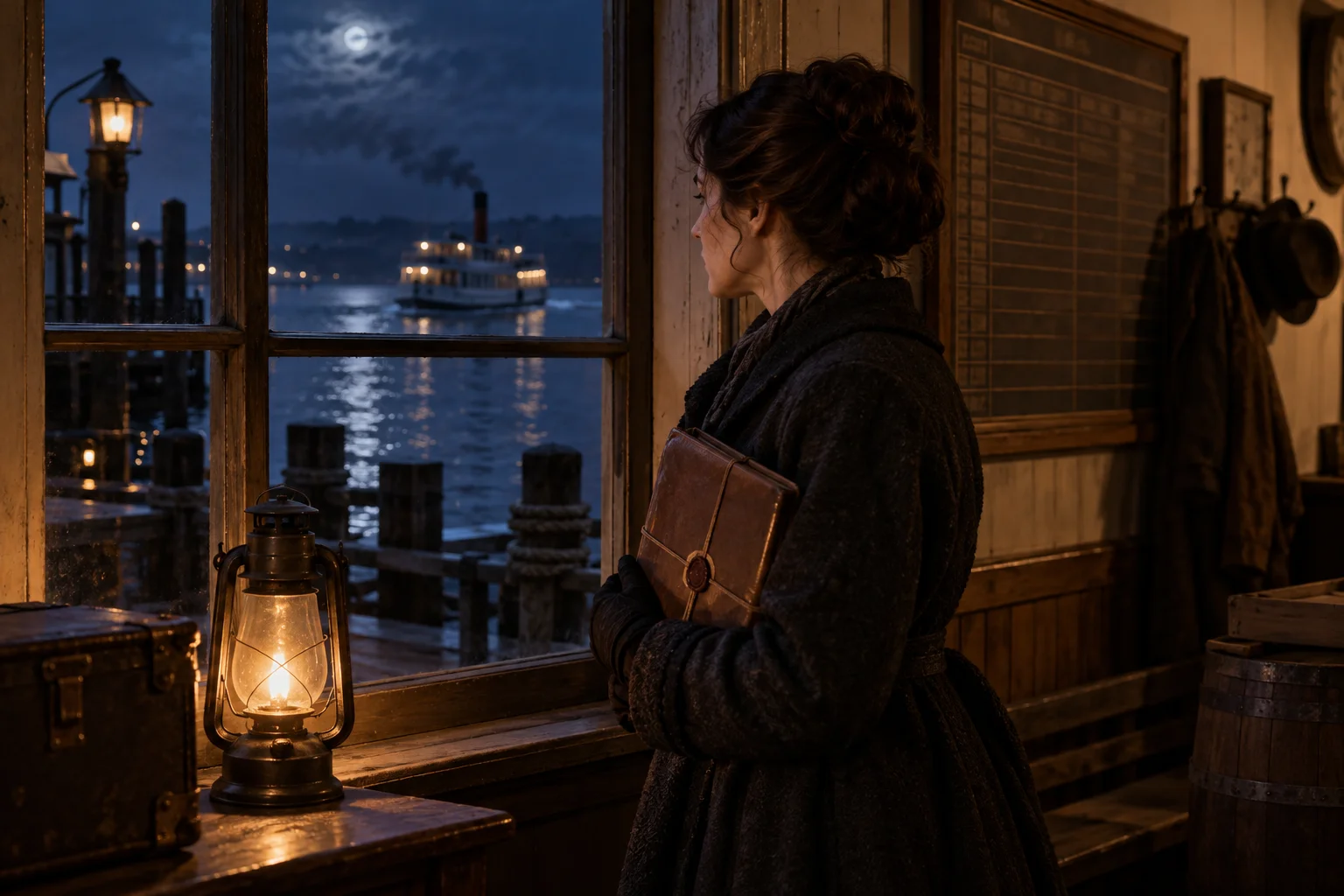
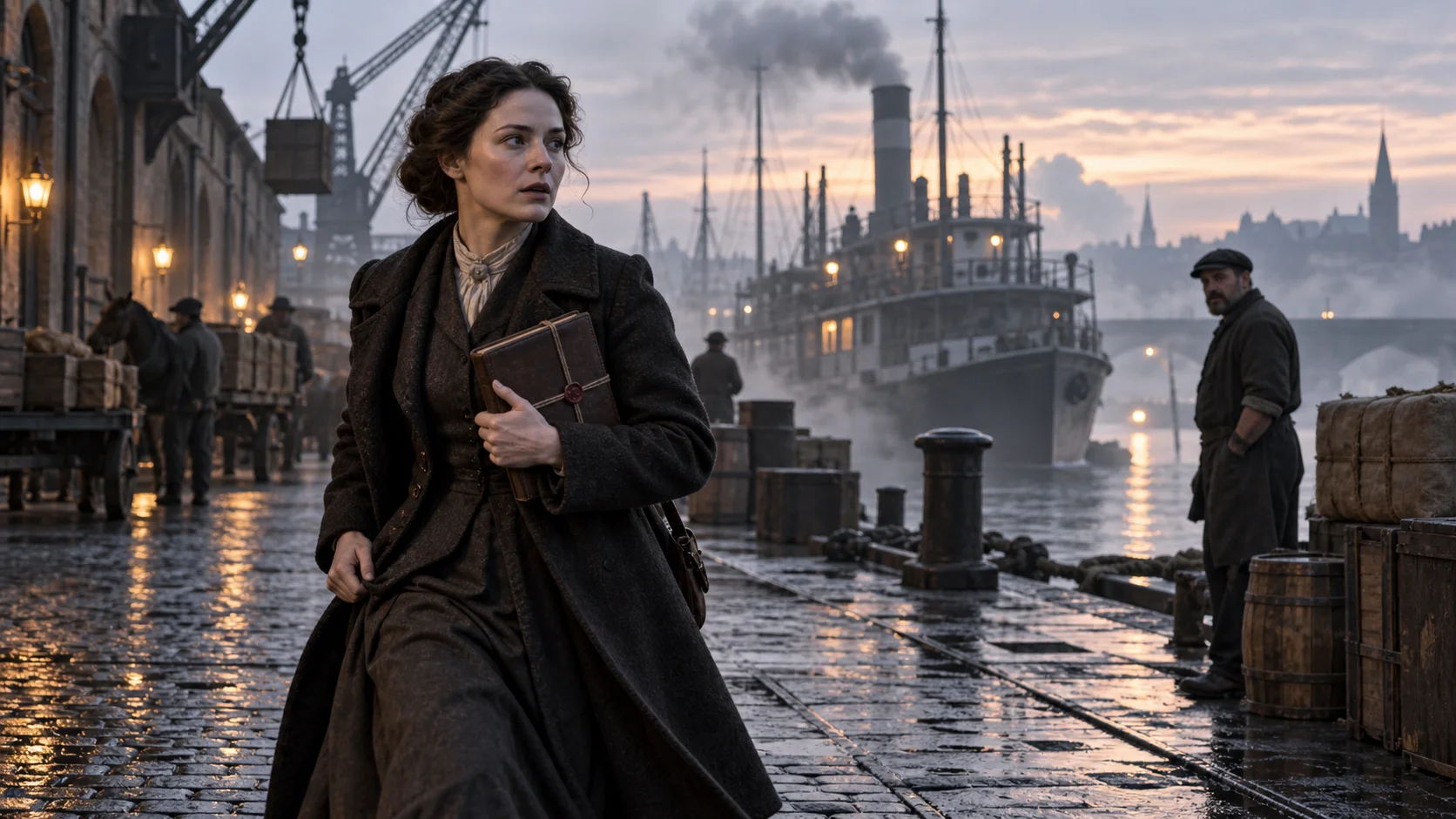
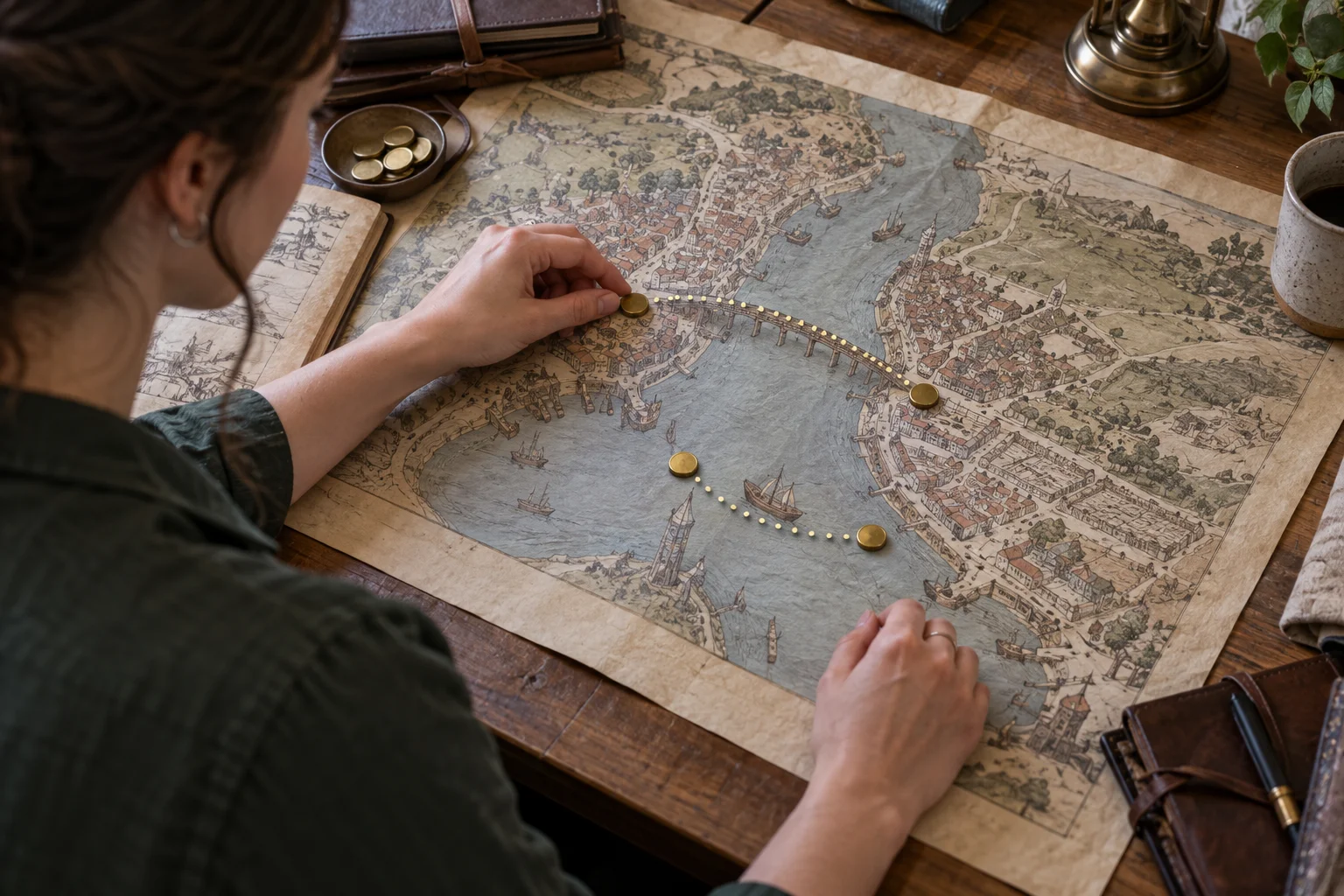
This guide uses a fictional river port in the late nineteenth century. Ida, a young courier, carries a copy of a dock ledger that could expose wage theft. She must decide whether to catch the last ferry or take a guarded bridge. We will build her premise, research only the facts that affect that decision, test one plot variable, and draft forward in Fyrlo chapter by chapter. The city and events are invented; any real historical claim in your own project still needs independent verification.
Start the historical novel with a decision, not a costume
A genre label is not a premise. Historical fiction set in a port in 1890 tells a reader almost nothing about what a character must do. Ida has copied entries from a shipping ledger and wants the evidence beyond her employer's reach before dawn. The ferry leaves soon, while the bridge is watched by a clerk who knows her. Her immediate problem is legible without a page of dates or famous names. The period matters because transport, communication, employment, and social power shape her available choices, not because old-fashioned objects decorate the scene.
Write a working premise in three clauses: a person wants something concrete; a period-specific condition makes it hard; one choice will carry a cost. For Ida, the ledger may help other workers but end her job. Avoid giving the invented port a real treaty, strike, or law unless you have verified it. You can set the story in a fictional city while researching the broader technologies and labor conditions that constrain it. Mark every claim about a real place or institution for later review instead of treating a plausible sentence as evidence.
In Fyrlo, establish the premise and format first. Keep Ida's goal, the ledger, the ferry deadline, the bridge, and the employer's influence together as project context. Ask for a short opening that makes her choice visible before expanding the world. Review what the draft adds: if it invents a police regulation or a precise fare, mark the detail as unverified rather than accepting it into the story. An AI historical fiction writer is useful for testing dramatic possibilities; it is not a source for historical facts.
Separate sources, inference, and invention before drafting
Make a small research ledger with three columns. In the first, record a verified statement and the source that supports it. In the second, record a cautious inference, such as what a long crossing might mean for a courier who cannot miss a meeting. In the third, record invented story facts: Ida, her employer, the copied page, and the fictional port. These columns stop a generated suggestion from silently becoming history. They also prevent research from swallowing the novel. You need enough evidence to make the next decision credible, not an archive of everything that happened in a century.
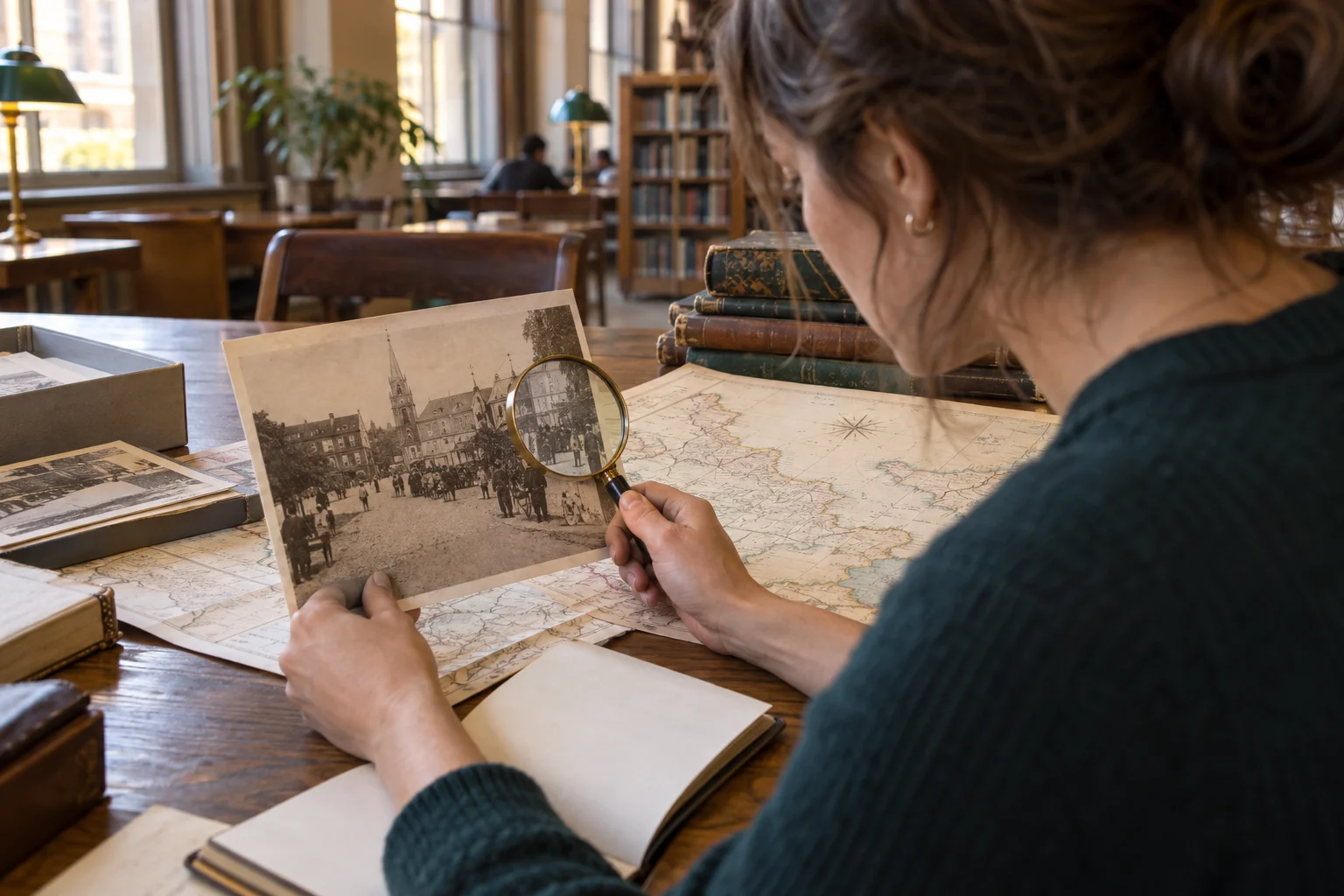
Start with the details on which the plot turns: whether the ferry service you imagine fits the era and place, how a message could travel, who could access a ledger, and what authority an employer might actually have. Search reputable collections, books, and local records for your chosen setting. The Library of Congress shows how primary sources can be read alongside historical fiction, while its guidance on analyzing artifacts asks readers to examine context rather than treating one image as a complete account. A photograph can establish that an object existed, not that every worker used it the same way.
A source note should include a title, date, institution, link or shelf reference, and the exact claim it supports. Record uncertainty too. If sources disagree about a practice, you can narrow the scene, choose a different place, or leave the claim out. Fyrlo can hold your accepted story context and draft, but it does not verify an archive, consult your notes automatically, or judge the reliability of a claim. Keep a separate source list you can return to during revision, especially when the generated prose sounds most authoritative.
Make period constraints drive the historical fiction plot
The useful historical detail is the one that changes an action. Ida cannot instantly send the copied page across the river. If the telegraph office is shut, she must carry it herself or trust another person. If the ferry has already departed, the guarded bridge gains power. These are dramatic constraints, but the exact opening hours, routes, and communications available in a real city cannot be guessed. Research the conditions for your chosen location, then adapt the fictional situation without claiming that a made-up institution was real.
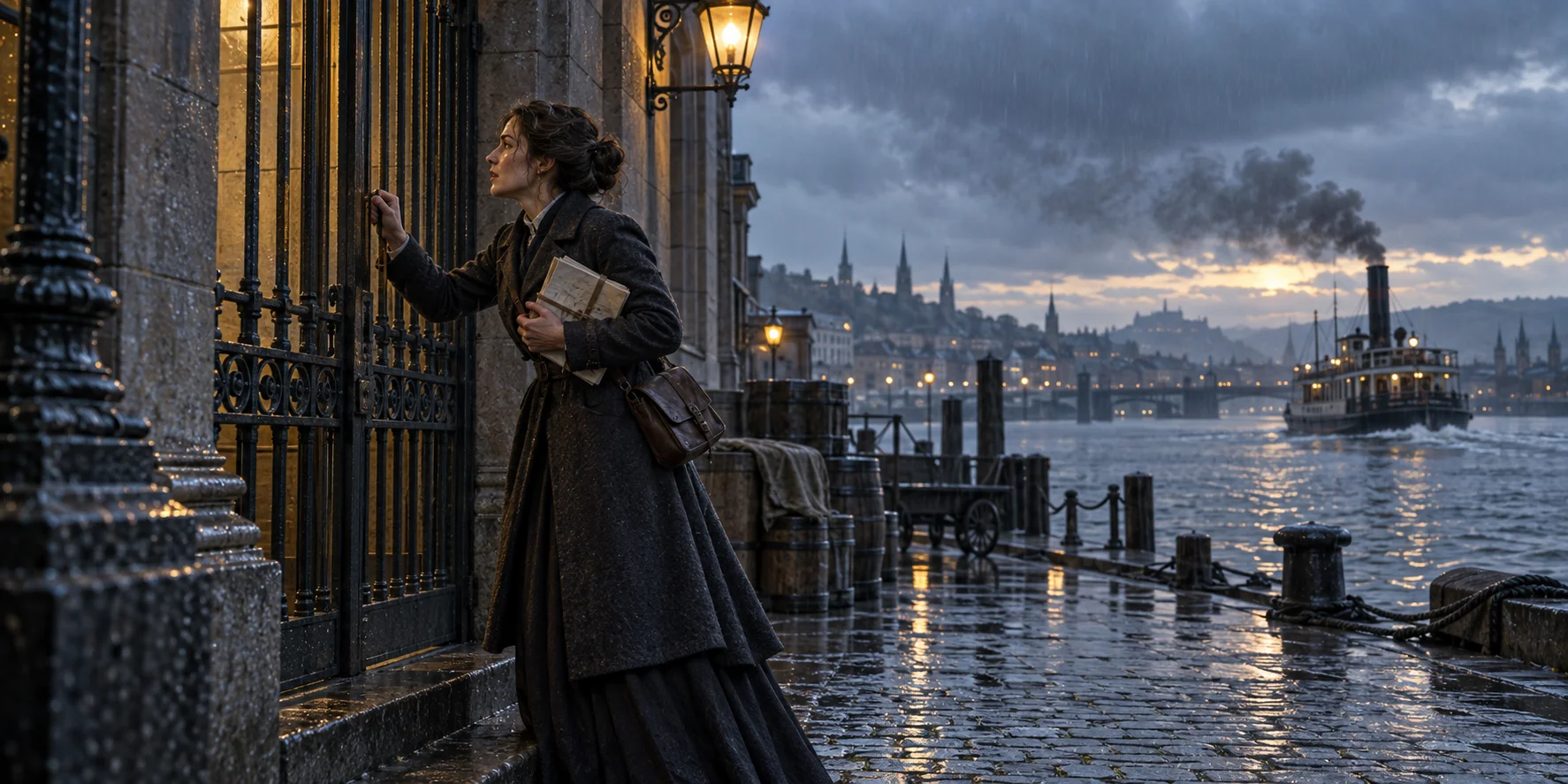
Give every constraint a causal job. A locked gate might force Ida to ask a watchman for help, revealing that he has seen her copy the ledger. A wet cobbled quay can slow her only if that delay changes the departure. Clothing matters when it restricts movement, conceals the page, or signals status to someone at the bridge. Do not stack period furniture, street names, and obsolete vocabulary merely to create atmosphere. The reader should feel the era through pressure on the character, not through a catalogue that pauses the story.
Test a chain of three events: Ida reaches the telegraph office, finds it closed, and chooses the ferry; the ferry is delayed or missed, making the bridge unavoidable. Keep the sequence consistent with what you have researched. If a generated scene introduces a technology decades too early or a shortcut across an impossible distance, do not patch it with another invented explanation. Fix the underlying plan. A brief source check before each chapter is easier than untangling a plot built on one confident but false assumption.
Compare one route, then draft chapter by chapter in Fyrlo
Two alternatives are enough for a useful comparison. Hold the premise, period, evidence, and Ida's motive steady. In version A she catches the ferry but must entrust the ledger to a stranger on board. In version B she takes the bridge and faces the clerk who knows her employer. Which version forces a more revealing choice, and which can be supported by the researched geography? If you change the date, city, villain, route, and goal at once, you will not know what made one draft stronger.
Fyrlo can help you compare that focused variable while the premise, characters, and accepted plot context remain in one project. Choose the route that best exposes Ida's values, then carry only that result into the chapter plan. Give the next chapter a consequence rather than another unrelated obstacle: the stranger may demand a favor, or the clerk may recognize Ida's handwriting. Keep a brief continuity note with who possesses the copied page, who knows what it contains, how long the crossing takes, and which historical details are still awaiting sources.
Draft one chapter at a time and review it before continuing. Check whether the generated dialogue gives Ida modern assumptions, whether the same boat somehow departs twice, or whether a minor character learns a secret without a scene that explains it. Edit the prose in your own voice; save accepted changes to the plan and character context. If a better researched fact overturns the route, revise the outline instead of making later chapters defend an error. The tool supports continuity work, but it cannot guarantee consistency or factual accuracy on its own.
Audit the draft without turning the novel into a textbook
After a chapter works as fiction, make a separate historical pass. Highlight every specific date, legal rule, job title, object, journey time, form of address, and apparent quotation. For each, find a reliable source or remove the certainty. A reader does not need a footnote after every sentence, but you need to know which details are documented and which belong to your invented port. If a detail is only probable, avoid presenting it as a universal rule for all people in that era.
Then read for narrative bias. Who gets to speak about the work on the docks, and whose experience is treated as scenery? A single archive photograph may reflect the priorities of its maker or collector. Research beyond the easiest surviving voices, especially when your plot uses inequality as its stakes. Ask a knowledgeable reader to flag flattened language or borrowed stereotypes. For Ida, the ledger must matter because other people have lives and agency, not because their hardship supplies an instant heroic moment for her.
Finally remove the historical details that do not affect action, interpretation, or mood. The strongest ending to a chapter may be Ida watching the last ferry leave while holding evidence she can no longer deliver safely. That image earns its place because the plan changes. Fyrlo is free to download and includes some usage, but not every feature or unlimited generation is free. It is a planning and drafting aid, not a guarantee of originality, rights, historical accuracy, publication readiness, or commercial success. Verify, revise, and make the final creative decisions yourself.