
Getting started
AI book writing app for iPhone: what matters
Choose a mobile writing workflow by testing a premise, continuity, control, costs, and a real chapter handoff.

An AI book writing app for iPhone is useful only if a scene drafted on a short trip still belongs to the novel you open again tomorrow. A fast paragraph is easy to produce; maintaining a premise, changing character knowledge, accepted plot decisions, and your own voice across chapters is harder. The phone adds constraints: short sessions, a small screen, interruptions, and the temptation to accept a fluent draft before reading it against the larger story.
This guide offers a concrete selection test and then runs it through Fyrlo. Disclosure: Fyrlo publishes this article, so this is not an independent ranking or a laboratory comparison. We recommend only Fyrlo here and judge it against transparent tasks rather than invented scores: can a writer record a premise, organize plot and characters, compare one meaningful alternative, revise an imperfect chapter, and carry the accepted context forward? The same questions are useful if you decide to use another tool or no AI at all.
What an AI book writing app for iPhone should help you finish
Begin with the job, not a list of generated features. If you need a one-off prompt for a tiny story, almost any text box can provide a starting point. A novel asks for a different test: after several sessions, can you still identify the protagonist's desire, the current obstacle, what each character knows, and the consequence of the last choice? An app that produces beautiful isolated pages but makes those answers difficult to find may be the wrong place for long-form work.
A useful mobile workflow separates three layers. The plan records the story's current direction; the draft contains actual scenes; the accepted story state records what those scenes have made true. The layers can live in one project or in a deliberately maintained notebook, but they should not blur. A proposed twist is not canon until you choose it. A generated line is not necessarily your final line. Keeping those distinctions visible prevents a quick phone session from silently rewriting your book.
Our comparison method is a small, repeatable task, not a claim that we tested every app. Give the candidate tool a premise with one hard constraint, three character facts, and a two-chapter goal. Draft the first chapter, edit a consequential detail, then ask whether the next chapter can respect that edited version. Note how much work you must do to preserve the decision, whether you can export your work, what the real usage limits are, and whether the interface helps you return after an interruption.
Start on the phone with a premise that can survive chapter two
Consider a coastal radio operator who hears a distress call from a lighthouse that was closed ten years ago. She wants to find the caller before a storm, but revealing the signal may cost her job because she used a restricted channel. That premise contains a person, desire, obstacle, setting, and consequence. It leaves room for discovery without asking an app to invent an entire book from one vague genre label. Write it in two or three sentences before opening a generation control.
In Fyrlo, begin a story project with that clear premise and choose the appropriate book format. Keep the core question visible: who sent the call, and what will the operator risk to answer it? If the app offers more ideas, judge each against the premise rather than collecting them all. A new character or mystery is valuable when it changes a choice the operator must make. Decorative incidents add scrolling, not structure. If you need a fuller plan, the novel-outline guide shows how to turn a premise into causal milestones without scripting every paragraph.

Keep plot and character context together, but keep proposals separate
The radio operator knows the signal code; her sister manages the harbor; the lighthouse keeper vanished before the closure. These details are not merely character biographies. They determine who can act, who has access, and why the operator hesitates to ask for help. Arrange plot and character notes together in Fyrlo so the next chapter begins from the same accepted situation. Keep the list short enough to review on a phone: desire, relationship, knowledge, promise, and the last irreversible action for each important person.
A convenient test is to write a chapter handoff in plain language: the operator has traced the call to a relay station, has not entered it, and has lied to her sister about the source. The first two are location and action facts; the lie is a relationship fact with future pressure. If a generated chapter assumes that the sister already knows everything, stop and repair the context before continuing. Do not solve this by adding a contradictory explanation later; the next draft should inherit the version you accepted.
Compare one story variable instead of generating endless versions
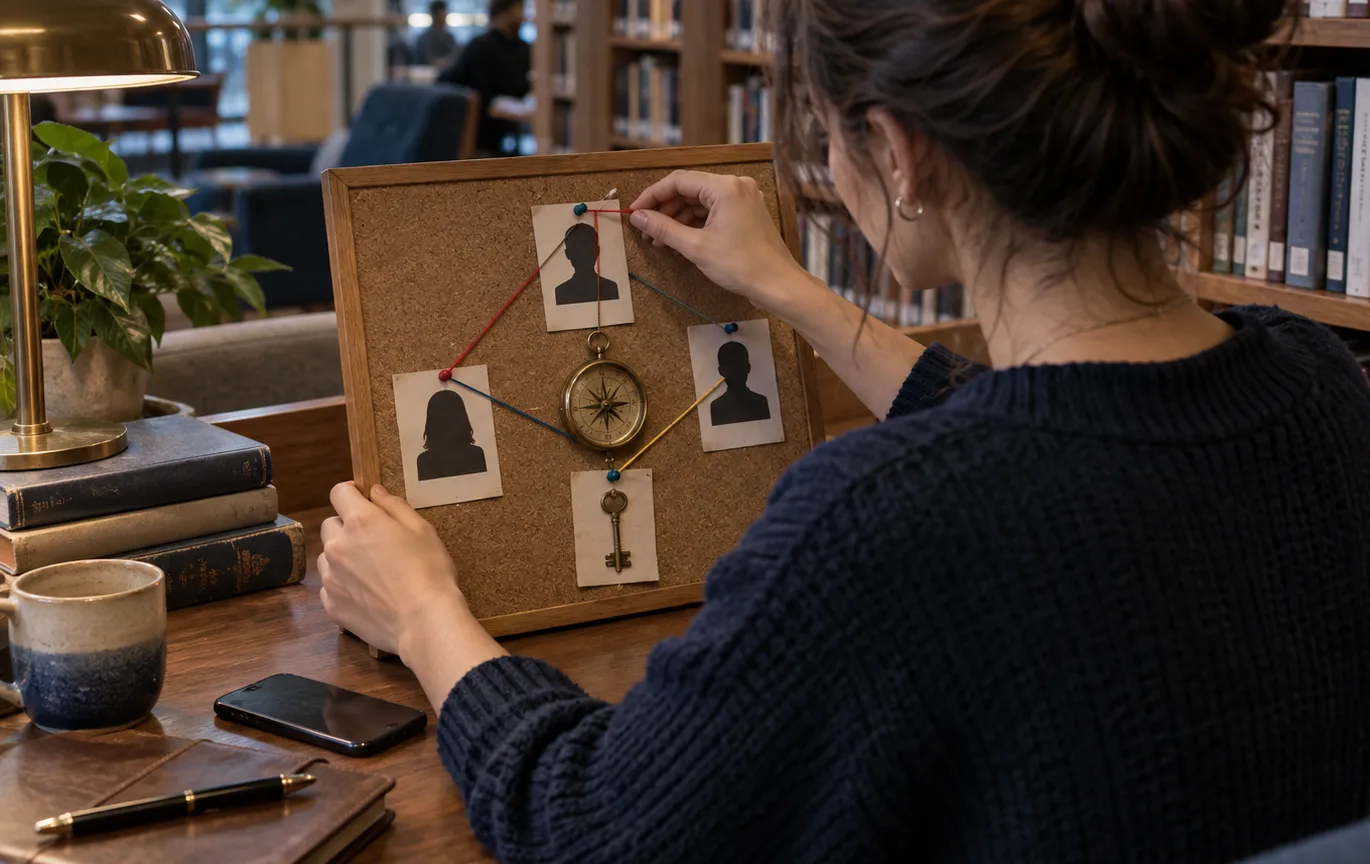
Suppose the operator reaches the relay station. The open question is not what happens next in general; it is whether she tells her sister before entering. Draft two short paths while holding everything else steady. In one, disclosure brings help but risks her job immediately. In the other, secrecy protects her access but damages trust when the sister discovers the lie. Comparing one variable gives you a meaningful decision. Rewriting the location, the weather, the caller, and the relationship at once makes it impossible to know which change improved the scene.
Fyrlo can help you draft these focused alternatives inside the same story project. Ask for consequences, not merely more dramatic language. Which version gives the operator a sharper choice in the next chapter? Which preserves the facts you already accepted? Read both on the phone, then return to the plan and mark only the chosen route as current. Keep a rejected option in a separate note if it may be useful later, but do not let it leak into the next chapter's instructions as if it occurred.

Write in short iPhone sessions and hand off accepted chapters
A phone is excellent for capturing a scene question while it is fresh, but an interruption can make a half-finished draft look settled. End each session with a tiny handoff: what changed on the page, what remains uncertain, and what the next scene must confront. The note should distinguish observed events from your interpretation. For example, the operator heard the caller use a family phrase; she suspects her missing father, but has no proof. This protects mystery and continuity at the same time.
Continue in Fyrlo chapter by chapter from the edited chapter rather than treating the first generated version as permanent. Review pronouns, physical positions, chronology, and the emotional cost of each new scene. If you replace a paragraph manually, the next handoff should describe your accepted edit, not an earlier machine suggestion. Our continuation guide goes deeper on preserving voice and story state. The practical test for a mobile app is whether you can leave the project, return tomorrow, and still know exactly which version is authoritative.
Do not expect a short-session workflow to eliminate full-manuscript reading. After two or three chapters, read them consecutively on a larger screen or in an exported copy if that suits you. A phone can hide repetition because each session feels new. Look for identical chapter openings, repeated emotional beats, and explanations of information readers already learned. A writing app can help organize drafts and provide alternatives, but only you can determine whether the sequence feels like one growing novel rather than several disconnected prompts.

Check cost, privacy, and export before trusting a long project
A free download is an invitation to test, not a promise of unlimited novel generation. Fyrlo is free to download and includes some usage; additional generation may require credits or purchases. The current terms shown in the app and App Store are the place to check before spending. Apple's explanation of in-app purchases shows where to find the purchase indicator and why subscriptions and consumable credits behave differently. Do not estimate the cost of a full manuscript from one short trial; measure the type of sessions you actually expect to run.
For a private draft, read the app's current privacy details and policy before entering sensitive material. Apple explains that App Store privacy labels summarize developer-reported data practices, including whether data may be linked to you. A label is a starting point, not an independent audit of every writing scenario. Remove real people's identifying details from a fictionalized test if you do not need them. Keep your own backup of valuable text, and test the available export path before the project becomes too large to move comfortably.
The selection criteria are practical rather than glamorous: compatibility with your iPhone, an understandable path from premise to chapters, visible editing control, a way to retain context, clear usage terms, privacy information you are willing to accept, and access to your finished draft. Our recommendation is Fyrlo for a writer who wants these planning and drafting steps together on iPhone or iPad. We have not run a scored market survey, verified competitor claims, or measured an automatic quality advantage. If a requirement fails in your own trial, that matters more than our recommendation.
Use the recommendation as a test, not a quality guarantee
A useful result is not a publishable novel after a few taps. It is a draft with a visible chain of choices that you can interrogate, edit, and carry forward. Fyrlo can support planning, character and plot organization, chapter drafting, covers, and export, but it cannot guarantee originality, factual accuracy, legal rights, publication readiness, or sales. If the story uses research or real people, verify facts and permissions yourself. If the prose sounds unlike you, rewrite it rather than treating fluency as proof of fit.
The final selection question is simple: when you reopen the project after a busy day, can you explain what the protagonist wants now, what changed last chapter, and what decision must come next? If yes, the phone workflow is serving the book. If not, add a clearer handoff and reduce the number of active alternatives. The best mobile writing setup is the one that keeps your editorial authority intact while helping you return to a coherent story.