AI writing workflows
AI antagonist generator: build an opponent who acts
Turn a threatening character sketch into a limited, purposeful opponent whose decisions reshape the next chapter.

An AI antagonist generator can give you a name, a grievance and a dramatic appearance while leaving the actual novel stuck. The useful question is what this opponent will do next, with which resources, and how that decision makes the protagonist change course. Start there, and a generated profile becomes material you can test rather than a description you hope will create conflict.
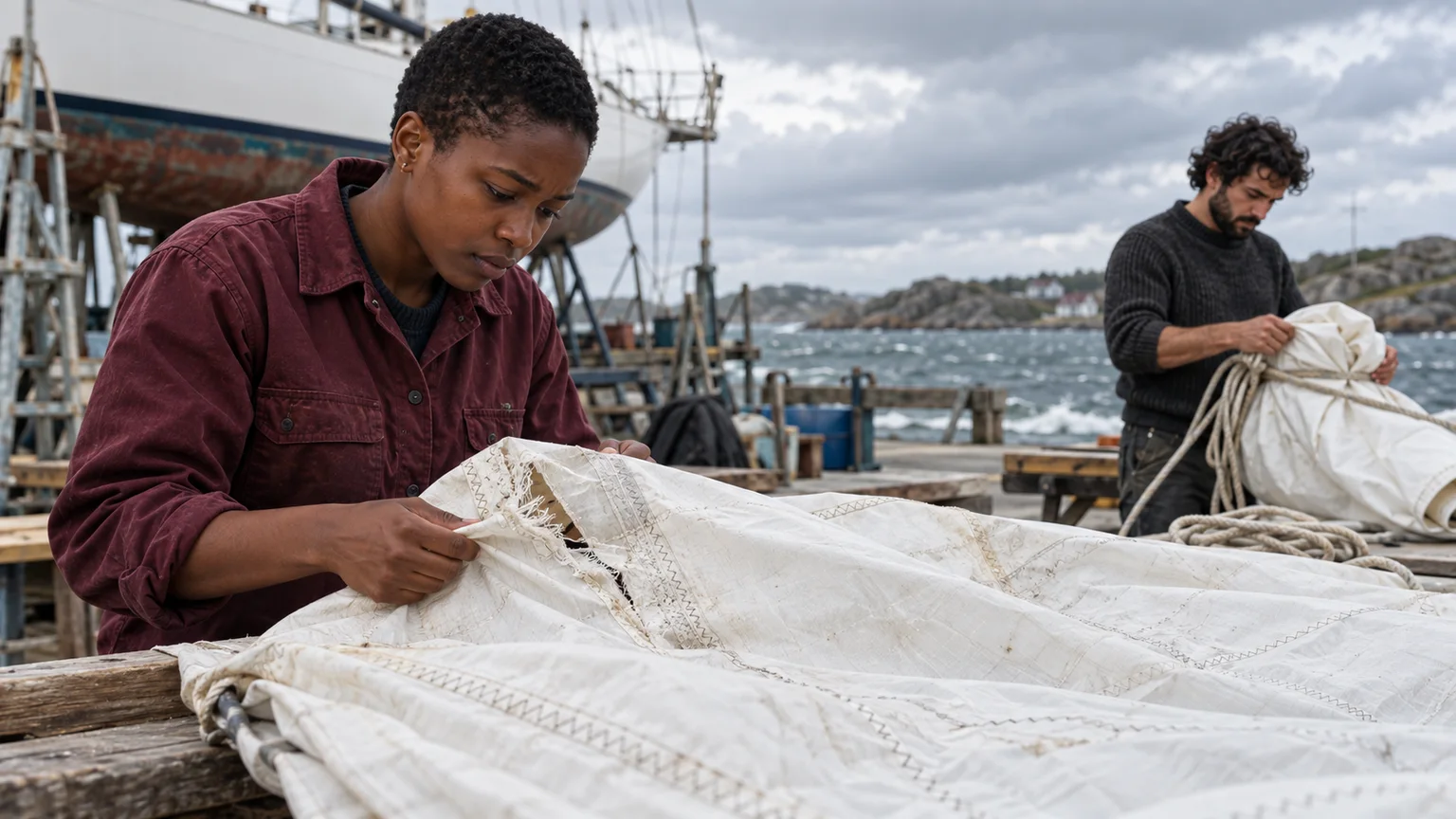
This Fyrlo workflow follows an invented coastal workshop story. Leila wants to finish a community sailing project; Tomas controls the sailcloth and wants to protect the workshop's fragile finances. Neither can get everything they want. You will establish that collision, organize plot and character context, compare one tactic, and continue chapter by chapter while checking the opponent's knowledge and limits.
Give the AI antagonist generator a real collision
Write the premise before asking for a villain. Leila has promised a repaired training sail to a community group by the weekend. Tomas has reserved the remaining material for a paying contract that keeps the workshop open. The supply cannot cover both jobs immediately. This concrete collision supplies a place, a scarce resource, two objectives and a deadline. An instruction to create someone ruthless supplies none of those relationships.
An antagonist is an opposing force in this particular story, not automatically an evil person. Tomas can be right about the finances and still make damaging choices about access, trust or responsibility. You do not have to excuse those choices. Separate what he wants from what he is willing to do. Understanding an action gives it causal weight; approval is a different matter.
In Fyrlo, establish the project premise and put the two goals into the plot and character information before generating a chapter. Describe the relationship in ordinary terms: former collaborators who now disagree about who may promise the workshop's resources. Preserve the facts already established in your draft. If the project already has a cast, use the character-development guide to clarify roles instead of generating a second, incompatible cast.
A practical planning instruction is: develop an opponent who wants to secure the paid contract, can restrict workshop material, and cannot cancel Leila's outside promise. Ask for motives and possible actions within that boundary. Read the suggestions before accepting them. A new inheritance, secret owner or conveniently unlimited stock may remove the very collision you set out to write. Reject attractive details that make the central problem easier by changing its premises.

Connect the motive to a present method
A backstory is not yet a plan. Tomas once watched a family workshop close after too many unpaid favors. That memory can explain why he fears another generous promise, but the plot still needs his present response. He locks the remaining sailcloth away, offers Leila a smaller allocation and tells the customer that the paid repair will be ready. Each action advances something he wants now.
Record a short opponent brief: objective, belief, chosen method, possible cost and line he initially refuses to cross. For Tomas, the belief is that promises without payment jeopardize everyone's work. His method is controlling access rather than physical intimidation. The cost is losing Leila's trust. His current boundary is that he will not deliberately damage the community group's equipment. Keep those fields distinct; a fear should not become a license for any action the plot needs.
Purdue OWL's character-writing guidance connects goals with conflict. Apply that modest principle to the opponent as well as the lead: what does the action serve? It does not require every person to have a tragic past, nor does it establish a universal recipe for villains. An ordinary professional commitment can carry a strong disagreement when both people have something real to lose.
Update Tomas's information in Fyrlo with the brief you actually choose. Use concrete behavior instead of strings of adjectives. Controlled and calculating tell you less than keeps the storage key, offers a partial compromise, and checks the customer schedule. Then draft the first encounter around a decision. If the generated scene only explains his childhood, ask for a revision that turns the present objective into an observable action while retaining the accepted facts.
Make power and knowledge finite
The opponent needs enough influence to create resistance and enough limits to remain believable. Tomas controls one cupboard, not the harbor, the community group or every supplier. Leila can seek other material, but doing so takes time and may produce a sail that needs further adjustment. These boundaries turn conflict into choices. Unlimited authority would let him end the problem instantly; effortless escape would let her ignore him.
Track knowledge separately from power. Tomas knows about the paid contract and hears Leila's promise during the workshop meeting. He does not know that she has called a neighboring boatyard until someone tells him or he sees the delivery. A scene can hide that call from the reader if the viewpoint allows it, but the author still needs a credible route by which he learns the fact.
Add these limits to the project context before continuing in Fyrlo. Review the next draft for invented reach: did Tomas suddenly call a person whose number he never had, anticipate a private conversation or control a business he does not own? Correct the accepted story information and the affected passage. Repeating a constraint in planning helps you evaluate the draft; it is not a guarantee that the model will obey it.
One useful test is to outline what Tomas would do if Leila did nothing for a day. He would prepare the paid job, contact the customer and preserve the stock. That independent movement prevents him from waiting backstage for her next scene. The narrative-planning research by Riedl and Young distinguishes causal event progression from understandable character intentions. Its abstract provides a useful conceptual connection, not evidence that Fyrlo has been tested with that planning algorithm.

Compare one tactic and follow its consequences
Keep the motive stable while comparing a method. In one option, Tomas refuses all access until the paid contract is finished. In another, he offers a limited amount if Leila agrees to reduce the promised sail. Both pursue financial security. Changing only the tactic reveals different pressure: a refusal drives her elsewhere; a conditional offer makes her choose between keeping her exact promise and accepting a workable compromise.
Use a focused Fyrlo planning or revision instruction: keep the material shortage, deadline, relationship and financial motive unchanged; explore a conditional allocation instead of a total refusal. This is a writing comparison, not a claim that the app supplies a dedicated antagonist simulator or automatic branch management. Keep the alternatives clearly separated in your own notes and retain only the chosen version in the ongoing project.
Judge each option by the next action it causes. What can Leila attempt? What does Tomas risk? Which fact must the reader know? A tactic that only produces a louder argument may add volume without altering the plot. The conditional offer is useful if accepting it costs Leila credibility with the group, while rejecting it exposes the workshop to another costly delay. You can make the conflict sharp without making either person foolish.
After choosing, revise the chapter plan rather than leaving both possibilities in the context. If Tomas granted a partial allocation, the next chapter cannot treat the cupboard as entirely inaccessible without a new event. Record the material available, the promise still outstanding and the relationship change. These are the consequences that future scenes must inherit; discarded ideas are not established story facts.
Carry the opponent's state into the next chapter
Draft a short chain of action and reaction before requesting more prose. Leila accepts the smaller allocation, discovers it will not cover the damage, and asks another yard for an offcut. Tomas learns that a delivery will interrupt his customer fitting. He moves the fitting time, which leaves Leila less access to the shared cutting table. Each move follows from a previous condition; none needs a newly invented personality trait.
At the chapter handoff, record both characters' current position. Include what Tomas wants now, what he has learned, what resource he controls, what concession he has already made and what consequence he must face. Keep the update short enough to consult. Copying every discarded explanation into the plan makes it harder to see which facts govern the next draft.
Continue in Fyrlo with that accepted context and a clear next chapter objective. Then inspect the generated response rather than judging only the prose's fluency. Does Tomas react to knowledge he actually acquired? Does his new action fit his method? Does Leila's choice remain possible? Edit any contradiction before continuing. The existing continuation guide can help you make this handoff without losing the manuscript's established voice.
Finally, give the opposition an outcome. Tomas may change his allocation after seeing the group's own contribution, or maintain his position and lose a collaborator. Neither reconciliation nor punishment is compulsory. What matters is that the ending grows from the limits, decisions and costs already on the page. Read the opponent's scenes together; if his plan vanishes between encounters, restore a few purposeful actions rather than more explanatory speeches.